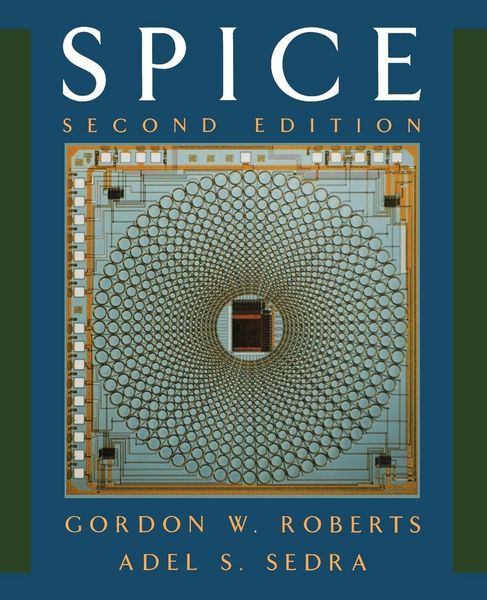
Produktbild: Spice

Spice

147,99 €

inkl. gesetzl. MwSt., Versandkostenfrei


Beschreibung

Produktdetails

Einband

Taschenbuch

Erscheinungsdatum

01.09.1996

Verlag

Oxford University Press

Seitenzahl

462

Maße (L/B/H)

23,5/19,1/2,5 cm

Gewicht

794 g

Auflage

2. Auflage

Sprache

Englisch

ISBN

978-0-19-510842-2

Beschreibung

Produktdetails

Einband

Taschenbuch

Erscheinungsdatum

01.09.1996

Verlag

Oxford University Press

Seitenzahl

462

Maße (L/B/H)

23,5/19,1/2,5 cm

Gewicht

794 g

Auflage

2. Auflage

Sprache

Englisch

ISBN

978-0-19-510842-2

Herstelleradresse

Libri GmbH
Europaallee 1
36244 Bad Hersfeld
DE

Email: gpsr@libri.de

Kundinnen und Kunden meinen

0 Bewertungen

Informationen zu Bewertungen

Zur Abgabe einer Bewertung ist eine Anmeldung im Konto notwendig. Die Authentizität der Bewertungen wird von uns nicht überprüft. Wir behalten uns vor, Bewertungstexte, die unseren Richtlinien widersprechen, entsprechend zu kürzen oder zu löschen.

Die Bewertungen sind nach Format, Anzahl Sterne und Datum sortiert.

Verfassen Sie die erste Bewertung zu diesem Artikel

Helfen Sie anderen Kund*innen durch Ihre Meinung

Kundinnen und Kunden meinen

0 Bewertungen filtern

  • Produktbild: Spice
    • Preface

    • 1: Introduction to Spice

    • 1.1: Computer Simulation of Electronic Circuits

    • 1.2: An Outline of Spice

    • 1.2.1: Types of Analysis Performed by Spice

    • 1.2.2: Input to Spice

    • 1.2.3: Output from Spice

    • 1.4: Examples

    • 1.4.1: Example 1: DC Node Voltages of a Linear Network

    • 1.4.2: Example 2: Tranient Response of a 3-Stage Linear Amplifier

    • 1.4.3: Example 3: Setting Circuit Initial Conditions During a Tranient Analysis

    • 1.4.4: Example 4: Frequency Response of a Linear Amplifier

    • 1.5: Spice Tips

    • 1.6: Bibliography

    • 1.7: Problems

    • 2: Operational Amplifiers

    • 2.1: Modeling an Ideal Op Amp with Spice

    • 2.2: Analyzing the Behavior of Ideal Op Amp Circuits

    • 2.2.1: Inverting Amplifier

    • 2.2.2: The Miller Integrator

    • 2.2.3: A Damped Miller Integrator

    • 2.2.4: The Unity-Gain Buffer

    • 2.2.5: Instrumentation Amplifier

    • 2.3: Nonideal Op Amp Performance

    • 2.3.1: Small-Signal Frequency Response of Op Amp Circuits

    • 2.3.2: Modeling the Large-Signal Behavior of Op Amps

    • 2.4: The Effects of Op Amp Large-Signal Nonidealities on Closed-Loop Behavior

    • 2.4.1: DC Transfer Characteristic of an Inverting Amplifier

    • 2.4.2: Slew-Rate Limiting

    • 2.4.3: Other Op Amp Nonidealities

    • 2.5: Spice Tips

    • 2.6: Bibliography

    • 2.7: Problems

    • 3: Diodes

    • 3.1: Describing Diodes to Spice

    • 3.1.1: Diode Element Description

    • 3.1.2: Diode Model Description

    • 3.2: Spice as a Curve Tracer

    • 3.2.1: Temperature Effects

    • 3.3: Zener Diode Modeling

    • 3.4: A Half-Wave Rectifier Circuit

    • 3.5: Limiting and Clamping Circuits

    • 3.6: Spice Tips

    • 3.7: Problems

    • 4: Bipolar Junction Transistors (BJTs)

    • 4.1: Describing BJTs to Spice

    • 4.1.1: BJT Element Description

    • 4.1.2: BJT Model Description

    • 4.1.3: Verifying NPN Transistor Circuit Operation

    • 4.2: Using Spice as a Curve Tracer

    • 4.3: Spice Analysis as a Curve Tracer

    • 4.3.1: Transistor Modes of Operation

    • 4.3.2: Computing DC Bias of a PNP Transistor Circuit

    • 4.4: BJT Transistor Amplifiers

    • 4.4.1: BJT Small-Signal Model

    • 4.4.2: Single-Stage Voltage-Amplifier Circuits

    • 4.5: DC Bias Sensitivity Analysis

    • 4.6: The Common-Emitter Amplifier

    • 4.7: Spice Tips

    • 4.8: Bibliography

    • 4.9: Problems

    • 5: Field-Effect Transistors (FETs)

    • 5.1: Describing MOSFETs to Spice

    • 5.1.1: MOSFET Element Description

    • 5.1.2: MOSFET Model Description

    • 5.1.3: An Enhancement-Mode N-Channel MOSFET Circuit

    • 5.1.4: Observing the MOSFET Current - Voltage Characteristics

    • 5.2: Spice Analysis of MOSFET Circuits at DC

    • 5.2.1: An Enhancement-Mode P-Channel MOSFET Circuit

    • 5.2.2: A Depletion-Mode P-Channel MOSFET Circuit

    • 5.2.3: A Depletion-Mode N-Channel MOSFET Circuit

    • 5.3: Descrbing JFETs to Spice

    • 5.3.1: JFET Element Description

    • 5.3.2: JFET Model Description

    • 5.3.3: An N-Channel JFET Example

    • 5.3.4: A P-Channel JFET Example

    • 5.4: FET Amplifier Circuis

    • 5.4.1: Effect of Bias Pointn on Amplifier Conditions

    • 5.4.2: Small-Signal Model of the FET

    • 5.4.3: A Basic FET Amplifier Circuit

    • 5.5: Investigating Bias Stability with Spice

    • 5.6: Integrated-Circuit MOS Amplifiers

    • 5.6.1: Enhancement-Load Amplifiers Including the Body Effect

    • 5.6.2: CMOS Amplifier

    • 5.7: MOSFET Switches

    • 5.8: Describing MESFETs to Spice

    • 5.8.1: MESFET Element Description

    • 5.8.2: MESFET Model Description

    • 5.8.3: Small-Signal MESFET Model

    • 5.8.4: A MESFET Biasing Example

    • 5.9: Spice Tips

    • 5.10: Bibliography

    • 5.11: Problems

    • 6: Differential and Multistage Amplifiers

    • 6.1: Input Excitation for the Differential Pair

    • 6.2: Small-Signal Analysis of the Differential Amplifier: Symmetric Conditions

    • 6.3: Small-Signal Analysis of the Differential Amplifier: Assymmetric Conditions

    • 6.4: Current-Souce Biasing in Integrated Circuits

    • 6.5: A BJT Multistage Amplifier Circuit

    • 6.6: Spice Tips

    • 6.7: Bibliography

    • 6.8: Problems

    • 7: Frequency Problems

    • 7.1: Investigating Transfer Function Behavior Using PSpice

    • 7.2: Modeling Dynamic Effects in Semiconductor Devices

    • 7.3: The Low-Frequency Response of the Common-Source Amplifier

    • 7.4: High-Frequency Response Comparison of the Common-Emitter and Cascode Amplfiers

    • 7.5: High-Frequency Response of the CC-CE Amplfier

    • 7.6: Spice Tips

    • 7.7: Problems

    • 8: Feedback

    • 8.1: The General Feedback Structure

    • 8.2: Determining Loop Gain with Spice

    • 8.3: Stability Analysis Using Spice

    • 8.4: Investigating the Range of Amplifier Stability

    • 8.5: The Effect of Phase Margin on Transient Response

    • 8.6: Frequency Compensation

    • 8.7: Spice Tips

    • 8.8: Bibliography

    • 8.9: Problems

    • 9: Output Stages and Power Amplifiers

    • 9.1: Emitter-Follower Output Stage

    • 9.2: Class B Output Stage

    • 9.3: Spice Tips

    • 9.4: Problems

    • 10: Analog Integrated Circuits

    • 10.1: A Detailed Analysis of the 741 Op Amp Circuit

    • 10.2: A CMOS Op Amp

    • 10.3: Spice Tips

    • 10.4: Bibliography

    • 10.5: Problems

    • 11: Filters and Tuned Amplifiers

    • 11.1: The Butterworth and Chebyshev Transfer Functions

    • 11.2: Second-Order Active Filters Based on Inductor Replacement

    • 11.3: Second-Order Active Filters Based on the Two-Integrator-Loop Technology

    • 11.4: Tuned Amplifiers

    • 11.5: Spice Tips

    • 11.6: Bibiliography

    • 11.7: Problems

    • 12: Signal Generators and Waveform - Shaping Circuits

    • 12.1: Op Amp-RC Sinusoidal Oscillators

    • 12.1.1: The Wien-Bridge Oscillator

    • 12.1.2: An Active-Filter-Tuned Oscillator

    • 12.2: Multivibrator Circuits

    • 12.3: Precision Rectifier Circuits

    • 12.4: Spice Tips

    • 12.5: Bibiliography

    • 12.6: Problems

    • 13: MOS Digital Circuits

    • 13.1: NMOS Inverter with Enhancement Load

    • 13.2: NMOS Inverter with Depletion Load

    • 13.3: The CMOS Inverter

    • 13.4: A Gallium-Arsenide Inverter Circuit

    • 13.5: Spice Tips

    • 13.6: Problems

    • 14: Bipolar Digital Circuits

    • 14.1: Transistor-Transistor Logic (TTL)

    • 14.2: Emitter-Coupled Logic (ECL)

    • 14.3: BiCMOS Digital Circuits

    • 14.4: Bibliography

    • 14.5: Problems


    • A.1: Diode Model

    • A.2: BJT Model

    • A.3: JET Model

    • A.4: MOSFET Model

    • A.5: MESFET Model

    • A.6: Bibliography


    • Index