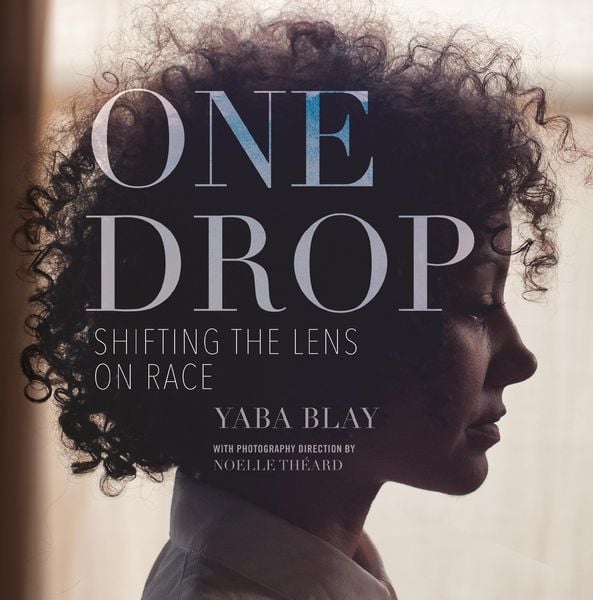
One Drop Shifting the Lens on Race
-
- Hardcover
- Taschenbuch ausgewählt
- eBook
-
Sprache:Englisch
33,99 €
inkl. gesetzl. MwSt.,
Beschreibung
Produktdetails
Verkaufsrang
48841
Einband
Taschenbuch
Erscheinungsdatum
19.09.2023
Verlag
Penguin USSeitenzahl
288
Maße (L/B/H)
22,1/21,8/1,8 cm
Gewicht
885 g
Sprache
Englisch
ISBN
978-0-8070-1321-2
Challenges narrow perceptions of Blackness as both an identity and lived reality to understand the diversity of what it means to be Black in the US and around the world
What exactly is Blackness and what does it mean to be Black?
Is Blackness a matter of biology or consciousness?
Who determines who is Black and who is not?
Who’s Black, who’s not, and who cares?
In the United States, a Black person has come to be defined as any person with any known Black ancestry. Statutorily referred to as “the rule of hypodescent,” this definition of Blackness is more popularly known as the “one-drop rule,” meaning that a person with any trace of Black ancestry, however small or (in)visible, cannot be considered White. A method of social order that began almost immediately after the arrival of enslaved Africans in America, by 1910 it was the law in almost all southern states. At a time when the one-drop rule functioned to protect and preserve White racial purity, Blackness was both a matter of biology and the law. One was either Black or White. Period. Has the social and political landscape changed one hundred years later?
One Drop explores the extent to which historical definitions of race continue to shape contemporary racial identities and lived experiences of racial difference. Featuring the perspectives of 60 contributors representing 25 countries and combining candid narratives with striking portraiture, this book provides living testimony to the diversity of Blackness. Although contributors use varying terms to self-identify, they all see themselves as part of the larger racial, cultural, and social group generally referred to as Black. They have all had their identity called into question simply because they do not fit neatly into the stereotypical “Black box”—dark skin, “kinky” hair, broad nose, full lips, etc. Most have been asked “What are you?” or the more politically correct “Where are you from?” throughout their lives. It is through contributors’ lived experiences with and lived imaginings of Black identity that we can visualize multiple possibilities for Blackness.
What exactly is Blackness and what does it mean to be Black?
Is Blackness a matter of biology or consciousness?
Who determines who is Black and who is not?
Who’s Black, who’s not, and who cares?
In the United States, a Black person has come to be defined as any person with any known Black ancestry. Statutorily referred to as “the rule of hypodescent,” this definition of Blackness is more popularly known as the “one-drop rule,” meaning that a person with any trace of Black ancestry, however small or (in)visible, cannot be considered White. A method of social order that began almost immediately after the arrival of enslaved Africans in America, by 1910 it was the law in almost all southern states. At a time when the one-drop rule functioned to protect and preserve White racial purity, Blackness was both a matter of biology and the law. One was either Black or White. Period. Has the social and political landscape changed one hundred years later?
One Drop explores the extent to which historical definitions of race continue to shape contemporary racial identities and lived experiences of racial difference. Featuring the perspectives of 60 contributors representing 25 countries and combining candid narratives with striking portraiture, this book provides living testimony to the diversity of Blackness. Although contributors use varying terms to self-identify, they all see themselves as part of the larger racial, cultural, and social group generally referred to as Black. They have all had their identity called into question simply because they do not fit neatly into the stereotypical “Black box”—dark skin, “kinky” hair, broad nose, full lips, etc. Most have been asked “What are you?” or the more politically correct “Where are you from?” throughout their lives. It is through contributors’ lived experiences with and lived imaginings of Black identity that we can visualize multiple possibilities for Blackness.
Kundinnen und Kunden meinen
Verfassen Sie die erste Bewertung zu diesem Artikel
Helfen Sie anderen Kund*innen durch Ihre Meinung
Kurze Frage zu unserer Seite
Vielen Dank für Ihr Feedback
Wir nutzen Ihr Feedback, um unsere Produktseiten zu verbessern. Bitte haben Sie Verständnis, dass wir Ihnen keine Rückmeldung geben können. Falls Sie Kontakt mit uns aufnehmen möchten, können Sie sich aber gerne an unseren Kund*innenservice wenden.
zum Kundenservice