• Produktbild: The Historical Phonology of Tibetan, Burmese, and Chinese
  • Produktbild: The Historical Phonology of Tibetan, Burmese, and Chinese

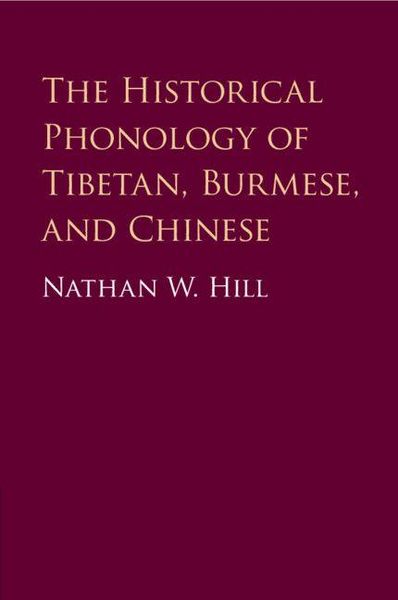
The Historical Phonology of Tibetan, Burmese, and Chinese

47,99 €

inkl. gesetzl. MwSt., Versandkostenfrei


Beschreibung

Produktdetails

ISBN

978-1-316-60151-8

Erscheinungsdatum

09.06.2022

Einband

Taschenbuch

Verlag

Cambridge Academic

Seitenzahl

388

Maße (L/B/H)

22,9/15,2/2,1 cm

Gewicht

568 g

Sprache

Englisch

Beschreibung

Produktdetails

ISBN

978-1-316-60151-8

Erscheinungsdatum

09.06.2022

Einband

Taschenbuch

Verlag

Cambridge Academic

Seitenzahl

388

Maße (L/B/H)

22,9/15,2/2,1 cm

Gewicht

568 g

Sprache

Englisch

Herstelleradresse

Libri GmbH
Europaallee 1
36244 Bad Hersfeld
DE

Email: gpsr@libri.de

Kundinnen und Kunden meinen

0 Bewertungen

Informationen zu Bewertungen

Zur Abgabe einer Bewertung ist eine Anmeldung im Konto notwendig. Die Authentizität der Bewertungen wird von uns nicht überprüft. Wir behalten uns vor, Bewertungstexte, die unseren Richtlinien widersprechen, entsprechend zu kürzen oder zu löschen.

Die Bewertungen sind nach Format, Anzahl Sterne und Datum sortiert.

Verfassen Sie die erste Bewertung zu diesem Artikel

Helfen Sie anderen Kund*innen durch Ihre Meinung

Kundinnen und Kunden meinen

0 Bewertungen filtern

Weitere Artikel finden Sie in

  • Produktbild: The Historical Phonology of Tibetan, Burmese, and Chinese
  • Produktbild: The Historical Phonology of Tibetan, Burmese, and Chinese
  • Introduction; Part I. Tibetan: 1. Old Tibetan; 2. Classical Tibetan; 3. The Bodish languages; 4. Tibetan diachronic phonology: 4.1. From Old Tibetan to proto-Bodish; 4.2. Reprise: from proto-Bodish to Old Tibetan; 4.3. From proto-Bodish to Trans-Himalayan; 4.4. Reprise: from Trans-Himalayan to proto-Bodish; 4.5. Diachronic mysteries; Part II. Burmese: 1. Old Burmese; 2. Written Burmese; 3. The Burmish languages; 4. The Loloish languages; 5. Burmese diachronic phonology: 5.1. From Burmese to proto-Burmish; 5.2. Reprise: proto-Burmish to Old Burmese; 5.3. From proto-Burmish to Trans-Himalayan; 5.4. Reprise: Trans-Himalayan to proto-Burmish; 5.5. Diachronic mysteries; Part III. Chinese: 1. Old Chinese: 1.1. Middle Chinese; 1.2. Rhymes of the Sh¿j¿ng; 1.3. Structure of Chinese characters; 1.4. Less traditional sources of data for reconstructing Old Chinese; 2. Simplex initials of Old Chinese: 2.1. Internal reconstruction of Middle Chinese initials; 2.2. Expanding the Old Chinese initials using xiésh¿ng evidence; 3. Old Chinese pre-initials: 3.1. Reconstructing tight pre-initials using xiésh¿ng evidence; 3.2. Reconstructing tight pre-initials on the basis of morphological speculation; 3.3. Reconstructing tight pre-initials using proto-M¿n; 3.4. Reconstructing tight pre-initials using loans into Vietic; 3.5. Reconstructing tight pre-initials using loans into Hmong-Mien; 3.6. Reconstructing tight pre-initials using loans into Tai-Kadai; 3.7. Reconstructing loose pre-initials; 3.8. Reconstructing loose pre-initials using proto-M¿n; 3.9. Reconstructing loose pre-initials using xiésh¿ng evidence; 3.10. Reconstructing loose using loans into non-Sinitic languages; 3.11. Reconstructing loose pre-initials on the basis of morphological speculation; 4. Old Chinese medial; 5. Old Chinese vowels; 6. Origins of the tones and fnal clusters; 7. Finals of Old Chinese; 8. How to reconstruct a word in Old Chinese; 9. From Old Chinese to Trans-Himalayan; 10. Reprise: Trans-Himalayan to Old Chinese; 11. Diachronic mysteries; Part IV. Trans-Himalayan: 1. Overview of Trans-Himalayan phonology; 2. Initials of Trans-Himalayan: 2.1. Simplex resonants; 2.2. Simplex obstruents; 3. Vowels of Trans-Himalayan; 4. Finals of Trans-Himalayan; 5. Reprise of Diachronic mysteries; 6. Concluding remarks.