Gutscheinbedingungen

Gültig bis 13.07.2026 | Gültig für Spielzeug (außer Tonieboxen & ausgewählte Tonies), Filme, Musik, Software, Games, Schreibwaren, Hörbücher und Hörbuch-Downloads (außer Abo & Shelfies), gebrauchte Bücher, nicht preisgebundene Bücher und Kalender | Einlösbar unter osiander.de und in der Osiander App | Click & Collect nur mit Online-Zahlung (Paypal/Kreditkarte) vorab | Einzelne Artikel können ausgeschlossen sein | Nicht kombinierbar mit anderen Gutscheinen oder Preisaktionen | Nur einmal pro Einkauf einlösbar | Gutschein wird auf max. 500€ Bestellwert angerechnet | Keine Barauszahlung | Digitale Hörbücher nur für Android | Nicht gültig für preisgebundene Artikel (aufgrund der Buchpreisbindung sind Gutscheine nicht auf Bücher, eBooks, Presse einlösbar), tolino eReader & Zubehör, Elektronik, Geschenke & Trends, Abonnements & Flatrates, Geschenkkarten, Versandkosten und Services

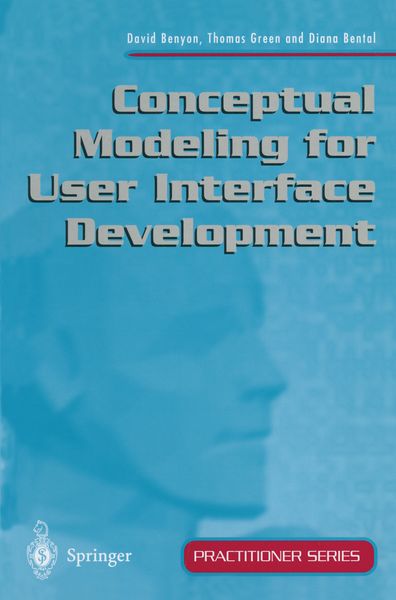
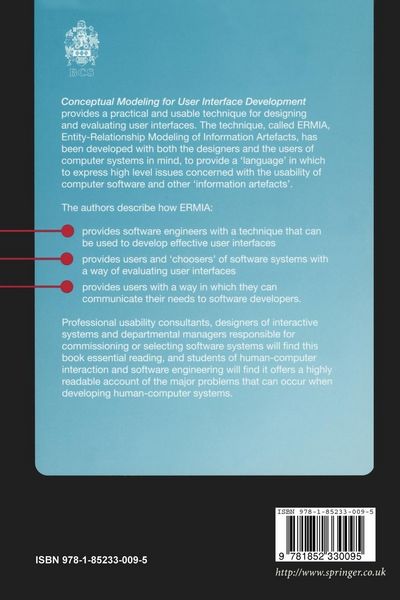
  • Produktbild: Conceptual Modeling for User Interface Development
  • Produktbild: Conceptual Modeling for User Interface Development

Conceptual Modeling for User Interface Development

Aus der Reihe Practitioner Series

49,99 €

inkl. gesetzl. MwSt., Versandkostenfrei


Beschreibung

Produktdetails

Einband

Taschenbuch

Erscheinungsdatum

11.06.1999

Verlag

Springer London

Seitenzahl

187

Maße (L/B/H)

23,5/15,5/1,2 cm

Gewicht

318 g

Auflage

1st ed.

Sprache

Englisch

ISBN

978-1-85233-009-5

Beschreibung

Produktdetails

Einband

Taschenbuch

Erscheinungsdatum

11.06.1999

Verlag

Springer London

Seitenzahl

187

Maße (L/B/H)

23,5/15,5/1,2 cm

Gewicht

318 g

Auflage

1st ed.

Sprache

Englisch

ISBN

978-1-85233-009-5

Herstelleradresse

Springer-Verlag KG
Sachsenplatz 4-6
1201 Wien
AT

Email: GPSR Kontakt

Noch keine Bewertungen vorhanden

Verfassen Sie die erste Bewertung zu diesem Artikel

Helfen Sie anderen Kundinnen und Kunden durch Ihre Meinung.

Kundinnen und Kunden meinen

Bewertungen (0)

  • Produktbild: Conceptual Modeling for User Interface Development
  • Produktbild: Conceptual Modeling for User Interface Development
  • 1. Modeling in User Interface Development.- 1.1 User Interface Development.- 1.2 Principles of Design.- 1.3 Models in Design.- 1.4 User Interface Development: The Functional View.- 1.5 Models of Dynamics.- 1.6 Models of Structure.- 1.7 The Role of ERMIA in User Interface Development.- 2. An Introduction to ERMIA.- 2.1 Evaluating Designs and Devices.- 2.2 ERMIA in a Nutshell.- 2.3 Information Artefacts.- 2.4 The Uses of ERMIA.- 3. The Components of an ERMIA Model.- 3.1 The Components.- 3.2 Entity.- 3.3 Relationship.- 3.4 Attribute.- 3.5 Entity, Relationship or Attribute?.- 3.6 Example: A Database of Papers Submitted to a Conference.- 3.7 Example: Telephone Network.- 4. Conceptual and Perceptual ERMIAs.- 4.1 The Information to Be Displayed versus the Display Itself.- 4.2 Manifest and Conceptual Entities and Relationships.- 4.3 Perceptually-coded Attributes.- 4.4 Example: A List Viewport.- 4.5 Distributed Conceptual Information.- 4.6 Comparing Different User Views.- 5. Searching for Information.- 5.1 Information Can Be Hard to Find.- 5.2 The Five Types of Entity Store.- 5.3 Example: The List of Flowers Revisited.- 5.4 Searching More Complex Structures.- 6. Dealing with Complex Relationships.- 6.1 Decomposing Many-to-Many Relationships.- 6.2 Different Manifest Structures Lead to Different Search.- 6.3 Making Many-to-Many Relationships Easy to Explore.- 6.4 Example: A Drum Machine Pattern Sequencer.- 6.5 Fossil Silt.- 7. Standard Structures and Safe Paths.- 7.1 Standard Structures for Search.- 7.2 Safe Trails.- 7.3 Connection Traps.- 7.4 Short Cut Keys.- 8. Representing Different Views.- 8.1 Levels of Information Artefacts.- 8.2 Example: Currency Exchange.- 8.3 Different Views Facilitate Different Tasks.- 8.4 Representing Mental Models.- 9. Developing ERMIAs.- 9.1 ERMIA as a Language for Design.- 9.2 Heuristics for ERMIA.- 9.3 Methodology for ERMIA.- 9.4 Case Study: The Oven Hob Problem.- 9.5 Building the ERMIA.- 10. Practical ERMIA Modeling.- 10.1 The Appointments Diary.- 10.2 The Alarm Clock.- 10.3 The ATM.- 11. Case Study.- 11.1 The Domain.- 11.2 Conceptual ERMIA of XBarnacle.- 11.3 A Perceptual ERMIA of the XBarnacle Interface.- 11.4 Using ERMIA to Identify Potential Usability Problems.- 11.5 Did the problems materialize?.- 11.6 Introducing critics: XBarnacle.- 12. Conclusions.- 12.1 ERMIA and Other Techniques.- 12.2 Choosing a Modeling Method.- 12.3 Usability Issues.- 12.4 Future Developments.- Solutions to Exercises.- Summary of Notation.- Resources.