Beschreibung
Produktdetails
Einband
Gebundene Ausgabe
Erscheinungsdatum
11.12.2006
Abbildungen
Drawings: 169 B&W, 0 Color; Tables: 14 B&W, 0 Color
Verlag
John Wiley & SonsSeitenzahl
488
Maße (L/B/H)
24/16,1/3,1 cm
Gewicht
894 g
Auflage
1. Auflage
Sprache
Englisch
ISBN
978-0-471-21479-3
The state of the art in space-time code design
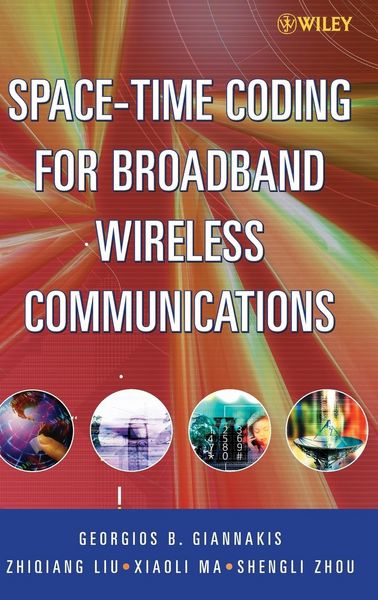
This cutting-edge text presents the state of the art in space-time (ST) coded multi-antenna systems operating over broadband wireless mobile channels, including an analysis of the most recent research findings. Specifically, the authors focus on the algorithms and performance analysis of ST coded systems at the physical layer.
This text is a complement to previously published works covering ST coded multi-antenna systems and offers several unique features and benefits:
* Systematic coverage of one of the most promising techniques that will support the next generation of broadband multimedia services
* Unified and comprehensive exposition on the design of ST codes, which places all the latest research in context
* Thorough designs of ST codes for the gamut of frequency-selective, time-selective, and doubly-selective MIMO channels that are encountered with broadband wireless mobile links, in addition to ST codes for flat fading MIMO channels
* Recent advances in complex field coded transmissions, sphere decoding algorithms, closed-loop ST coded systems, operation in the presence of colored interference, and multi-user, multi-antenna systems
* Development and analysis of novel algorithms and techniques that have arisen from recent research
Numerical and simulated examples are given for most of the algorithms presented in the text to help readers better visualize and understand how they work. In addition, the authors provide background information on wireless communications basics, diversity techniques, and capacity of MIMO channels, giving readers the necessary foundation to grasp all the key concepts and techniques presentedin the text.
This text will not only bring engineers, network designers, and graduate students in wireless communications up to date with the latest findings, it will also provide them with the latest applications.
This cutting-edge text presents the state of the art in space-time (ST) coded multi-antenna systems operating over broadband wireless mobile channels, including an analysis of the most recent research findings. Specifically, the authors focus on the algorithms and performance analysis of ST coded systems at the physical layer.
This text is a complement to previously published works covering ST coded multi-antenna systems and offers several unique features and benefits:
* Systematic coverage of one of the most promising techniques that will support the next generation of broadband multimedia services
* Unified and comprehensive exposition on the design of ST codes, which places all the latest research in context
* Thorough designs of ST codes for the gamut of frequency-selective, time-selective, and doubly-selective MIMO channels that are encountered with broadband wireless mobile links, in addition to ST codes for flat fading MIMO channels
* Recent advances in complex field coded transmissions, sphere decoding algorithms, closed-loop ST coded systems, operation in the presence of colored interference, and multi-user, multi-antenna systems
* Development and analysis of novel algorithms and techniques that have arisen from recent research
Numerical and simulated examples are given for most of the algorithms presented in the text to help readers better visualize and understand how they work. In addition, the authors provide background information on wireless communications basics, diversity techniques, and capacity of MIMO channels, giving readers the necessary foundation to grasp all the key concepts and techniques presentedin the text.
This text will not only bring engineers, network designers, and graduate students in wireless communications up to date with the latest findings, it will also provide them with the latest applications.
Noch keine Bewertungen vorhanden
Verfassen Sie die erste Bewertung zu diesem Artikel
Helfen Sie anderen Kundinnen und Kunden durch Ihre Meinung.
Kurze Frage zu unserer Seite
Vielen Dank für Ihr Feedback
Wir nutzen Ihr Feedback, um unsere Produktseiten zu verbessern. Bitte haben Sie Verständnis, dass wir Ihnen keine Rückmeldung geben können. Falls Sie Kontakt mit uns aufnehmen möchten, können Sie sich aber gerne an unseren Kund*innenservice wenden.
zum Kundenservice