• Produktbild: Linux - Unleashing the Workstation in Your PC
  • Produktbild: Linux - Unleashing the Workstation in Your PC

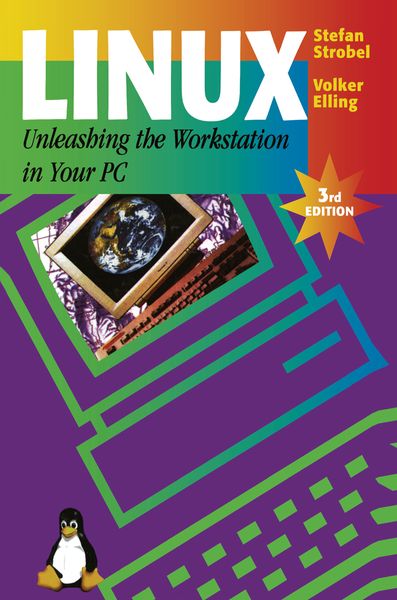
Linux - Unleashing the Workstation in Your PC Foreword by Jürgen Gulbins

49,99 €

inkl. gesetzl. MwSt., Versandkostenfrei


Beschreibung

Produktdetails

Einband

Taschenbuch

Erscheinungsdatum

06.05.1997

Verlag

Springer Us

Seitenzahl

608

Maße (L/B/H)

23,5/15,5/3,3 cm

Gewicht

824 g

Auflage

Third Edition 1997

Übersetzt von

R. Bach + weitere

Sprache

Englisch

ISBN

978-0-387-94880-5

Beschreibung

Rezension

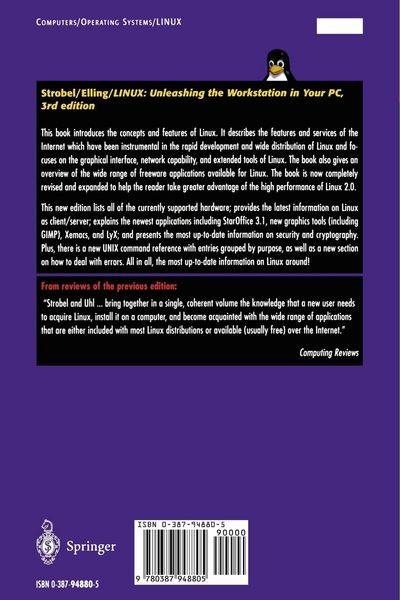
"Strobel and Uhl...bring together in a single, coherent volume the knowledge that a new user needs to acquire Linux, install it on a computer, and become acquainted with the wide range of applications that are either included with most Linux distributions or available (usually free) over the Internet." Computing Reviews

Produktdetails

Einband

Taschenbuch

Erscheinungsdatum

06.05.1997

Verlag

Springer Us

Seitenzahl

608

Maße (L/B/H)

23,5/15,5/3,3 cm

Gewicht

824 g

Auflage

Third Edition 1997

Übersetzt von

  • R. Bach
  • A. Derieg

Sprache

Englisch

ISBN

978-0-387-94880-5

Herstelleradresse

Springer-Verlag KG
Sachsenplatz 4-6
1201 Wien
AT

Email: GPSR Kontakt

Noch keine Bewertungen vorhanden

Verfassen Sie die erste Bewertung zu diesem Artikel

Helfen Sie anderen Kundinnen und Kunden durch Ihre Meinung.

Kundinnen und Kunden meinen

Bewertungen (0)

  • Produktbild: Linux - Unleashing the Workstation in Your PC
  • Produktbild: Linux - Unleashing the Workstation in Your PC
  • 1.1 Historical perspectives on Linux.- 1.2 Versions.- 1.3 Features.- 1.4 UNIX development and standards.- 1.5 The Free Software Foundation.- 1.6 An overview of Linux features.- Basics.- 2.1 Multi-user operation.- 2.2 Multitasking.- 2.3 Memory management.- 2.4 Shell model.- 2.5 File systems.- 2.6 Devices.- 2.7 Shells.- 2.8 Search patterns.- 2.9 Daemons.- 2.10 Overview of commands.- Linux features.- 3.1 Virtual consoles.- 3.2 Linux file systems.- 3.3 Data exchange.- 3.4 Loadable Modules.- 3.5 Sound.- 3.6 Extended commands.- 3.7 New features in Linux 2.0.- 3.8 The pros and cons of upgrading.- Emulators.- 4.1 DOS emulator.- 4.2 WINE.- 4.3 iBCS2 emulator.- 4.4 HP48 emulator (X48).- 4.5 IBM 3270 emulator.- 4.6 Macintosh emulator.- Installation.- 5.1 Linux distributions.- 5.2 Sources.- 5.3 Hardware.- 5.4 Installation.- 5.5 Boot manager.- Configuration.- 6.1 General configuration 1l.- 6.2 Kernel.- 6.3 Daemons.- 6.4 Serial login.- 6.5 Fax.- 6.6 Metadevices and RAID.- 6.7 Streamers and CD-ROM drives.- Administration.- 7.1 The administrator.- 7.2 Booting.- 7.3 Shutdown.- 7.4 The Linux directory tree.- 7.5 Users and groups.- 7.6 Shells.- 7.7 User information.- 7.8 Backups.- 7.9 File system management.- 7.10 Upgrades.- 7.11 Installation of software packages.- 7.12 Creating boot diskettes.- X Window System.- 8.1 Features.- 8.2 Structure.- 8.3 X resources.- 8.4 Window managers.- 8.5 Toolkits.- 8.6 X11 server.- 8.7 Linux as X terminal.- 8.8 X11 configuration.- 8.9 Configuration of X applications.- Networking.- 9.1 Network hardware.- 9.2 TCP/IP.- 9.3 IP.- 9.4 IP aliasing.- 9.5 Serial connections.- 9.6 PPP.- 9.7 Parallel connection.- 9.8 ISDN.- 9.9 TCP and UDP.- 9.10 Host names.- 9.11 UUCP.- 9.12 RPC.- 9.13 NIS.- 9.14 NFS.- 9.15 LAN manager.- 9.16 PC/NFS.- 9.17 ISODE.- 9.18 Novell Netware.- Network applications.- 10.1 Network daemons.- 10.2 Internet daemon (inetd).- 10.3 Telnet.- 10.4 Secure shell.- 10.5 FTP.- 10.6 Archie.- 10.7 Berkeley r-utilities.- 10.8 Mail.- 10.9 News.- 10.10 IRC.- 10.11 Gopher.- 10.12 World Wide Web.- 10.13 Network management.- Support and help.- 11.1 man, xman.- 11.2 Info.- 11.3 Newsgroups.- 11.4 FAQs and HOWTOs.- 11.5 WWW.- 11.6 Mailing lists.- 11.7 Other documents.- 11.8 Other sources.- Applications.- 12.1 Desktop environment.- 12.2 StarOffice.- 12.3 Editors.- 12.4 Graphic programs.- 12.5 Word processing.- 12.6 Multimedia environment Andrew.- 12.7 Databases.- 12.8 Java.- 12.9 Mathematical applications.- 12.10 Simulations.- 12.11 Games and recreation.- GNU Emacs.- 13.1 Overview.- 13.2 Basic terms.- 13.3 Operation.- 13.4 Documentation and help.- 13.5 Modes.- 13.6 Packages and enhancements.- 13.7 Emacs Lisp.- 13.8 Configuration.- Languages and tools.- 14.1 Languages.- 14.2 C compilers.- 14.3 Pascal, Fortran, Simula, and Modula-2.- 14.4 Lisp and Prolog.- 14.5 Ada.- 14.6 Tel.- 14.7 Interface builders.- 14.8 Metacard.- 14.9 awk, gawk.- 14.10 Perl.- 14.11 Editors.- 14.12 GNU Debugger (GDB).- 14.13 Make utility.- 14.14 Imake.- 14.15 RCS.- 14.16 xwpe.- 14.17 Example.- Linux and security.- 15.1 Cryptology.- 15.2 UNIX system security.- 15.3 Information sources.- Linux command reference.- 16.1 X-Windows.- 16.2 System and processes.- 16.3 User and group management.- 16.4 File and directory management.- 16.5 Terminal.- 16.6 Viewers and editors.- 16.7 Archiving and compression.- 16.8 Disk management and file systems.- 16.9 On-Line Manual.- 16.10 Development and installation.- 16.11 File processing.- 16.12 Text formatting.- 16.13 Time.- 16.14 Internet and communication.- 16.15 Shells and shell tools.- 16.16 Printing.- 16.17 Miscellaneous.- Error and error localization under Linux.- 17.1 Where to find error messages.- 17.2 Some errors and their possible causes.- 17.3 Frequent error messages and possible causes.- 18.1 Contents of the proc file system.- 18.2 Overview of /etc files.- 18.3 Overview of /etc directories.- 18.4 Hidden files in home directories.- 18.5 List of known SunSite mirrors.