• Produktbild: Brewing Microbiology
  • Produktbild: Brewing Microbiology
- 13%

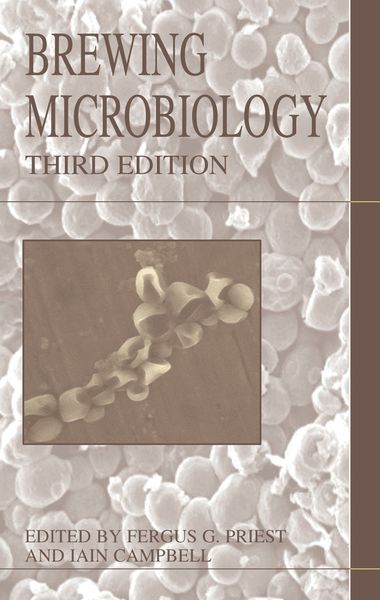
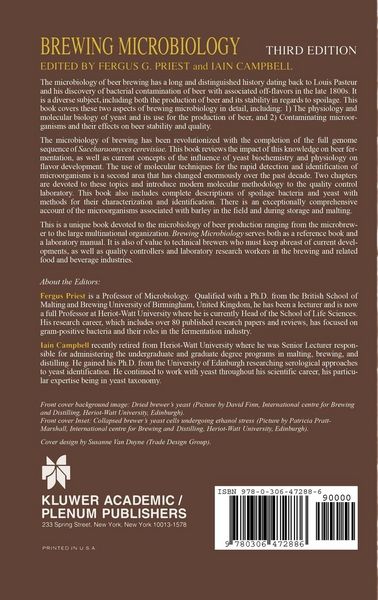
Brewing Microbiology

13% sparen

213,99 € UVP 246,09 €

inkl. gesetzl. MwSt., Versandkostenfrei


Beschreibung

Produktdetails

Einband

Gebundene Ausgabe

Erscheinungsdatum

30.11.2002

Abbildungen

XII, 9 illus., schwarz-weiss Illustrationen

Herausgeber

F.G. Priest + weitere

Verlag

Springer Us

Seitenzahl

399

Maße (L/B/H)

24/16,6/3 cm

Gewicht

830 g

Auflage

3. Auflage

Sprache

Englisch

ISBN

978-0-306-47288-6

Beschreibung

Produktdetails

Einband

Gebundene Ausgabe

Erscheinungsdatum

30.11.2002

Abbildungen

XII, 9 illus., schwarz-weiss Illustrationen

Herausgeber

Verlag

Springer Us

Seitenzahl

399

Maße (L/B/H)

24/16,6/3 cm

Gewicht

830 g

Auflage

3. Auflage

Sprache

Englisch

ISBN

978-0-306-47288-6

Herstelleradresse

Libri GmbH
Europaallee 1
36244 Bad Hersfeld
DE

Email: gpsr@libri.de

Noch keine Bewertungen vorhanden

Verfassen Sie die erste Bewertung zu diesem Artikel

Helfen Sie anderen Kundinnen und Kunden durch Ihre Meinung.

Kundinnen und Kunden meinen

Bewertungen (0)

  • Produktbild: Brewing Microbiology
  • Produktbild: Brewing Microbiology
  • 1 Microbiological aspects of brewing.- Malting.- Brewing, mashing, and hop boiling.- Fermentation.- Postfermentation treatments.- Concluding remarks.- References.- 2 The biochemistry and physiology of yeast growth.- The cell cycle.- The growth and fermentation cycle.- Cell composition, nutrition, and general metabolism.- Energy and intermediary metabolism.- Yeast biochemistry and beer production.- Summary.- References.- 3 Yeast genetics.- Genetic features of Saccharomyces cerevisiae.- The need for new brewing yeasts.- Genetic techniques.- Application of recombinant DNA methods to brewing yeasts.- Molecular biological approaches to yeast differentiation.- The nature of the brewing yeast genome.- The commercial use of genetically modified brewing yeasts.- Conclusions.- Acknowledgment.- References.- 4 The microbiota of barley and malt.- The microbiota of barley.- The microbiota of malt.- Effects of microorganisms on malting.- Effects of the microbiota on beer and distilled spirit.- Health hazards.- Assessment of mold contamination.- References.- 5 Gram-positive brewery bacteria.- Lactic acid bacteria.- Lactobacillus.- Pediococcus.- Leuconostoc.- Homofermentative cocci.- Kocuria, Micrococcus and Staphylococcus.- Endospore-forming bacteria.- Identification of genera of Gram-positive bacteria of brewery origin.- Concluding remarks.- References.- 6 Gram-negative brewery bacteria.- Acetic acidbacteria.- Enterobacteriaceae.- Zymomonas.- Anaerobic Gram-negative rods.- Megasphaera.- Miscellaneous non-fermentative bacteria.- Detection, enumeration, and isolation.- Conclusions.- References.- 7 Wild yeasts in brewing and distilling.- Systematics of yeasts.- Properties for identification of yeasts.- Detection of wild yeasts.- Identification of wild yeasts.- Effects of wild yeasts in the brewery.- Elimination of wild yeasts.- References.- 8 Rapid detection and identification of microbial spoilage.- Impedimetric techniques (conductance, capacitance).- Microcalorimetry.- Turbidometry.- How cytometry.- ATP bioluminescence.- Microcolony method.- Direct epiflourescence filter technique (DEFT).- Chemscan.- Protein fingerprinting by polyacrylamide gel electrophoresis.- Karyotyping (chromosome fingerprinting).- Immunoanalysis.- Hybridization using DNA probes.- Polymerase chain reaction.- Random amplified polymorphic DNA PCR.- Summary.- Acknowledgments.- References.- 9 Rapid identification of microorganisms.- What is identification?.- Approaches to identification.- Nucleic acid-based identification.- Techniques for examining proteins.- Methods that examine aspects of cell composition.- Techniques for studying morphology and behavior.- Concluding remarks.- Acknowledgments.- References.- 10 Microbiology and sanitation in U.S. microbrewies.- The raw materials.- The process and product.- Beer contact surfaces.- Concluding remarks.- References.- 11 Cleaning and disinfection in the brewing industry.- Definitions.- Standards required in a brewery.- Cleaning methods available.- Soil composition.- Process of detergency.- Chemistry of detergents.- Caustic and alkaline detergents.- Sequestrants.- Acids.- Surface-active agents.- Disinfectants and sanitizers used in breweries.- Oxidizing disinfectants.- Nonoxidizing disinfectants.- Water treatment.- Steam.- Summary.- References.- 12 Microbiological methods in brewing analysis.- Microbiological analysis of raw materials.- Yeast.- Wort and fermentation.- Sterility of plant.- Beer.- Conclusions.- References.