
• Produktbild: Science, Technology, and Society
  • Produktbild: Science, Technology, and Society
Band 6 - 11%

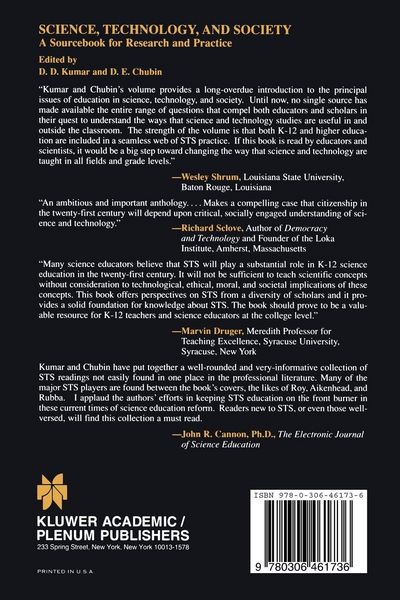
Science, Technology, and Society Education A Sourcebook on Research and Practice

11% sparen

84,99 € UVP 96,29 €

inkl. gesetzl. MwSt., Versandkostenfrei


Beschreibung

Produktdetails

Einband

Taschenbuch

Erscheinungsdatum

30.04.2000

Herausgeber

David D. Kumar + weitere

Verlag

Springer Netherland

Seitenzahl

308

Maße (L/B/H)

22,9/15,2/1,8 cm

Gewicht

471 g

Auflage

Softcover reprint of the original 1st ed. 2000

Sprache

Englisch

ISBN

978-0-306-46173-6

Beschreibung

Produktdetails

Einband

Taschenbuch

Erscheinungsdatum

30.04.2000

Herausgeber

Verlag

Springer Netherland

Seitenzahl

308

Maße (L/B/H)

22,9/15,2/1,8 cm

Gewicht

471 g

Auflage

Softcover reprint of the original 1st ed. 2000

Sprache

Englisch

ISBN

978-0-306-46173-6

Herstelleradresse

Springer-Verlag KG
Sachsenplatz 4-6
1201 Wien
AT

Email: GPSR Kontakt

Noch keine Bewertungen vorhanden

Verfassen Sie die erste Bewertung zu diesem Artikel

Helfen Sie anderen Kundinnen und Kunden durch Ihre Meinung.

Kundinnen und Kunden meinen

Bewertungen (0)

  • Produktbild: Science, Technology, and Society
  • Produktbild: Science, Technology, and Society
  • Why STS?.- References.- 1. Real Science Education: Replacing “PCB” with S(cience) through-STS throughout All Levels of K$#x2014;12: “Materials” as One Approach.- The Old and New Paradigms for Learning “Science”.- The Real Science Approach Based on the S—STS Paradigm.- References.- 2. The Development of Civic Scientific Literacy in the United States.- The Conceptualization and Measurement of Civic Scientific Literacy.- The Measurement of Civic Scientific Literacy.- The Development of Civic Scientific Literacy.- Conclusion.- References.- 3. STS Science in Canada: From Policy to Student Evaluation.- Science Education in Canada.- Curriculum Policy and Deliberation.- Classroom Materials and Research and Development.- Teacher Understanding and Implementation.- Student Learning and Instruction—Assessment.- Summary and Implications.- References.- 4. Trade-offs, Risks, and Regulations in Science and Technology: Implications for STS Education.- STS and the Endangered Species Act.- STS and Corporate Average Fuel Economy (CAFE) Standards.- STS and Airbags.- Implications for STS Education.- References.- 5. Thoughts about the Evaluation of STS: More Questions than Answers.- Important Issues in STS that Affect Evaluation.- Suggestions for Evaluation.- Summary.- References.- 6. Science, Technology, Society, and the Environment: Scientific Literacy for the Future.- Topics Reviewed by the Independent Commission and Findings.- Recommendations.- Conclusion.- References.- 7. Marginalization of Technology within the STS Movement in American K—12 Education.- A Matter of Definition.- Technological Literacy.- The K—12 STS Movement in America.- STS and K—12 Science Education.- STS in Technological Education.- The Perennial Challenges of Educational Reform.- Conclusion.-Acknowledgments.- References.- 8. Student Understanding of Global Warming: Implications for STS Education beyond 2000.- Scientific Literacy as a Foundation for STS Education.- The STS Leadership Institute.- The Science of Global Warming.- Discussion.- Implications for the New Millennium.- References.- 9. STS Education for Knowledge Professionals.- The Emergence of Knowledge Professionals.- Who are Knowledge Professionals?.- At Work with Knowledge Professionals.- Knowledge Professionals and STS.- STS Graduate Education for Knowledge.- Professionals.- From Glimpsing One Tree to Surveying a Forest.- Some Conclusions.- References.- 10. Reculturing Science: Politics, Policy, and Promises to Keep.- Making Changes.- Fallacy of the Market.- Calling versus Recruiting.- Images of Careers.- The New Scientist.- Institutions that Matter.- Missions and Dilemmas.- Professionalized Scrutiny of Research and Development.- Enterprise as a System.- Prospects for a New Compact.- References.- 11. Trends and Opportunities in Science and Technology Studies: A View from the National Science Foundation.- Orientation.- The National Science Foundation.- Origins of STS.- The Organizational Culture of the National Science Foundation.- How STS Decides What to Fund.- What Lies Ahead?.- Conclusion.- References.