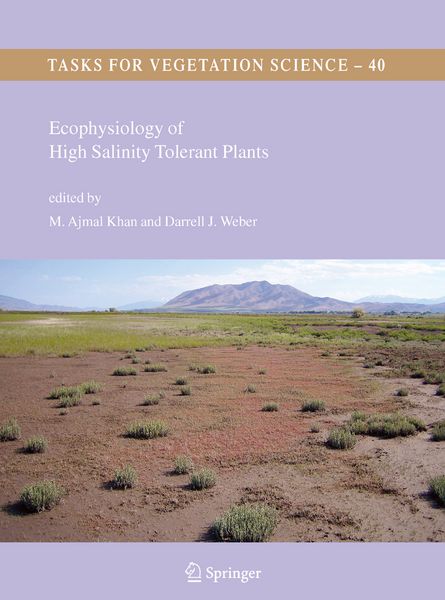
Produktbild: Ecophysiology of High Salinity Tolerant Plants
Band 40 - 12%

Ecophysiology of High Salinity Tolerant Plants

12% sparen

187,99 € UVP 213,99 €

inkl. gesetzl. MwSt., Versandkostenfrei


Beschreibung

Produktdetails

Einband

Gebundene Ausgabe

Erscheinungsdatum

09.12.2005

Herausgeber

M. Ajmal Khan + weitere

Verlag

Springer Netherland

Seitenzahl

399

Maße (L/B/H)

26/18,3/2,8 cm

Gewicht

990 g

Auflage

2006

Sprache

Englisch

ISBN

978-1-4020-4017-7

Beschreibung

Produktdetails

Einband

Gebundene Ausgabe

Erscheinungsdatum

09.12.2005

Herausgeber

Verlag

Springer Netherland

Seitenzahl

399

Maße (L/B/H)

26/18,3/2,8 cm

Gewicht

990 g

Auflage

2006

Sprache

Englisch

ISBN

978-1-4020-4017-7

Herstelleradresse

Springer-Verlag KG
Sachsenplatz 4-6
1201 Wien
AT

Email: GPSR Kontakt

Noch keine Bewertungen vorhanden

Verfassen Sie die erste Bewertung zu diesem Artikel

Helfen Sie anderen Kundinnen und Kunden durch Ihre Meinung.

Kundinnen und Kunden meinen

Bewertungen (0)

  • Produktbild: Ecophysiology of High Salinity Tolerant Plants
  • Contributing authors.- Preface.- Foreword.-
    1. How salts of sodium, potassium and sulfate affect the germination and early growth of Atriplex acanthocarpa (Chenopodiaceae); B. Gaylord, T. Egan.-
    2. Halophyte eed germination; M.A. Khan, B. Gul.-
    3. Salt tolerance of some potential forage grasses of Cholistan desert of Pakistan; M. Ashraf et al.-
    4. Variability of fruit and seed-oil characteristics in Tunisian accessions of the halophyte Cakile maritima (Brassicaceae); M.A. Ghars et al.-
    5. Salt tolerant plants from the great basin region of the United States; D.J. Weber, J. Hanks.-
    6. Role of calcium in alleviating salinity effects in coastal halophytes; B. Gul, M.A. Khan.-
    7. Calorespirometric metabolism and growth in response to seasonal changes in temperature and salt; B.N. Smith et al.-
    8. Evaluation of anthocyanin contents under salinity (NaCl) stress in Bellis perennis L.; R.A. Khavari-Nejad et al.-
    9. A comparative study on responses of growth and solute composition in halophytes Suaeda salsa and Limonium bicolor to salinity; X. Liu et al.-
    10. Alleviation of salinity stress of some Brassica species; M. Özturk et al.-
    11. Saline tolerance physiology in grasses; K.B. Marcum.-
    12. Localization of potential ion transport pathways in thesalt glands of the halophyte Sporobolus virginicus; Y. Naidoo, G. Naidoo.-
    13. Cellular responses to salinity of two coastal halophytes with different whole plant tolerance: Kosteletzkya virginica (L.) Presl.and Sporobolus virginicus (L.) Kunth; X. Li et al.-
    14. Eco-physiological studies on Indian desert plants: effect of salt on antioxidant defense systems in Ziziphus spp.; N. Sankhla et al.-
    15. Sabkha edge vegetation of coastal and inland sabkhat in Saudi Arabia; H.-J. Barth.-
    16. Analysis of the soil conditions in salt grass (Distichlis spicata (L.) Greene) wild populations in semiarid coastal zone of Mexico; A. Escobar-Hernández et al.-
    17. Comparative salt tolerance of perennial grasses; S. Gulzar, M.A. Khan.-
    18. Commercial application of halophytic turfs for golf and landscape developments utilizing hyper-saline irrigation; M. DePew, P.H. Tillman.-
    19. Salt tolerance of floriculture crops; C.T. Carter, C.M. Grieve.-
    20. Utilization of salt-affected soils by growing some Acacia species; M.Y. Ashraf et al.-
    21. Soil remediation via salt-conduction and the hypotheses of halosynthesis and photoprotection; N.P. Yensen, K.Y. Biel.-22. Mechanism of cash crop halophytes to maintain yields and reclaim saline soils in arid areas; H.-W. Koyro et al.-
    23. Halophyte uses for the twenty-first century; N.P. Yensen.-
    24. Halophyte research and development: What needs to be done next? B. Böer.