Beschreibung
Produktdetails
Einband
Taschenbuch
Erscheinungsdatum
01.04.2008
Verlag
Open University PressSeitenzahl
334
Maße (L/B/H)
23,9/17,3/1,8 cm
Gewicht
590 g
Sprache
Englisch
ISBN
978-0-335-22140-0
Tina Patel, Liverpool John Moores University
"This book provides an essential tool for undergraduate students embarking upon their own research projects in Criminology. It provides clear and informative guidance on a range of research methods and designs to assist students in their own criminological endeavours."
Jacki Tapley, University of Portsmouth
- How do criminologists go about studying crime and its consequences?
- How are programmes for offenders and communities evaluated?
- How can you collect and analyse criminological material?
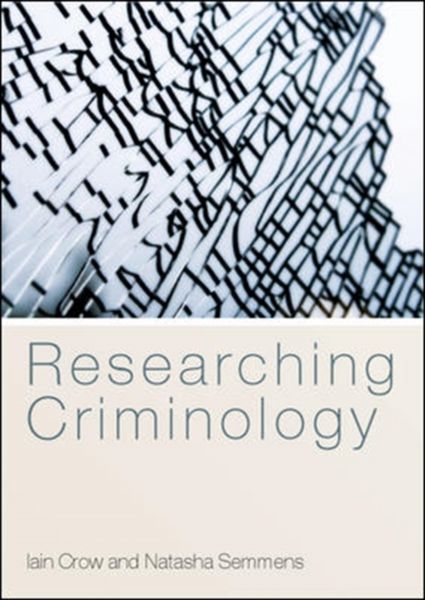
Designed especially for students on criminology and criminal justice courses, and professionals working in the field, Researching Criminology emphasises the importance of research as an integrated process. It looks at the ways in which a mixture of investigative methods can be used to analyze a criminological question.
Written by two experienced researchers and lecturers Researching Criminology is a comprehensive introduction to the aims, principles and methods of doing criminological research. The book covers all the key topics that you will encounter when researching crime. Individual chapters include material on:
- The research process
- Principles of researching criminology
- How to design criminological research
- Evaluation research
- Researching ethically
- A glossary of essential key concepts
Kundinnen und Kunden meinen
Verfassen Sie die erste Bewertung zu diesem Artikel
Helfen Sie anderen Kund*innen durch Ihre Meinung
Kurze Frage zu unserer Seite
Vielen Dank für Ihr Feedback
Wir nutzen Ihr Feedback, um unsere Produktseiten zu verbessern. Bitte haben Sie Verständnis, dass wir Ihnen keine Rückmeldung geben können. Falls Sie Kontakt mit uns aufnehmen möchten, können Sie sich aber gerne an unseren Kund*innenservice wenden.
zum Kundenservice