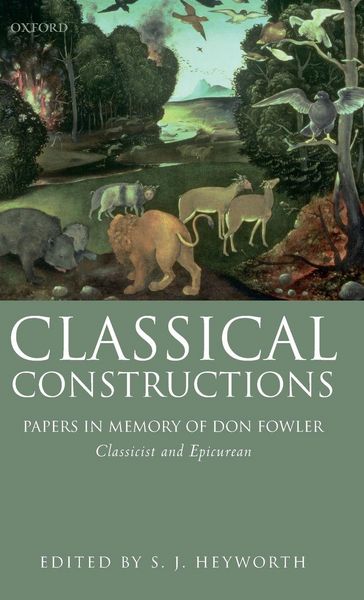
Classical Constructions Papers in Memory of Don Fowler, Classicist and Epicurean
-
- Englisch ausgewählt
189,99 €
inkl. gesetzl. MwSt.,
Beschreibung
Produktdetails
Einband
Gebundene Ausgabe
Erscheinungsdatum
01.11.2007
Abbildungen
Frontispiece, 4 halftones
Herausgeber
Heyworth S. J. + weitereVerlag
Oxford AcademicSeitenzahl
386
Maße (L/B/H)
22,2/14,5/2,6 cm
Gewicht
674 g
Sprache
Englisch
ISBN
978-0-19-921803-5
Classical Constructions is a collection of ground-breaking and scholarly papers on Latin literature by a number of distinguished Classicists, produced in memory of Don Fowler, who died in 1999 at the age of 46. The authors were all inspired by the desire to commemorate a beloved colleague and friend and have produced papers of great freshness and insight. The essays, including that by Don Fowler himself, are much concerned with the reception of the classical world, extending into the realms of modern philosophy, art history, and cultural studies. There are fundamental studies of Horace's style and Ovid's exile. The volume is unusual in the informality of the style of a number of pieces, and the openness with which the contributors have reminisced about the honorand and reflected on his early death.
Noch keine Bewertungen vorhanden
Verfassen Sie die erste Bewertung zu diesem Artikel
Helfen Sie anderen Kundinnen und Kunden durch Ihre Meinung.
Kurze Frage zu unserer Seite
Vielen Dank für Ihr Feedback
Wir nutzen Ihr Feedback, um unsere Produktseiten zu verbessern. Bitte haben Sie Verständnis, dass wir Ihnen keine Rückmeldung geben können. Falls Sie Kontakt mit uns aufnehmen möchten, können Sie sich aber gerne an unseren Kund*innenservice wenden.
zum Kundenservice