• Produktbild: Experience Sampling Method
  • Produktbild: Experience Sampling Method

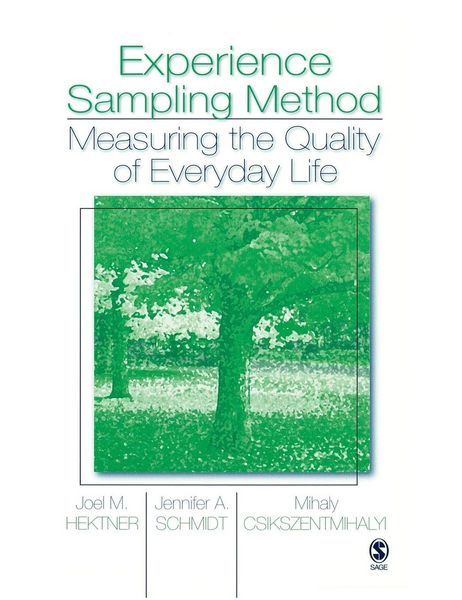
Experience Sampling Method Measuring the Quality of Everyday Life

245,99 €

inkl. gesetzl. MwSt., Versandkostenfrei


Beschreibung

Produktdetails

Einband

Gebundene Ausgabe

Erscheinungsdatum

18.08.2006

Verlag

Sage Publications

Seitenzahl

368

Maße (L/B/H)

24,1/19,6/2,4 cm

Gewicht

870 g

Sprache

Englisch

ISBN

978-1-4129-4923-1

Beschreibung

Produktdetails

Einband

Gebundene Ausgabe

Erscheinungsdatum

18.08.2006

Verlag

Sage Publications

Seitenzahl

368

Maße (L/B/H)

24,1/19,6/2,4 cm

Gewicht

870 g

Sprache

Englisch

ISBN

978-1-4129-4923-1

Noch keine Bewertungen vorhanden

Verfassen Sie die erste Bewertung zu diesem Artikel

Helfen Sie anderen Kundinnen und Kunden durch Ihre Meinung.

Kundinnen und Kunden meinen

Bewertungen (0)

  • Produktbild: Experience Sampling Method
  • Produktbild: Experience Sampling Method
  • List of Tables and Figures
    Acknowledgments
    Part I: The Origins of ESM
    Chapter 1: Epistemological Foundations for the Measurement of Experience
    A Systematic Phenomenology
    The Experience Sampling Method
    A Brief History
    How Trustworthy Are Subjective Self-Reports?
    What Can We Learn From ESM?
    Chapter 2: Theoretical Foundations of ESM
    Biology, Culture, and Daily Behavior
    Subjective Experience in Context: The Interplay of Psychological Processes and Cognitive Functions
    Interaction of Individuals and Environments
    Experience Fluctuations, Well-Being, and Development
    A Theoretical Compass for Exploring Experience
    Part II: How to Measure the Quality of Everyday Life
    Chapter 3: Collecting the Data
    Designing a Study Using ESM
    Equipment and Signaling Schedules
    Designing the Form
    Other Design Decisions
    Implementing the Study
    Documentation
    Chapter 4: Dealing With the Data: Coding, Entry, Cleaning, and Data Management
    Developing a Codebook
    Coding the External Coordinates of Experience
    Conding the Internal Coordinates of Experience
    What to Do With the Codes Once They Are Developed: Physically Coding and Entering the Data
    Setup, Cleaning, and Manipulation of Data Files
    Response-Level Data and Person-Level Data
    Postentry Data Manipulation
    Data File Management and Documentation
    Chapter 5: Types of Analyses
    Qualitative Approaches
    Graphic and Numeric Descriptive Information
    Planning for Statistical Analyses
    OLS Statistical Techniques
    Multilevel and Other Complex Statistical Techniques
    Chapter 6: Psychometrics of ESM Data
    Validity of Method
    Validity of ESM Measurements
    Reliability of ESM Measurements
    Part III: Uses of ESM in Social Science Research
    Chapter 7: Samples of Experience
    The Who, What, Where, When, and How of Daily Experiences
    Quality of Experience in Selected Activities
    Quality of Experience of Selected Groups of People
    Emotions, Well-Being, and Flow
    Chapter 8: The Experience of Males and Females
    Differences in Activities
    Differences in Companionship
    Similiarities and Differences in Emotional Experience
    Other Gender Differences in Adolescence
    Chapter 9: The Experience of Family Life
    Methodological Concerns and Variations
    The Couple Relationship
    The Arrival of the First Child
    Juggling Work and Family Roles
    The Adolescent¿s Experience of Family
    Transmission of Emotions Between Family Members
    Comparisons Between Families: Optimal Conditions for Adolescent Development
    Chapter 10: The Experience of Work
    Methodological Concerns and Variations
    Time and Work
    The Quality of Experience at Work: General Trends
    The Quality of Experience Across Workers
    The Quality of Experience Across Work Activities
    The Intersection of Work and Family
    The Experience of Unemployment
    Adolescent Work
    Chapter 11: Examining Cross-Cultural Differences
    Methodological Concerns and Variations
    Culture and Time Use
    Cross-Cultural Variation in General Affective Experience
    Culture and Subjective Experience in Various Activities
    Cross-Cultural Examination of Flow
    Studies of American Subcultures
    Chapter 12: Educational Applications
    Methodological Concerns and Variations
    Time Use and Structure of Classrooms
    The Quality of Students¿ Classroom Experiences
    Comparing Students¿ Classroom Experiences
    After-School Programs
    Studies of Adult Learners
    The Experience of Teachers
    Chapter 13: Clinical Applications
    Methodological Concerns and Variations
    Use of ESM for Describing and Contextualizing Experiences of Disorder
    Use of ESM in Therapy and in Treatment Evaluation
    Concluding Thoughts
    Ten Major Issues ESM Illuminates
    Appendix A: Sample ESM Data Collection Forms (ESFs)
    Appendix B: ESM Coding Scheme Used in the Sloan Study of Youth and Social Development
    References
    Index
    About the Authors