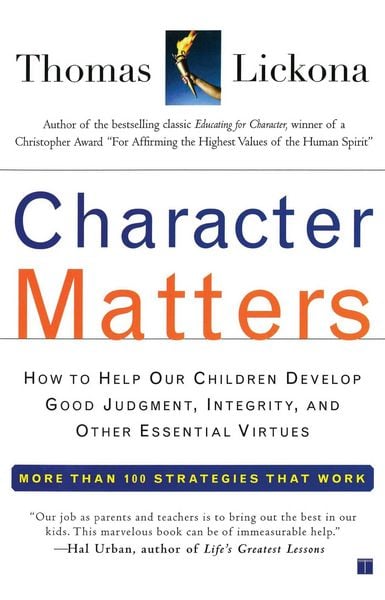
Produktbild: Character Matters

Character Matters How to Help Our Children Develop Good Judgment, Integrity, and Other Essential Virtues

19,99 €

inkl. gesetzl. MwSt., Versandkostenfrei


Beschreibung

Produktdetails

Einband

Taschenbuch

Erscheinungsdatum

10.02.2004

Verlag

Simon & Schuster N.Y.

Seitenzahl

336

Maße (L/B/H)

21,5/13,9/2,1 cm

Gewicht

299 g

Sprache

Englisch

ISBN

978-0-7432-4507-4

Beschreibung

Produktdetails

Einband

Taschenbuch

Erscheinungsdatum

10.02.2004

Verlag

Simon & Schuster N.Y.

Seitenzahl

336

Maße (L/B/H)

21,5/13,9/2,1 cm

Gewicht

299 g

Sprache

Englisch

ISBN

978-0-7432-4507-4

Herstelleradresse

Libri GmbH
Europaallee 1
36244 Bad Hersfeld
DE

Email: gpsr@libri.de

Noch keine Bewertungen vorhanden

Verfassen Sie die erste Bewertung zu diesem Artikel

Helfen Sie anderen Kundinnen und Kunden durch Ihre Meinung.

Kundinnen und Kunden meinen

Bewertungen (0)

Die Leseprobe wird geladen.
  • Produktbild: Character Matters

  • Contents

    Introduction

    Part One -- Why Character Matters

    Chapter 1: Why Character Matters

    The Right Stuff

    The Content of Our Character

    Ten Essential Virtues

    The Two Sides of Character

    What Is the Current Condition of Our Character?

    2002 Report Card on American Youth Ethics

    Character in the Face of Temptation: The Lost Wallet Experiment

    What Motivates Honesty?

    Character in the Face of Evil: The Rescuers Study

    What Motivated Rescue?

    The Roots of Caring

    Character as Transformation of Moral Self

    The Character of Our Democracy

    Sex and Character

    The National Character Education Movement

    Part Two -- Create Families of Character

    Chapter 2: Raise Children of Character

    Make Character Development a High Priority

    Be an Authoritative Parent

    Love Children

    Teach by Example

    Manage the Moral Environment

    Use Direct Teaching to Form Conscience and Habits

    Teach Good Judgment

    Discipline Wisely

    Solve Conflicts Fairly

    Provide Opportunities to Practice the Virtues

    Foster Spiritual Development

    Chapter 3: Build a Strong Home-School Partnership

    Affirm the Family as the Primary Character Educator

    Expect Parents to Participate

    Provide Incentives for Parent Participation

    Provide Programs on Parenting -- and Work to Increase the Turnout

    Get the Program to the Parents

    Assign "Family Homework"

    Form Parent Peer Support Groups

    Involve Parents in Planning the Character Education Program

    Establish an Ongoing Forum for Parents

    Form a Parents' Character Education Committee

    Make a Moral Compact with Parents

    Renew the Compact

    Extend the Compact to Discipline

    Extend the Compact to Sports and Other Co-curricular Activities

    Extend the Compact to Combating the Effects of the Media

    Be Responsive to Parental Complaints

    Respect the Primacy of Parental Rights Regarding Sex Education

    Increase the Flow of All Positive Communication Between School and Home

    Let Parents Know What Work Is Expected and Send Home Regular Reports

    Provide Family Support Centers and Community Schools

    Chapter 4: Talk to Kids About Sex, Love, and Character

    Sex and the Human Heart

    A Sexually Toxic Environment

    Be Clear About What Kids Need in Order to Avoid Premature Sex

    Point Out the Positive Trends

    Help Kids Understand Why Some Young People Get Sexually Involved

    Talk About What Counts as "Sex"

    Teach Kids Nonsexual Ways to Be Intimate

    Offer a Vision

    Talk About the Emotional Dangers of Uncommitted Sex

    Discuss the Rewards of Waiting

    Talk About Tough Issues

    Implement Character-Based Sex Education in Schools

    Part Three -- Create Classrooms of Character

    Chapter 5: Build Bonds and Model Character

    Teach as if Relationships Matter

    Use the Power of a Handshake

    Get to Know Students as Individuals

    Use Bonding to Improve Behavior

    Use the Power of Example

    Use a Self-Inventory to Focus on Role Modeling

    Invite Guest Speakers Who Are Positive Role Models

    What the Research Shows

    Chapter 6: Teach Academics and Character at the Same Time

    "If We Do Character Education, Will Academic Learning Improve?"

    Name the Virtues Needed to Be a Good Student

    Teach as if Purpose Matters

    Teach as if Excellence Matters

    Teach as if Integrity Matters

    Teach as if Students Can Take Responsibility for Their Learning

    Use an Instructional Process That Makes Character-Building Part of Every Lesson

    Manage the Classroom So That Character Matters

    Teach Curriculum Content as if Character Matters

    Use a Schoolwide Curriculum That Teaches Moral and Intellectual Virtues

    Structure Discussion as if Character Matters

    Teach as if Truth Matters

    Teach with a Commitment to Balance

    Model Balance and Fairness in Dealing with Controversial Issues

    Teach as if Justice Matters

    Chapter 7: Practice Character-Based Discipline

    Share the Agenda

    Hold Students Accountable

    Teach Principles of Responsibility

    Involve Students in Generating the Rules

    Teach the Golden Rule

    Share the Plan with Parents
    Practice Procedures

    Use the Language of Virtue

    Help Students Learn from Mistakes

    Have Students Make a Behavior Improvement Plan

    Discuss Why a Behavior Was Wrong

    Use Time-out Effectively

    Design Detention That Builds Character

    Teach Restitution

    Have Kids Help Each Other

    Prepare for a "Guest Teacher"

    Give a Difficult Child Responsibility

    Design a "Tough Love" Program for Difficult Students

    Chapter 8: Teach Manners

    Get Kids to Think About Why Manners Matter

    Teach the Hello-Good-bye Rule

    Teach Alphabet Manners

    Implement a Manners Curriculum

    Chapter 9: Prevent Peer Cruelty and Promote Kindness

    Begin with Character-Based Discipline

    Create a Caring School Community

    Implement an Effective Anti-Bullying Program

    Get Students to Take Responsibility for Stopping Peer Cruelty

    Build Classroom Community

    Foster Friendship

    Do "Anonymous Compliments"

    Implement Quality Cooperative Learning

    Teach Empathy Through Children's Literature

    Have Children with Disabilities Teach Their Peers

    Use the Seven E's to Teach Caring

    Use the Power of a Pledge

    0 Have Kids Keep a Good Deeds Journal

    Celebrate Kindness

    Have Peers Recognize Peers

    Use a Class Meeting to Discuss Bullying

    Build Bonds Through Buddy Classes

    Create "School Families"

    Implement Advisory Groups

    Create a Safe and Respectful School Bus

    Chapter 10: Help Kids (and Adults) Take Responsibility for Building Their Own Characters

    Teach Why Character Matters

    Teach "Nobody Can Build Your Character for You"

    Teach "We Create Our Character by the Choices We Make"

    Study Persons of Character

    Have Students Do Character Interviews

    Have Students Assess Their Own Character

    Teach Daily Goal Setting

    Teach Kids to Make "Goal Strips"

    Help Kids Connect the Virtues with Life

    Assess "Levels of Responsibility"

    Use Character Quotes to Help Kids Set Goals

    Do a Goal-Setting Bulletin Board

    Have Students Set 100 Goals

    Have Students Develop a Portfolio

    Have Students Write a Mission Statement

    Enable Students to Reflect on Life's Largest Questions

    Part Four -- Create Schools of Character

    Chapter 11: Make Your School a School of Character

    Create a Touchstone

    Have a Character-Based Motto
    Seek the Principal's Support for Making Character a Priority

    Form the Leadership Group(s)

    Develop a Knowledge Base

    Introduce the Concept of Character Education to the Entire Staff

    Consider "What Sort of Persons Do We Want Our Students to Become?"

    Consider "What Will Character Education Mean for Me?"

    Consider "What Will Character Education Look Like If We Do It Schoolwide?"

    Analyze the Moral and Intellectual Culture of the School

    Choose Two Priorities for Improving the School Culture

    Ask "Should We Commit to Becoming a School of Character?"

    Plan a Quality Character Education Program

    Choose an Organizing Strategy for Promoting the Virtues

    Make Assessment Part of the Plan

    Build a Strong Adult Community

    Make Time for Character

    Chapter 12: Involve Students in Creating a School of Character

    Involve Students in Planning and Leading the Character Education Program

    Use Class Meetings to Give Kids a Voice and Responsibility

    Involve Students in Participatory Schoolwide Student Government

    Provide Informal Opportunities for Student Input

    Challenge Students to Mount a Schoolwide Campaign

    Establish a Mentoring System

    Establish a Character Club or Committee

    Recognize Student Leadership

    Part Five -- Create Communities of Character

    Chapter 13: Involve the Whole Community in Building Good Character

    Strengthen the School-Community Partnership

    Strengthen Families

    Commit to Becoming a Community of Character

    Create a Leadership Group

    Give Everyone a Chance for Input

    Identify the Target Virtues

    Provide Leadership Training

    Get Business Involved

    Promote Community Awareness of Character

    Integrate Character into All Community Programs

    Create a Special Role for Police

    Give Kids a Leadership Role

    Recognize Good Character

    Have Community Volunteers Teach Character in the Schools

    Assess the Impact of a Community Character Initiative

    Epilogue

    Appendix: The Hilltop Elementary School Story

    Notes

    Index