• Produktbild: Theoretical Approaches to Biological Control
  • Produktbild: Theoretical Approaches to Biological Control

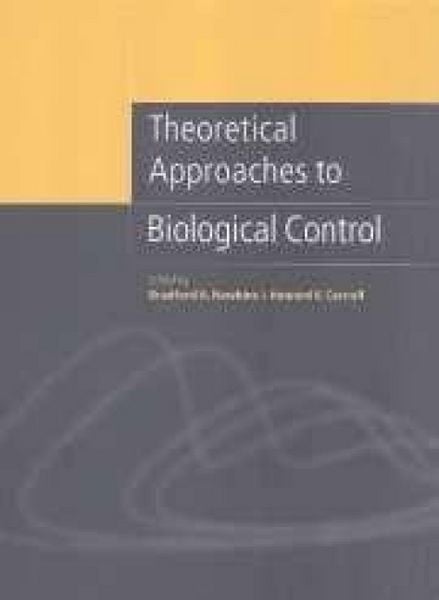
Theoretical Approaches to Biological Control

68,99 €

inkl. gesetzl. MwSt., Versandkostenfrei


Beschreibung

Produktdetails

Einband

Taschenbuch

Erscheinungsdatum

30.06.2008

Herausgeber

Hawkins Bradford A. + weitere

Verlag

Cambridge Academic

Seitenzahl

432

Maße (L/B/H)

24,6/18,9/2,3 cm

Gewicht

300 g

Sprache

Englisch

ISBN

978-0-521-08287-7

Beschreibung

Produktdetails

Einband

Taschenbuch

Erscheinungsdatum

30.06.2008

Herausgeber

Verlag

Cambridge Academic

Seitenzahl

432

Maße (L/B/H)

24,6/18,9/2,3 cm

Gewicht

300 g

Sprache

Englisch

ISBN

978-0-521-08287-7

Herstelleradresse

Libri GmbH
Europaallee 1
36244 Bad Hersfeld
DE

Email: gpsr@libri.de

Noch keine Bewertungen vorhanden

Verfassen Sie die erste Bewertung zu diesem Artikel

Helfen Sie anderen Kundinnen und Kunden durch Ihre Meinung.

Kundinnen und Kunden meinen

Bewertungen (0)

  • Produktbild: Theoretical Approaches to Biological Control
  • Produktbild: Theoretical Approaches to Biological Control
  • Preface; Part I. Biological Control Theory: Past and Present: 1. The theoretical foundations of biological control Alan A. Berryman; 2. Recent developments in theory for biological control of insect pests by parasitoids Cheryl J. Briggs, William W. Murdoch and Roger M. Nisbet; 3. Biological control models: a field guide Nigel D. Barlow; Part II. Ecological Considerations: 4. The uniformity and density of pest exploitation as guides to success in biological control Michael E. Hochberg, and Robert D. Holt; 5. Biological control of insect pests: a tritrophic perspective Nick J. Mills and Andrew P. Gutierrez; 6. The case for generalists in biological control Gary C. Chang and Peter Kareiva; 7. Why is the parasitoid Encarsia formosa so successful in controlling whiteflies Joop C. van Lenteren and Herman W. J. van Roermund; 8. Parasitoid adult nutritional ecology: implications for biological control Mark A. Jervis and Neil A. C. Kidd; 9. Coexistence of multiple attractors and its consequences for a three-species food chain Liebe F. Cavalieri and Huseyin Koçak; Part III. Spatial Considerations: 10. Dynamics of spatially structured spider mite populations Sandra J. Walde and Gösta Nachman; 11. Habitat fragmentation and biological control Teja Tscharntke and Andreas Kruess; 12. Outbreaks of insects: a dynamic approach Alan Hastings; Part IV. Genetic/Evolutionary Considerations: 13. Population dynamics and the evolutionary stability of biological control Robert D. Holt, Michael E. Hochberg and Michael Barfield; 14. Genetic conflict in natural enemies: a review, and consequences for the biological control of arthropods Martha S. Hunter; 15. Overexploitation and mutualism in plant - herbivore - predator interactions: their evolution and impact on population dynamics Maurice W. Sabelis, Minus van Baalen, Jan Bruin, Martijn Egas, Vincent A. A. Jansen, Arne Janssen and Bas Pels; 16. A Darwinian view of host selection and its practical implications Robert F. Luck, and Leonard Nunney; Part V. Microbes and Pathogens: 17. The dynamics of insect - pathogen interactions H. C. J. Godfray and Cheryl Briggs; 18. Host - pathogen - parasitoid systems Michael Begon, Steven M. Sait and David J. Thompson; 19. Persistence of natural enemies of weeds and insect pests in heterogeneous environments David W. Onstad and Edward A. Kornkven; 20. Application of insect - pathogen models to biological control Matthew B. Thomas, Simon N. Wood and Veronica Soloranzo; 21. Dose - response relationships in biocontrol of plant disease and their use to define pathogen refuge size Kenneth B. Johnson; Index.