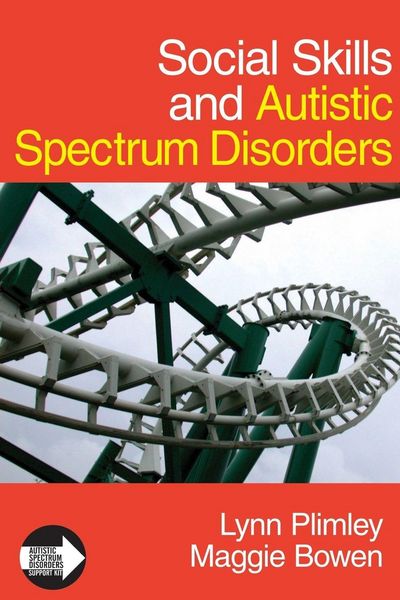

Social Skills and Autistic Spectrum Disorders
-
- Taschenbuch ausgewählt
- eBook
-
Sprache:Englisch
43,99 €
UVP
82,20 €
inkl. gesetzl. MwSt.,
Beschreibung
Produktdetails
Einband
Taschenbuch
Erscheinungsdatum
01.02.2007
Verlag
SAGE PublicationsSeitenzahl
98
Maße (L/B/H)
23,4/15,6/0,6 cm
Gewicht
164 g
Sprache
Englisch
ISBN
978-1-4129-2313-2
`The highly readable, accessible writing style and visually clear presentation allow the reader to dip in frequently to build up knowledge by accretion...This is an excellent book, ideal for those both new to working with people with ASD and also more experienced practitioners' - Special magazine
Individuals with autistic spectrum disorders (ASDs) have difficulty in communicating and socializing. They perceive the world in a very different way to most people, and often find the behaviour of those around them confusing and unfair.
This book examines the concerns around inappropriate social behaviour that those living and working with children and adults face on a day-to-day basis. It discusses preventative measures and intervention strategies, and uses real-life case studies to illustrate these.
Issues covered include:
"an overview of what difficulties might be encountered at different stages in life
"strategies that can be used to alleviate the problems
"how to recognize triggers and create stress-free environments
"hints and tips for those living and working with individuals with ASDs.
Noch keine Bewertungen vorhanden
Verfassen Sie die erste Bewertung zu diesem Artikel
Helfen Sie anderen Kundinnen und Kunden durch Ihre Meinung.
Kurze Frage zu unserer Seite
Vielen Dank für Ihr Feedback
Wir nutzen Ihr Feedback, um unsere Produktseiten zu verbessern. Bitte haben Sie Verständnis, dass wir Ihnen keine Rückmeldung geben können. Falls Sie Kontakt mit uns aufnehmen möchten, können Sie sich aber gerne an unseren Kund*innenservice wenden.
zum Kundenservice