Beschreibung
Produktdetails
Einband
Taschenbuch
Erscheinungsdatum
01.11.2019
Abbildungen
0 Illustrations
Herausgeber
Paula BakerVerlag
Pennsylvania St Univ PrSeitenzahl
120
Maße (L/B/H)
22,9/15,2/0,7 cm
Gewicht
204 g
Sprache
Englisch
ISBN
978-0-271-02246-8
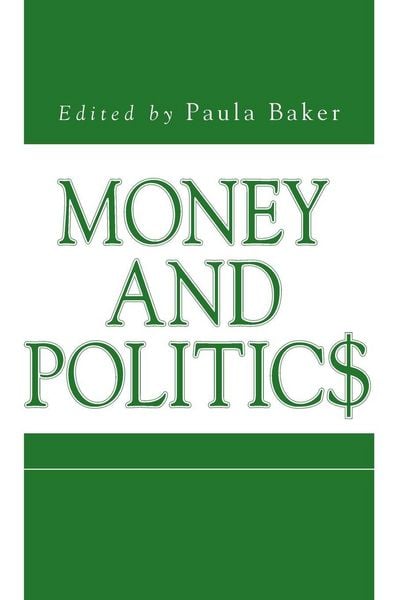
That large financial contributions distort American politics and American democracy is an idea that stands as a truism in political debate. It has fired reform movements; it has inspired round after round of efforts to limit who can give to candidates and parties, how much they can give, and how much campaigns can spend. The laws have generated constitutional arguments about free speech, a still inconclusive literature on whether contributions actually shape policy, and a great deal of work for lawyers and financial analysts who monitor compliance. In the wake of Enron's collapse and subsequent revelations about that corporation's involvement with policy makers, the public's attention has once again focused on the role that money plays in politics. Little of the scholarly work (and none of the legal work) is historical. Yet history can shed light on the long-running debate about the impact of money on politics and what, if anything, are plausible policy options.
This collection of original essays is a step in that direction. The chapters cover episodes from the early nineteenth century through the 1970s. They illustrate how deep concern about money in politics runs-and how the definition of the problem has changed over time. Through the nineteenth century, the "spoils system" in which party loyalists gained reward for their efforts appeared to be the evil that blocked responsive parties and honest public administration. Party war chests that brought howls of complaint (and great exaggeration) seemed quaint by the middle of the twentieth century. In part because reform had weakened the parties and campaigns required consultants' skills in coordination and in part because television advertising was so expensive, the cost of campaigns rose. Candidates griped and policy entrepreneurs worked out possible solutions, which were in place before the Watergate scandal focused public attention on campaign finance. In the history of campaign-finance reform, one generation's solutions have tended to become another's problem. Contributors to the volume are Paula Baker, Robert Mutch, Mark Wahlgren Summers, and Julian E. Zelizer.
Kundinnen und Kunden meinen
Verfassen Sie die erste Bewertung zu diesem Artikel
Helfen Sie anderen Kund*innen durch Ihre Meinung
Kurze Frage zu unserer Seite
Vielen Dank für Ihr Feedback
Wir nutzen Ihr Feedback, um unsere Produktseiten zu verbessern. Bitte haben Sie Verständnis, dass wir Ihnen keine Rückmeldung geben können. Falls Sie Kontakt mit uns aufnehmen möchten, können Sie sich aber gerne an unseren Kund*innenservice wenden.
zum Kundenservice