• Produktbild: E-Serials Collection Management
  • Produktbild: E-Serials Collection Management

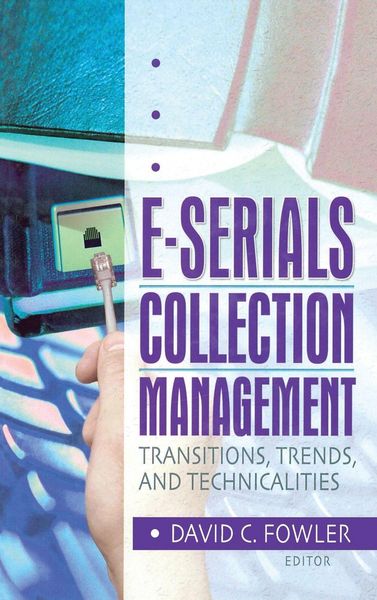
E-Serials Collection Management Transitions, Trends, and Technicalities

92,99 €

inkl. gesetzl. MwSt., Versandkostenfrei


Beschreibung

Produktdetails

Einband

Gebundene Ausgabe

Erscheinungsdatum

18.12.2003

Verlag

Taylor and Francis

Seitenzahl

300

Maße (L/B/H)

23,5/15,7/2,1 cm

Gewicht

635 g

Sprache

Englisch

ISBN

978-0-7890-1753-6

Beschreibung

Produktdetails

Einband

Gebundene Ausgabe

Erscheinungsdatum

18.12.2003

Verlag

Taylor and Francis

Seitenzahl

300

Maße (L/B/H)

23,5/15,7/2,1 cm

Gewicht

635 g

Sprache

Englisch

ISBN

978-0-7890-1753-6

Kundinnen und Kunden meinen

0 Bewertungen

Informationen zu Bewertungen

Zur Abgabe einer Bewertung ist eine Anmeldung im Konto notwendig. Die Authentizität der Bewertungen wird von uns nicht überprüft. Wir behalten uns vor, Bewertungstexte, die unseren Richtlinien widersprechen, entsprechend zu kürzen oder zu löschen.

Die Bewertungen sind nach Format, Anzahl Sterne und Datum sortiert.

Verfassen Sie die erste Bewertung zu diesem Artikel

Helfen Sie anderen Kund*innen durch Ihre Meinung

Kundinnen und Kunden meinen

0 Bewertungen filtern

Die Leseprobe wird geladen.
  • Produktbild: E-Serials Collection Management
  • Produktbild: E-Serials Collection Management
  • About the Editor Contributors Preface List of Abbreviations Chapter 1. Current Trends in Electronic Journal Publishing: An Agents Unique Insight into Pricing, Licensing, and Technological Aspects Based on Proximity to Publishers and Libraries Introduction Management Challenges Facing Libraries The Requirement of a License Pricing Models Access Technologies Alternative Publishing Conclusion Chapter 2. To Use or Not to Use: The Benefits and Challenges of Using a Subscription Agent for Electronic Journals The Benefits of Using a Subscription Agent The Benefits of Using a Vendor/Publisher The Benefits of Using a Third-Party Provider The Challenges of Working with Subscription Agents The Challenges of Working with Vendors/Publishers The Challenges of Working with Third-Party Providers Conclusion Chapter 3. Collection Development and Cataloging of Online Materials: What Libraries Are Doing Now Introduction Methodology Results and Analysis Conclusion Appendix Chapter 4. IP Ranges versus Passwords: The Pros, the Cons, and Whats in Between Passwords IP Access IP and Password! Password Advantages Access Through Aggregators Librarians Make a Difference Future of Password and IP Access Chapter 5. Consortia and Electronic Journals: An Overview The Impetus to Cooperate History of Cooperation and Consortia Description of a Consortium: OhioLINK Support for Consortia Consortia: What Works Consortia: E-Journal Problems The Future of Consortial Arrangements Conclusion Chapter 6. Usage Data: Issues and Challenges for Electronic Resource Collection Management Introduction Guidelines, Standards, and Initiatives Relating to Usage Data Communication Between Libraries and Vendors Can Libraries Collect Their Own Usage Data? Key Use Measures for Vendor Statistics Pitfalls of Usage Data Putting the Data to Work: Using Usage Data in Academic Libraries Collection and Dissemination of Usage Data Conclusion Chapter 7. Case Study in Claiming/Troubleshooting E-Journals: UCLAs Louise M. Darling Biomedical Library Background University of California System UCLAs Library E-Resources Management Organizational Structure for E-Resources Claiming/Troubleshooting Categories of Troubleshooting Issues and Solutions Using the Troubleshooting Screen Conclusion Chapter 8. Electronic Reserve: A Future in Transition? Introduction Digitization at Deakin University Copyright General Comments Aggregators Changes in the Conception of a “Reserve” Collection The Future? Conclusion Chapter 9. E-Books After the Fall: A New Model Definition Background The Future The New Model Libraries Conclusion Chapter 10. Open Access and Retrieval: Liberating the Scholarly Literature Budapest Open Access Initiative New Generation Journals Self-Archiving EPrints Open Archives Initiative Open Archives Initiative Protocol for Metadata Harvesting Roles and Responsibilities of Self-Archiving “The Future of Ideas” Chapter 11. E-Serials and Regional Accreditation Regional Accreditations Perspective on E-Serials Southern Region Western Region Northwest Region New England Region Middle States Region North Central Region How Some Libraries Interpreted and Responded to Standards Unresolved Issues Relating to E-Serials and Accreditation Conclusion Chapter 12. Managing E-Resources: A Database Driven Approach Introduction LORA Public Interface LORA Staff Interface Implementation Looking Ahead: Planned Additions Conclusion Chapter 13. Developing a Database for E-Journals That Improves Both Access and Management Introduction and History Cataloging Woes The E-Journals Database Conclusion Index Reference Notes Included