
• Produktbild: Generation 1.5 in College Composition
  • Produktbild: Generation 1.5 in College Composition

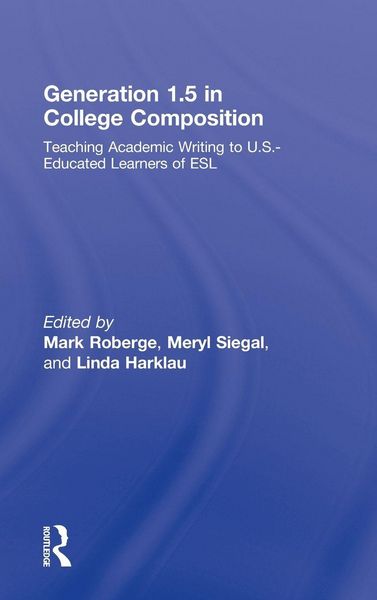
Generation 1.5 in College Composition Teaching Academic Writing to U.S.-Educated Learners of ESL

283,99 €

inkl. gesetzl. MwSt., Versandkostenfrei


Beschreibung

Produktdetails

Einband

Gebundene Ausgabe

Erscheinungsdatum

12.02.2009

Herausgeber

Roberge Mark + weitere

Verlag

Taylor and Francis

Seitenzahl

284

Maße (L/B/H)

23,5/15,7/2 cm

Gewicht

521 g

Sprache

Englisch

ISBN

978-0-8058-6442-7

Beschreibung

Produktdetails

Einband

Gebundene Ausgabe

Erscheinungsdatum

12.02.2009

Herausgeber

Verlag

Taylor and Francis

Seitenzahl

284

Maße (L/B/H)

23,5/15,7/2 cm

Gewicht

521 g

Sprache

Englisch

ISBN

978-0-8058-6442-7

Herstelleradresse

Libri GmbH
Europaallee 1
36244 Bad Hersfeld
DE

Email: gpsr@libri.de

Kundinnen und Kunden meinen

0 Bewertungen

Informationen zu Bewertungen

Zur Abgabe einer Bewertung ist eine Anmeldung im Konto notwendig. Die Authentizität der Bewertungen wird von uns nicht überprüft. Wir behalten uns vor, Bewertungstexte, die unseren Richtlinien widersprechen, entsprechend zu kürzen oder zu löschen.

Die Bewertungen sind nach Format, Anzahl Sterne und Datum sortiert.

Verfassen Sie die erste Bewertung zu diesem Artikel

Helfen Sie anderen Kund*innen durch Ihre Meinung

Kundinnen und Kunden meinen

0 Bewertungen filtern

Die Leseprobe wird geladen.
  • Produktbild: Generation 1.5 in College Composition
  • Produktbild: Generation 1.5 in College Composition
  • @contents: Selected Contents

    Introduction

    Generation 1.5 ten years later, Mark Roberge, Meryl Siegal and Linda Harklau

    Section One: Frameworks for understanding Generation 1.5

    1. Approaching Generation 1.5 through immigrant studies and socio-political/socio-economic frameworks, Vivian Louie
    2. Language minorities in higher education-What we (don't) know, Linda Harklau
    3. The complex linguistic situation of Generation 1.5 students, Mary Schmida
    4. The Erasure of Resident ESL Writers, Paul Kei Matsuda and Aya Matsuda

    Section Two: Generation 1.5 student characteristics and schooling paths

    1. Generation 1.5 immigrant ESL students: What experiences, characteristics and needs might they bring to our English classes? Mark Roberge
    2. Academic reading and writing challenges and strategies used to meet those challenges: A case of four undergraduate Generation 1.5 students, Cathryn Crosby
    3. At what price success? The academic writing development of a Generation 1.5 latecomer, Jan Frodesen
    4. Generation 1.5 students and the hegemony of dominant language ideologies, Jennifer A. Mott-Smith
    5. Accessing academic literacy in college: Pathways of U.S.-educated English language learners, Genevieve Patthey-Chavez, Joan Thomas-Spiegel, and Paul Dillon

    Section Three: Pedagogical approaches for Generation 1.5

    1. Pedagogical principles and practices for working with Generation 1.5, Patricia Porter, Deborah VanDommelen, Sugie Goen-Salter, and Deborah Swanson
    2. Reading/writing connections for Generation 1.5, Harriett Allison

    3. Vocabulary and reading for Generation 1.5, Cheryl Benz

    A functional focus on language: Grammar for Generation 1.5, Mary J. Schleppegrell

    1. Socioliterate pedagogy for Generation 1.5, Ann Johns
    2. Charting new territory: Creating an interdepartmental writing course for Generation 1.5, Christine Holten
    3. Individualizing pedagogy: Working with diverse needs and goals in freshman composition for international students and Generation 1.5, Dudley Reynolds, Kyung-Hee Bae and Jennifer Shade Wilson
    4. Situating language and academic literacy development into a curriculum of first-year college courses for Generation 1.5, Robin Murie

    5. Promoting Generation 1.5 learners' academic literacy and autonomy: Pedagogical approaches from the learning center, Margi Wald and Nathalie Destandau

    Conclusion

    Where do we go from here? Mark Roberge, Meryl Siegal and Linda Harklau