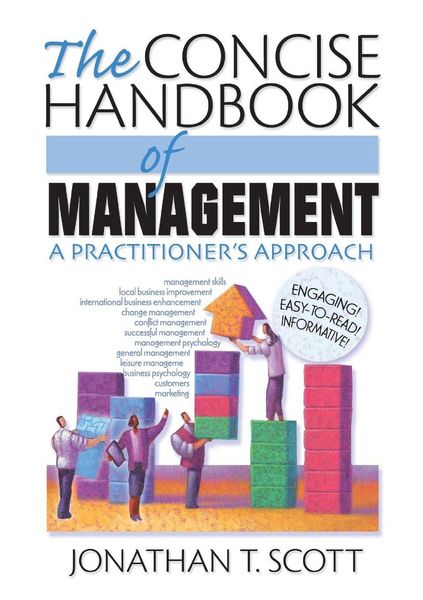
The Concise Handbook of Management A Practitioner's Approach
-
- Taschenbuch ausgewählt
- eBook
-
Sprache:Englisch
91,99 €
inkl. gesetzl. MwSt.,
Beschreibung
Produktdetails
Einband
Taschenbuch
Erscheinungsdatum
01.08.2005
Verlag
Taylor and FrancisSeitenzahl
278
Maße (L/B/H)
21,3/15,5/1,8 cm
Gewicht
431 g
Sprache
Englisch
ISBN
978-0-7890-2648-4
Discover the practical tips to make you an effective, customer-oriented manager!
Focusing on the pervading belief that everything a manager does must be customer oriented, The Concise Handbook of Management: A Practitioner's Approach gives you an overview of everything you need to know about managing in one practical, concise book. This plain-talking guide not only explains management theories, but also presents commonsense suggestions on the best ways to effectively manage people and things, no matter what type of business you are in. Taking a practitioner's approach of discussing management issues with customers ultimately in mind, this practical book motivates, is easily understandable, and is entertaining to boot.
The Concise Handbook of Management: A Practitioner's Approach uses succinct chapters with several real stories and case studies designed to clearly illustrate each concept and suggestion. Written with the busy manager in mind, each chapter is compact, clear, true-to-life, and is always aimed at the bottom line. The book includes a small business marketing and promotion checklist, a helpful bibliography, and a useful glossary of terms.
The Concise Handbook of Management: A Practitioner's Approach explores:
- the first three steps in becoming a good manager
- understanding the importance of customers
- getting the most from employees
- management competencies and styles
- organizational structures and cultures
- managing change
- managing conflict and stress
- managing teams and workgroups
- ethics
- leadership
- managing time
- written business communication
- mastering the skills of a presentation
- dealing with people in the workplace
- a small business marketing checklist
- project or program planning
- the marketing basicsproductstrategymarketingpricing
- developing external and internal customers
The Concise Handbook of Management: A Practitioner's Approach proves the adage that less is more, and has already been called the undergraduate/graduate student's or practicing manager's best all-in-one source and reference for simplified management theory and skills.
Noch keine Bewertungen vorhanden
Verfassen Sie die erste Bewertung zu diesem Artikel
Helfen Sie anderen Kundinnen und Kunden durch Ihre Meinung.
Kurze Frage zu unserer Seite
Vielen Dank für Ihr Feedback
Wir nutzen Ihr Feedback, um unsere Produktseiten zu verbessern. Bitte haben Sie Verständnis, dass wir Ihnen keine Rückmeldung geben können. Falls Sie Kontakt mit uns aufnehmen möchten, können Sie sich aber gerne an unseren Kund*innenservice wenden.
zum Kundenservice