Beschreibung
Produktdetails
Einband
Gebundene Ausgabe
Erscheinungsdatum
10.01.2002
Abbildungen
55 illustrations
Herausgeber
Robert H. Sharf + weitereVerlag
Stanford University PressSeitenzahl
288
Maße (L/B/H)
24,3/16,4/2,3 cm
Gewicht
567 g
Sprache
Englisch
ISBN
978-0-8047-3989-4
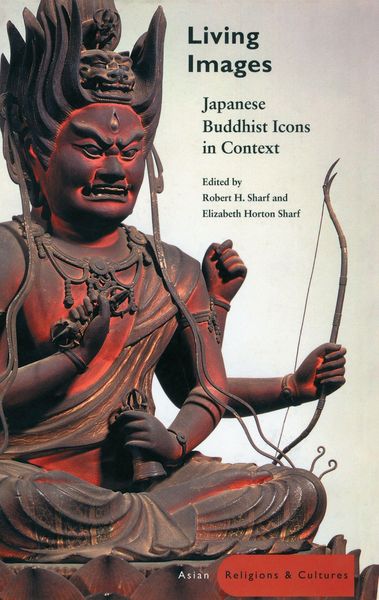
Buddhist images are ubiquitous in Japan, yet they are rarely accorded much attention in studies of Buddhist monastic traditions. Scholars of religion tend to regard Buddhist images as mere symbols or representations of religious ideals, commemorations of saints and patriarchs, ancillary aids to meditative practice, or the focus of lay piety. Art historians approach these images as works of art suitable for stylistic and iconographic analysis. Yet neither of these groups of scholars has adequately appreciated the centrality and significance of images and image worship in Japanese monastic practice.
The essays in this volume focus on the historical, institutional, and ritual context of a number of Japanese Buddhist paintings, sculptures, calligraphies, and relics-some celebrated, others long overlooked. Robert H. Sharf's introduction examines the reasons for the marginalization of images by modern Buddhist apologists and Western scholars alike, tackling the thorny question of whether Buddhists were in fact idolators.
The essays by Paul Groner and Karen Brock document and explicate the crucial role that sacred images played in the lives of two eminent medieval clerics, Eison and Myoe. James Dobbins looks at Shin representations of Shinran, founder of the Shin school of Pure Land Buddhism, and finds that early Shin piety was centered as much on Shinran and his images as on the Buddha Amida himself. Robert H. Sharf's essay on the use of Tantric mandalas reveals that, contrary to received opinion, such mandalas were not used as aids to ritual visualization but rather as vivified entities whose presence ensured the efficacy of the rite.
In each case, the authors find that the images were treated, by elite monks and unlettered laypersons alike, as living presences with considerable apotropaic and salvific power, and that Japanese Buddhist monastic life was centered around the management and veneration of these numinous beings.
Noch keine Bewertungen vorhanden
Verfassen Sie die erste Bewertung zu diesem Artikel
Helfen Sie anderen Kundinnen und Kunden durch Ihre Meinung.
Kurze Frage zu unserer Seite
Vielen Dank für Ihr Feedback
Wir nutzen Ihr Feedback, um unsere Produktseiten zu verbessern. Bitte haben Sie Verständnis, dass wir Ihnen keine Rückmeldung geben können. Falls Sie Kontakt mit uns aufnehmen möchten, können Sie sich aber gerne an unseren Kund*innenservice wenden.
zum Kundenservice