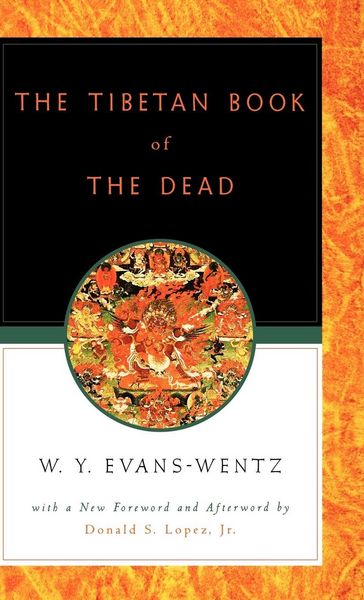
The Tibetan Book of the Dead Or the After-Death Experiences on the Bardo Plane, According to L=ama Kazi Dawa-Samdup's English Rendering
-
- Hardcover ausgewählt
- Taschenbuch
- eBook
-
Sprache:Englisch
-
Verlag:Oxford Academic
97,99 €
inkl. gesetzl. MwSt.,
Beschreibung
Produktdetails
Einband
Gebundene Ausgabe
Erscheinungsdatum
28.09.2000
Abbildungen
11 halftones and line illustrations
Herausgeber
Evans-Wentz W. Y.Verlag
Oxford AcademicSeitenzahl
380
Maße (L/B/H)
22,2/14,5/2,6 cm
Gewicht
666 g
Auflage
4., überarbeitete Auflage
Sprache
Englisch
ISBN
978-0-19-513311-0
The Tibetan Book of the Dead is one of the texts that, according to legend, Padma-Sambhava was compelled to hide during his visit to Tibet in the late 8th century. The guru hid his books in stones, lakes, and pillars because the Tibetans of that day and age were somehow unprepared for their
teachings. Now, in the form of the ever-popular Tibetan Book of the Dead, these teachings are constantly being discovered and rediscovered by Western readers of many different backgrounds--a phenomenon which began in 1927 with Oxford's first edition of Dr. Evans-Wentz's landmark volume. While it is
traditionally used as a mortuary text, to be read or recited in the presence of a dead or dying person, this book--which relates the whole experience of death and rebirth in three intermediate states of being--was originally understood as a guide not only for the dead but also for the living. As a
contribution to the science of death and dying--not to mention the belief in life after death, or the belief in rebirth--The Tibetan Book of the Dead is unique among the sacred texts of the world, for its socio-cultural influence in this regard is without comparison.
This fourth edition features a new foreword, afterword, and suggested further reading list by Donald S. Lopez, author of Prisoners of Shangri-La: Tibetan Buddhism and the West. Lopez traces the whole history of the late Evans-Wentz's three earlier editions of this book, fully considering the work
of contributors to previous editions (C. G. Jung among them), the sections that were added by Evans-Wentz along the way, the questions surrounding the book's translation, and finally the volume's profound importance in engendering bothpopular and academic interest in the religion and culture of
Tibet. Another key theme that Lopez addresses is the changing nature of this book's audience--from the prewar theosophists to the beat poets to the hippies to contemporary exponents of the hospice movement--and what
Noch keine Bewertungen vorhanden
Verfassen Sie die erste Bewertung zu diesem Artikel
Helfen Sie anderen Kundinnen und Kunden durch Ihre Meinung.
Kurze Frage zu unserer Seite
Vielen Dank für Ihr Feedback
Wir nutzen Ihr Feedback, um unsere Produktseiten zu verbessern. Bitte haben Sie Verständnis, dass wir Ihnen keine Rückmeldung geben können. Falls Sie Kontakt mit uns aufnehmen möchten, können Sie sich aber gerne an unseren Kund*innenservice wenden.
zum Kundenservice