• Produktbild: Democratic Accountability and the Use of Force in International Law
  • Produktbild: Democratic Accountability and the Use of Force in International Law

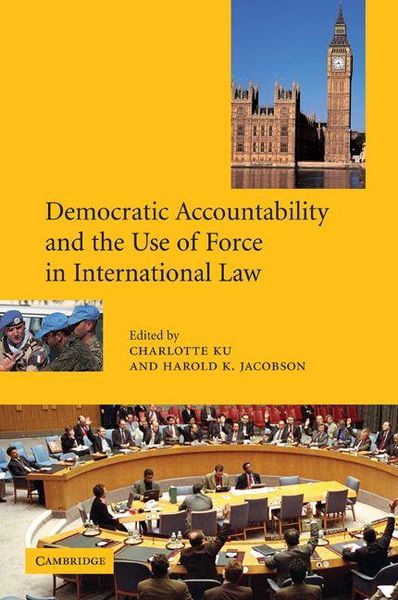
Democratic Accountability and the Use of Force in International Law

65,99 €

inkl. gesetzl. MwSt., Versandkostenfrei


Beschreibung

Produktdetails

Einband

Taschenbuch

Erscheinungsdatum

12.01.2011

Herausgeber

Ku Charlotte + weitere

Verlag

Cambridge Academic

Seitenzahl

468

Maße (L/B/H)

22,9/15,2/2,7 cm

Gewicht

680 g

Sprache

Englisch

ISBN

978-0-521-00207-3

Beschreibung

Produktdetails

Einband

Taschenbuch

Erscheinungsdatum

12.01.2011

Herausgeber

Verlag

Cambridge Academic

Seitenzahl

468

Maße (L/B/H)

22,9/15,2/2,7 cm

Gewicht

680 g

Sprache

Englisch

ISBN

978-0-521-00207-3

Kundinnen und Kunden meinen

0 Bewertungen

Informationen zu Bewertungen

Zur Abgabe einer Bewertung ist eine Anmeldung im Konto notwendig. Die Authentizität der Bewertungen wird von uns nicht überprüft. Wir behalten uns vor, Bewertungstexte, die unseren Richtlinien widersprechen, entsprechend zu kürzen oder zu löschen.

Die Bewertungen sind nach Format, Anzahl Sterne und Datum sortiert.

Verfassen Sie die erste Bewertung zu diesem Artikel

Helfen Sie anderen Kund*innen durch Ihre Meinung

Kundinnen und Kunden meinen

0 Bewertungen filtern

  • Produktbild: Democratic Accountability and the Use of Force in International Law
  • Produktbild: Democratic Accountability and the Use of Force in International Law
  • List of figures; List of tables; Notes on contributors; Preface; List of abbreviations; Part I. Introduction: 1. Broaching the issues Charlotte Ku and Harold K. Jacobson; Part II. The Domestic and International Context: 2. The interface of national constitutional systems with international law and institutions on using military forces: changing trends in executive and legislative powers Lori F. Damrosch; 3. Domestic political factors and decisions to use military forces Karen A. Mingst; 4. Collective security, peacekeeping, and ad hoc multilateralism Edwin M. Smith; 5. The legal responsibility of military personnel Robert C. R. Siekmann; Part III. Traditional Contributors to International Military Operations: 6. Canada: committed contributor of ideas and forces, but with growing doubts and problems Fen Osler Hampson; 7. Norway: political consensus and the problem of accountability Knut G. Nustad and Henrik Thune; 8. India: democratic, poor, internationalist Ramesh Thakur and Dipankar Banerjee; Part IV. Newcomers to International Military Operations: 9. Japan: moderate commitment within legal strictures Akiho Shibata; 10. Germany: ensuring political legitimacy for the use of military forces by requiring constitutional accountability Georg Nolte; Part V. Permanent Members of the UN Security Council: 11. Russian Federation: the pendulum of powers and accountability Bakhtiyar Tuzmukhamedov; 12. France: Security Council legitimacy and executive primacy Yves Boyer, Serge Sur and Olivier Fleurence; 13. The United Kingdom: increasing commitment requires greater parliamentary involvement Nigel D. White; 14. The United States: democracy, hegemony, and accountability Michael J. Glennon; Part VI. Conclusion: 15. Towards a mixed system of democratic accountability Charlotte Ku and Harold K. Jacobson; Appendix A: uses of military forces under the auspices of the UN and NATO; Appendix B: country participation in international operations, 1945-2000; References; Index.