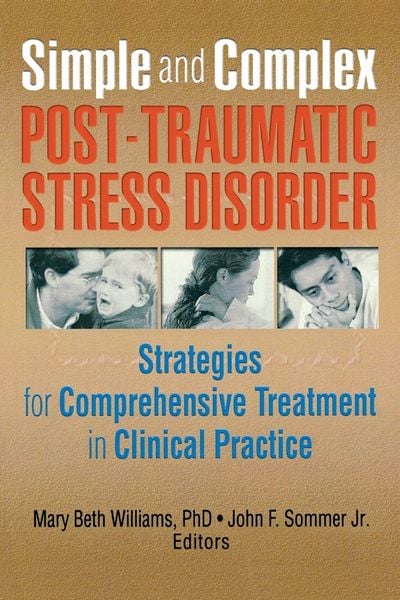
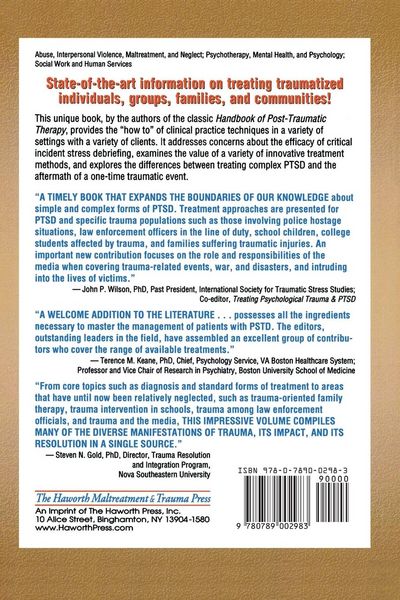
• Produktbild: Simple and Complex Post-Traumatic Stress Disorder
  • Produktbild: Simple and Complex Post-Traumatic Stress Disorder

Simple and Complex Post-Traumatic Stress Disorder Strategies for Comprehensive Treatment in Clinical Practice

102,99 €

inkl. gesetzl. MwSt., Versandkostenfrei


Beschreibung

Produktdetails

Einband

Taschenbuch

Erscheinungsdatum

07.10.2002

Verlag

Taylor & Francis

Seitenzahl

436

Maße (L/B/H)

22,9/15,2/2,4 cm

Gewicht

639 g

Sprache

Englisch

ISBN

978-0-7890-0298-3

Beschreibung

Produktdetails

Einband

Taschenbuch

Erscheinungsdatum

07.10.2002

Verlag

Taylor & Francis

Seitenzahl

436

Maße (L/B/H)

22,9/15,2/2,4 cm

Gewicht

639 g

Sprache

Englisch

ISBN

978-0-7890-0298-3

Herstelleradresse

Libri GmbH
Europaallee 1
36244 Bad Hersfeld
DE

Email: gpsr@libri.de

Kundinnen und Kunden meinen

0 Bewertungen

Informationen zu Bewertungen

Zur Abgabe einer Bewertung ist eine Anmeldung im Konto notwendig. Die Authentizität der Bewertungen wird von uns nicht überprüft. Wir behalten uns vor, Bewertungstexte, die unseren Richtlinien widersprechen, entsprechend zu kürzen oder zu löschen.

Die Bewertungen sind nach Format, Anzahl Sterne und Datum sortiert.

Verfassen Sie die erste Bewertung zu diesem Artikel

Helfen Sie anderen Kund*innen durch Ihre Meinung

Kundinnen und Kunden meinen

0 Bewertungen filtern

Die Leseprobe wird geladen.
  • Produktbild: Simple and Complex Post-Traumatic Stress Disorder
  • Produktbild: Simple and Complex Post-Traumatic Stress Disorder
    • About the Editors
    • Contributors
    • Preface: Trauma in the New Millennium
    • Purpose of the Book
    • Chapter Organization
    • Section I: Introduction
    • Chapter 1. A Short History of PTSD from the Military Perspective
    • Chapter 2. Assessment and Diagnosis of PTSD in Adults: A Comprehensive Psychological Approach
    • Introduction
    • Diagnosis versus Assessment
    • Taking a Psychosocial History
    • Methods of Assessment
    • Using Assessment Results in Making Clinical Recommendations
    • Summary
    • Chapter 3. Approaches to the Treatment of PTSD
    • Introduction
    • The Symptomatology of PTSD
    • Principles of Treatment
    • Group Psychotherapy
    • Concluding Remarks
    • Chapter 4. Psychopharmacological Treatment in PTSD
    • Introduction
    • Antidepressants
    • Buspirone
    • Lithium
    • Anticonvulsants
    • Benzodiazepines
    • Neuroleptics or Antipsychotic Agents (“Major Tranquilizers”)
    • Adrenergic Agents
    • Opiate Antagonists
    • Conclusion
    • Section II: Treatment of PTSD in General
    • Chapter 5. Cognitive-Behavioral Treatment of PTSD
    • The Efficacy of Psychosocial Treatments
    • Theoretical Considerations in Cognitive-Behavioral Therapy
    • Treatment Overview
    • Case Illustration
    • Summary
    • Appendix: Common Reactions to Assault Handout
    • Chapter 6. Short-Term Treatment of Simple and Complex PTSD
    • Introduction
    • The History of Video-Assisted Trauma Therapy
    • Principles of Time-Limited Trauma Therapy
    • Applications of Video-Assisted Trauma Therapy
    • Description of Treatment Procedures
    • Conclusion
    • Chapter 7. Life After Trauma: Finding Hope by Challenging Your Beliefs and Meeting Your Needs
    • Introduction
    • Impacts of Trauma
    • The Meanings of Traumatic Events and Coping
    • Working Through Traumatic Events
    • Testing Beliefs
    • Discerning the Meaning of Trust
    • Getting Control
    • Believing in Yourself and Others
    • Feeling Close to Yourself; Getting Close to Others
    • Conclusion
    • Section III: Group Treatments
    • Chapter 8. The Development of a Group Treatment Model for Post-Traumatic Stress Disorder
    • Introduction
    • Post-Traumatic Stress Disorder
    • Etiological Theories
    • The PTSD Group Treatment Programme
    • The Development of the Tradition of Group Approaches
    • Assessment
    • Efficiency
    • Biopsychosocial Strategy
    • Technique
    • Discussion
    • Group Program for Complex PTSD
    • Conclusion
    • Chapter 9. Developing and Maintaining a Psychoeducational Group for Persons Diagnosed As DID/MPD/DDNOS
    • Introduction
    • History of the Group
    • Composition and Structure of the Group
    • Group Process
    • Basic Principles in Conducting a Psychoeducational Support Group
    • Benefits of Support Group Participation for Members
    • Values of the Leaders
    • Areas of Concern and Ethical Issues in the Group
    • Contertransference and Vicarious Traumatization
    • A Retrospective Look at the Group: What Did It Accomplish?
    • Conclusions
    • Appendix: Group Handouts
    • Section IV: Children, Students, and Families
    • Chapter 10. Treatment Strategies for Traumatized Children
    • Brief Overview of the Literature
    • Evaluation and Treatment Plan
    • Educating the Child and Family About Trauma
    • The Role of Parents
    • Telling the Story
    • Addressing the Symptoms
    • Does Trauma Have Meaning?
    • Issues of Development
    • Follow-Up and Healing
    • Conclusions
    • Chapter 11. Provisions of Trauma Services to School Populations and Faculty
    • Introduction
    • Primary Prevention
    • Secondary Prevention
    • Intervention Strategies: A Case Illustration
    • Tertiary Prevention
    • Final Thoughts
    • Chapter 12. Traumatic Stress in Family Systems
    • Introduction
    • Assessing Family System Trauma
    • Treating Family System Trauma
    • Preventing Family System Trauma
    • Conclusions
    • Chapter 13. Dealing with Trauma in the Classroom
    • Surveying the Social La