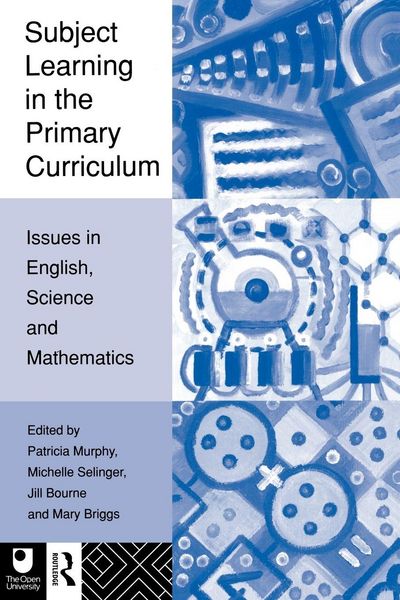
• Produktbild: Subject Learning in the Primary Curriculum
  • Produktbild: Subject Learning in the Primary Curriculum

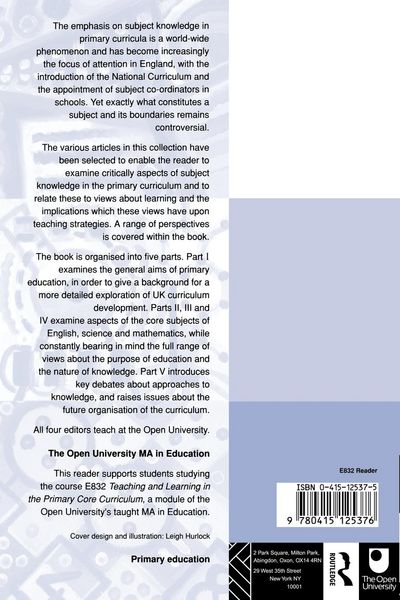
Subject Learning in the Primary Curriculum Issues in English, Science and Maths

61,99 €

inkl. gesetzl. MwSt., Versandkostenfrei


Beschreibung

Produktdetails

Einband

Taschenbuch

Erscheinungsdatum

16.03.1995

Herausgeber

Bourne Jill + weitere

Verlag

Taylor and Francis

Seitenzahl

344

Maße (L/B/H)

23,4/15,6/1,9 cm

Gewicht

476 g

Sprache

Englisch

ISBN

978-0-415-12537-6

Beschreibung

Produktdetails

Einband

Taschenbuch

Erscheinungsdatum

16.03.1995

Herausgeber

Verlag

Taylor and Francis

Seitenzahl

344

Maße (L/B/H)

23,4/15,6/1,9 cm

Gewicht

476 g

Sprache

Englisch

ISBN

978-0-415-12537-6

Herstelleradresse

Libri GmbH
Europaallee 1
36244 Bad Hersfeld
DE

Email: gpsr@libri.de

Noch keine Bewertungen vorhanden

Verfassen Sie die erste Bewertung zu diesem Artikel

Helfen Sie anderen Kundinnen und Kunden durch Ihre Meinung.

Kundinnen und Kunden meinen

Bewertungen (0)

Die Leseprobe wird geladen.
  • Produktbild: Subject Learning in the Primary Curriculum
  • Produktbild: Subject Learning in the Primary Curriculum
  • Introduction Patricia Murphy Part 1. Curriculum Influences 1.1 Introduction Patricia Murphy 1.2 The aims of primary education in member states of the Council of Europe Norman Thomas 1.3 Knowledge for the masses: World models and National Curricula 1920 - 1986 Aaron Benavot, Yun-Kyung Cha, David H. Kamens, John Meyer, and Suk-ying Wong 1.4 Education, Majorism and the Curriculum of the Dead Stephen Ball 1.5 Analysing views of practice Robin Alexander Part 2. English: Literacy practices in the primary classroom 2.1 Introduction Jill Bourne 2.2 The schooling of Literacy Joanna C. Street and Brian V. Street 2.3 What counts as reading in this class: Children's views of reading Eve Gregory 2.4 Disciplining English: The construction of a national subject Jill Bourne and Deborah Cameron 2.5 Young children's writing: from spoken to written genre rances Christie 2.6 Planning for writing across the curriculum Beverly Derewianka Part 3. Science: views of the domain and learning 3.1 Introduction Patricia Murphy 3.2 Constructivism and quality in science education Joan Solomon 3.3 Young people's understanding of science concepts Rosalind Driver, John Leach, Philip Scott, and Colin Wood-Robinson 3.4 Procedural and conceptual knowledge in science Richard Gott, Sandra Duggan, Robin Millar and Fred Lubben 3.5 Learning about physics through peer interaction Christine Howe Part 4. Mathematics - teaching strategies, perspectives on numeracy 4.1 Introduction Michelle Selinger 4.2 Scaffolding in maths, science and technology Mike Askew, John Bliss and Sheila Macrae 4.3 A proposed framework for examining basic number sense Alistaim McIntosh, Barbara J. Reys, and Robert E. Reys 4.4 Learning through problem-solving: A constructivist approach to second grade mathematics Paul Cobb, Terry Wood, and Erna Yackel 4.5 Telling and asking Eric Love and John Mason Part 5. Approaches to knowledge in the future curriculum? 5.1 Introduction Patricia Murphy 5.2 Expert knowledge Robert Glaser 5.3 The thinking curriculum John Nisbet 5.4 Situated cognition John Seely Brown, Allan Collins, and Paul Duguid