Beschreibung
Produktdetails
Einband
Taschenbuch
Erscheinungsdatum
01.12.1993
Verlag
Yale University PressSeitenzahl
248
Maße (L/B/H)
20,9/13,9/1,9 cm
Gewicht
318 g
Sprache
Englisch
ISBN
978-0-300-06051-5
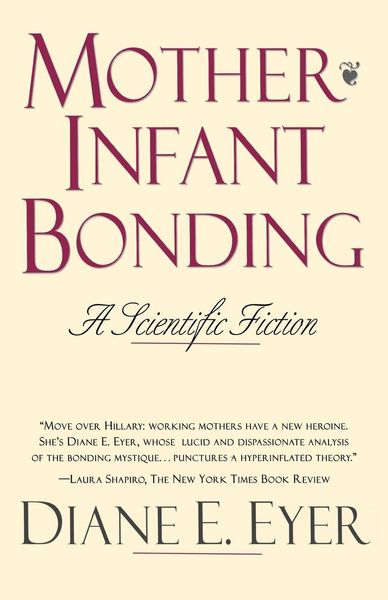
Two decades ago two pediatricians published a series of articles and books arguing that mothers and their infants must be physically close immediately after birth in order for their future relationship to develop properly. Their studies were inspired by research on animals-especially goats-showing that they reject their offspring if they have been separated even briefly right after birth. Some child care experts expanded on this idea and proclaimed that mother-infant bonding should be continued for the first year of a child's life. In spite of the fact that the research findings on bonding have now been dismissed by most of the scientific community, women are still told that the need to bond is a reason not to go back to work after having a baby, social workers are taught that bonding is important in preventing child abuse, delinquency, and school problems, and nurses are instructed to guide new mothers through the process of bonding. Guilt abounds among women who are unable, for whatever reason-illness of mother or child, premature birth, adoption-to bond with their babies. In this absorbing book, Diane E. Eyer traces the history of the bonding myth and explains its continuing popularity despite its demonstrated lack of validity. Most important, she shows how it reflects a disturbing tendency in our society to accept "scientific" research without question--and without awareness that it can be distorted by professional agendas and public demands. Eyer argues that the concept of bonding was developed at a time when hospitals were losing their appeal for many women who wanted to deliver their babies in birthing centers or at home. Hospitals seized on the bonding idea as a way to make their services more attractive to pregnant women and to reassert medical authority over the birthing process by regulating the bonding procedure. The story of bonding, says Eyer, is one example of the way that the scientific and medical communities have deluded women (and themselves) into accepting dicta based on fiction and not fact.
Noch keine Bewertungen vorhanden
Verfassen Sie die erste Bewertung zu diesem Artikel
Helfen Sie anderen Kundinnen und Kunden durch Ihre Meinung.
Kurze Frage zu unserer Seite
Vielen Dank für Ihr Feedback
Wir nutzen Ihr Feedback, um unsere Produktseiten zu verbessern. Bitte haben Sie Verständnis, dass wir Ihnen keine Rückmeldung geben können. Falls Sie Kontakt mit uns aufnehmen möchten, können Sie sich aber gerne an unseren Kund*innenservice wenden.
zum Kundenservice