Beschreibung
Produktdetails
Einband
Gebundene Ausgabe
Altersempfehlung
7 - 17 Jahr(e)
Erscheinungsdatum
30.06.1991
Herausgeber
Scott B. MacDonald + weitereVerlag
Bloomsbury AcademicSeitenzahl
178
Maße (L/B/H)
24/16,1/1,4 cm
Gewicht
438 g
Sprache
Englisch
ISBN
978-0-275-93052-3
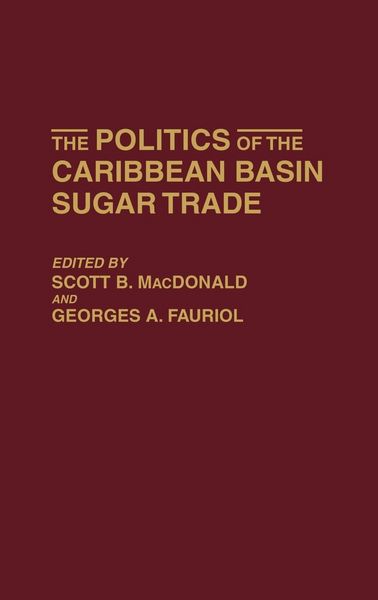
Growing global interdependence made the 1970s and 1980s a volatile period in the sugar trade at a time when Caribbean countries, while not the major world producers of sugar, were economically dependent on their sugar exports. Since then, government farm supports and quotas on imported sugar in the United States, overproduction in developing countries, and the emergence of a highly protected European Community sugar industry have all served to make the sugar trade a highly political global issue. This study focuses on the evolution of the U.S.--Caribbean Basin sugar trade in the 1980s and its impact on political relations between the countries involved. According to the authors, the sugar trade was not driven by laws of supply and demand, but by various political agendas. Economic protectionism, government subsidies for inefficient elements of the sugar industry, as well as corruption and mismanagement have contributed to the Byzantine politics of the sugar trade. Now the United States needs to determine how lifting quotas and terminating subsides will affect this complex relationship. By providing an in-depth look at the development of current policies in the sugar trade, this book offers the necessary background for making informed policy decisions.
After examining the U.S. sugar policy from 1974 to 1989, the book provides a broader Latin American perspective of U.S. and European Community sugar policies. It also offers subregional and country analyses covering the Commonwealth Caribbean, Central America, Cuba, the Dominican Republic, Haiti, and Panama. Despite the difficulty of competing against the United States and Europe, Caribbean and Central American countries are likely to continue to depend on sugar cane. Climactic and ecological factors make agricultural diversification extremely difficult. Some Caribbean and Central American producers have considered making ethanol automobile fuel from sugar, but here too they face protectionist pressure from U.S. producers of corn. Given current political realignments, the authors predict that the influence of the United States and the Soviet Union will diminish in the 1990s. The European Community, on the other hand, is likely to have greater influence on the inter-American sugar trade. Students of Latin American politics and international relationships, as well as those involved in the sugar industry or the policies affecting it, will find this book a valuable resource for future decisions.
Noch keine Bewertungen vorhanden
Verfassen Sie die erste Bewertung zu diesem Artikel
Helfen Sie anderen Kundinnen und Kunden durch Ihre Meinung.
Kurze Frage zu unserer Seite
Vielen Dank für Ihr Feedback
Wir nutzen Ihr Feedback, um unsere Produktseiten zu verbessern. Bitte haben Sie Verständnis, dass wir Ihnen keine Rückmeldung geben können. Falls Sie Kontakt mit uns aufnehmen möchten, können Sie sich aber gerne an unseren Kund*innenservice wenden.
zum Kundenservice