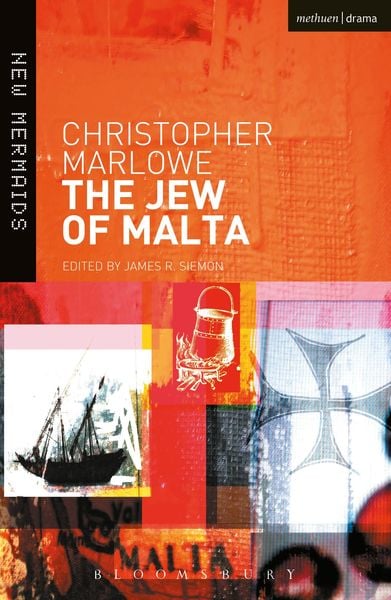
The Jew of Malta
-
- Hardcover
- Taschenbuch ausgewählt
- eBook
-
Sprache:Englisch
-
Verlag:Bloomsbury Academic
- W. W. Norton & Company 23,99 €
- Nebraska 12,99 €
- Tredition 9,90 €
- Lushena Books 14,99 €
- Sharp Ink 10,10 €
- Bloomsbury Publishing 14,99 €
- Book Jungle 24,99 €
- Culturea 14,95 €
- Creative Media Partners, LLC 19,99 €
- Theatre Communications Group 13,99 €
- BoD - Books on Demand 19,90 €
- Bloomsbury Academic 14,99 € ausgewählt
- Ingram Publishers Services 21,99 €
- Pan macmillan Ltd. 13,99 €
- Double 9 Books 15,99 €
14,99 €
inkl. gesetzl. MwSt.,
Beschreibung
Produktdetails
Einband
Taschenbuch
Erscheinungsdatum
30.05.2009
Abbildungen
n/a
Herausgeber
Siemon James R.Verlag
Bloomsbury AcademicSeitenzahl
176
Maße (L/B/H)
19,8/12,8/1,7 cm
Gewicht
148 g
Auflage
3rd Revised edition
Sprache
Englisch
ISBN
978-0-7136-7766-9
'Tell me worldlings, underneath the sun, If greater falsehood ever has been done'
The Jew of Malta, written around 1590, can present a challenge for modern audiences. Hugely popular in its day, the play swings wildly and rapidly in genre, from pointed satire, to bloody revenge tragedy, to melodrmatic intrigue, to dark farce and grotesque comedy. Although set in the Mediterranean island of Malta, the play evokes contemporary Elizabethan social tensions, especially the highly charged issue of London's much-resented community of resident merchant foreigners. Barabas, the enormously wealthy Jew of the play's title, appears initially victimized by Malta's Christian Governor, who quotes scripture to support the demand that Jews cede their wealth to pay Malta's tribute to the Turks. When he protests, Barabas is deprived of his wealth, his means of livelihood, and his house, which is converted to a nunnery. In response to this hypocritical extortion, Barabas launches a horrific (and sometimes hilarious) course of violence that goes well beyond revenge, using murderous tactics that include everything from deadly soup to poisoned flowers. The play's sometimes complex treatment of anti-Semitism and its relationship to Shakespeare's Merchant of Venice remain matters of continuing scholarly reflection.
This student edition contains a lengthy Introduction with background on the author, date and sources, theme, critical interpretation and stage history, as well as a fully annotated version of the playtext in modern spelling.
James R. Siemon is Professor of English at Boston University.
Noch keine Bewertungen vorhanden
Verfassen Sie die erste Bewertung zu diesem Artikel
Helfen Sie anderen Kundinnen und Kunden durch Ihre Meinung.
Kurze Frage zu unserer Seite
Vielen Dank für Ihr Feedback
Wir nutzen Ihr Feedback, um unsere Produktseiten zu verbessern. Bitte haben Sie Verständnis, dass wir Ihnen keine Rückmeldung geben können. Falls Sie Kontakt mit uns aufnehmen möchten, können Sie sich aber gerne an unseren Kund*innenservice wenden.
zum Kundenservice