• Produktbild: The Cambridge Handbook of Literacy
  • Produktbild: The Cambridge Handbook of Literacy

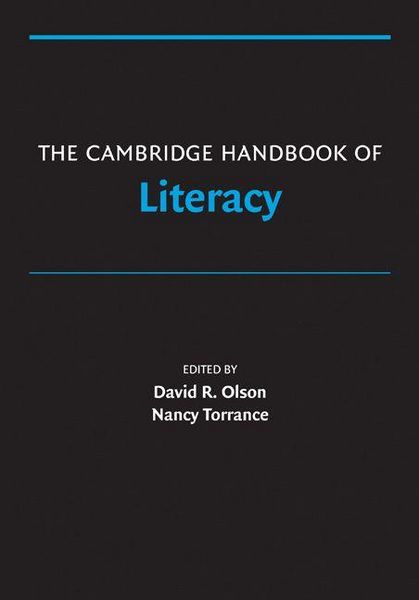
The Cambridge Handbook of Literacy

226,99 €

inkl. gesetzl. MwSt., Versandkostenfrei


Beschreibung

Produktdetails

Einband

Gebundene Ausgabe

Erscheinungsdatum

07.12.2021

Herausgeber

Olson David R. + weitere

Verlag

Cambridge Academic

Seitenzahl

624

Maße (L/B/H)

26/18,3/3,8 cm

Gewicht

1230 g

Sprache

Englisch

ISBN

978-0-521-86220-2

Beschreibung

Produktdetails

Einband

Gebundene Ausgabe

Erscheinungsdatum

07.12.2021

Herausgeber

Verlag

Cambridge Academic

Seitenzahl

624

Maße (L/B/H)

26/18,3/3,8 cm

Gewicht

1230 g

Sprache

Englisch

ISBN

978-0-521-86220-2

Herstelleradresse

Libri GmbH
Europaallee 1
36244 Bad Hersfeld
DE

Email: gpsr@libri.de

Kundinnen und Kunden meinen

0 Bewertungen

Informationen zu Bewertungen

Zur Abgabe einer Bewertung ist eine Anmeldung im Konto notwendig. Die Authentizität der Bewertungen wird von uns nicht überprüft. Wir behalten uns vor, Bewertungstexte, die unseren Richtlinien widersprechen, entsprechend zu kürzen oder zu löschen.

Die Bewertungen sind nach Format, Anzahl Sterne und Datum sortiert.

Verfassen Sie die erste Bewertung zu diesem Artikel

Helfen Sie anderen Kund*innen durch Ihre Meinung

Kundinnen und Kunden meinen

0 Bewertungen filtern

  • Produktbild: The Cambridge Handbook of Literacy
  • Produktbild: The Cambridge Handbook of Literacy
  • Part I. Literacy as a Scientific Subject: 1. The literacy episteme (from Innis to Derrida) Jens Brockmeier and David Olson; Part II. Literacy and Language: 2. Grammotology Peter T. Daniels; 3. Speech and writing Roy Harris; 4. The origins and co-evolution of literacy and numeracy Steven Chrisomalis; 5. Are there linguistic consequences of literacy? Comparing the potentials of language use in speech and writing Douglas Biber; 6. Becoming a literate language user: oral and written text construction across adolescence Ruth A. Berman and Dorit Ravid; 7. The challenge of academic language Catherine Snow and Paola Uccelli; 8. The basic processes in reading: insights from neuroscience Usha Goswami; 9. Language and literacy from a cognitive neuroscience perspective Karl Magnus Petersson, Martin Ingvaar, and Alexandra Reis; Part III. Literacy and Literatures: 10. Ways of reading Elizabeth Long; 11. Conventions of reading Heather Murray; 12. Literacy, reading and concepts of the self Carolyn Steedman; 13. Reading as a woman, being read as a woman Lisbeth Larsson; 14. Literacy and the history of science Karine Chemla; 15. Scientific literacy Steven Norris and Linda Phillips; 16. Digital literacy Teresa Dobson and John Willinsky; 17. Literacy, video games and popular culture James Paul Gee; Part IV. Literacy and Society: 18. Ethnography of writing and reading Brian Street; 19. The origins of Western literacy: literacy in Ancient Greece and Rome Rosalind Thomas; 20. Literacy from late antiquity to the early Middle Ages, c. 300-800 Nicholas Everett; 21. Chinese literacy Feng Wang, Yaching Tsai and William Shi-Yuan Wang; 22. The elephant in the room: language and literacy in the Arab world Niloofar Haeri; 23. Literacy, modernization, the intellectual community and civil society in the western world Frits van Holthoon; Part V. Literacy and Education: 24. The teaching of literacy skills in Western Europe: an historical perspective (16th to 20th centuries) A.-M. Chartier; 25. The configuration of literacy as a domain of knowledge Liliana Tolchinsky; 26. Literate thinking: metalinguistics and metacognition Bruce Homer; 27. Cultural and developmental predispositions to literacy Alison Garton and Chris Pratt; 28. Literacy and international development: education and literacy as human rights Joe Farrell; 29. Adult literacy education in industrialized nations Tom Sticht; 30. New technologies for literacy and international development Daniel Wagner; 31. Literacy theory and literacy policy David Olson.