Gutscheinbedingungen

Gültig bis 13.07.2026 | Gültig für Spielzeug (außer Tonieboxen & ausgewählte Tonies), Filme, Musik, Software, Games, Schreibwaren, Hörbücher und Hörbuch-Downloads (außer Abo & Shelfies), gebrauchte Bücher, nicht preisgebundene Bücher und Kalender | Einlösbar unter osiander.de und in der Osiander App | Click & Collect nur mit Online-Zahlung (Paypal/Kreditkarte) vorab | Einzelne Artikel können ausgeschlossen sein | Nicht kombinierbar mit anderen Gutscheinen oder Preisaktionen | Nur einmal pro Einkauf einlösbar | Gutschein wird auf max. 500€ Bestellwert angerechnet | Keine Barauszahlung | Digitale Hörbücher nur für Android | Nicht gültig für preisgebundene Artikel (aufgrund der Buchpreisbindung sind Gutscheine nicht auf Bücher, eBooks, Presse einlösbar), tolino eReader & Zubehör, Elektronik, Geschenke & Trends, Abonnements & Flatrates, Geschenkkarten, Versandkosten und Services

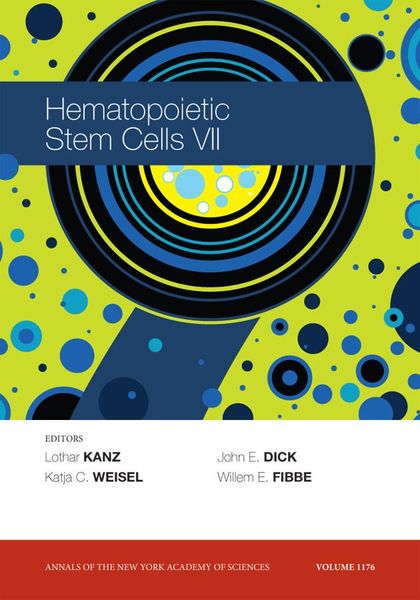
Produktbild: Hematopoietic Stem Cells VII

Hematopoietic Stem Cells VII

174,99 €

inkl. gesetzl. MwSt., Versandkostenfrei


Beschreibung

Produktdetails

Einband

Taschenbuch

Erscheinungsdatum

26.10.2009

Herausgeber

Lothar Kanz + weitere

Verlag

John Wiley & Sons Inc

Seitenzahl

300

Maße (L/B/H)

25,3/17,8/1,5 cm

Gewicht

521 g

Auflage

1. Auflage

Sprache

Englisch

ISBN

978-1-57331-761-0

Beschreibung

Produktdetails

Einband

Taschenbuch

Erscheinungsdatum

26.10.2009

Herausgeber

Verlag

John Wiley & Sons Inc

Seitenzahl

300

Maße (L/B/H)

25,3/17,8/1,5 cm

Gewicht

521 g

Auflage

1. Auflage

Sprache

Englisch

ISBN

978-1-57331-761-0

Herstelleradresse

Libri GmbH
Europaallee 1
36244 Bad Hersfeld
DE

Email: GPSR Kontakt

Noch keine Bewertungen vorhanden

Verfassen Sie die erste Bewertung zu diesem Artikel

Helfen Sie anderen Kundinnen und Kunden durch Ihre Meinung.

Kundinnen und Kunden meinen

Bewertungen (0)

  • Produktbild: Hematopoietic Stem Cells VII
  • Part I. Stem Cell Hierachy and Niche.
     
    1. Lymphoid lineage fate decision of hematopoietic stem cells (Koichi Akashi).
     
    2. Genetic Models to Study Quiescent Stem Cells and Their Niches (Christoph Schaniel and Kateri A. Moore).
     
    3. Niche regulation of hematopoietic stem cells in the endosteum: the role of Thrombopoietin/Mpl signaling in the maintenance of quiescent hematopoietic stem cells (Fumio Arai, Hiroki Yoshihara, Kentaro Hosokawa, Yuka Nakamura, Yumiko Gomei, Hiroko Iwasaki, and Toshio Suda).
     
    4. Functional Heterogeneity of the Bone Marrow Vascular Niche (K. Hans Georg Kopp, Andrea T. Hooper, Scott T. Avecilla, and Shahin Rafii).
     
    Part II. Stem Cell Regulation.
     
    5. Complex and Context Dependent Regulation of Hematopoiesis by TGF-' Superfamily Signaling (Sofie Singbrant Söderberg, Göran Karlsson, and Stefan Karlsson).
     
    6. WNT Proteins: Environmental factors regulating HSC fate in the niche (Tiago C. Luis and Frank J.T. Staal).
     
    7. Removal of the Spleen in Mice Alters the Cytokine Expression Profile of the Marrow Microenvironmement and Increases Bone Formation (Fabrizio Martelli, Maria Verrucci, Giovanni Migliaccio, Maria Zingariello, Rosa Alba Rana, Alessandro Maria Vannucchi, and Anna Rita Migliaccio).
     
    8. Novel trafficking routes for hematopoietic stem and progenitor cells (Steffen Massberg and Ulrich H. von Andrian).
     
    9. Dysregulation of myeloid-specific transcription factors in congenital neutropenia: rescue by NAMPT/NAD+/SIRT1 (Julia Skokowa and Karl Welte).
     
    Part III. Mesenchymal Stem Cells.
     
    10. Mesenchymal stromal cells: a novel treatment modality for tissue repair (Maria Ester Bernardo, Franco Locatelli, and Willem E. Fibbe).
     
    11. Perivascular Multipotent Progenitor Cells in Human Organs (Mihaela Crisan, Chien-Wen Chen, Mirko Corselli, Gabriella Andriolo, Lorenza Lazzari, and Bruno Péault).
     
    12. Phenotypic characterization of distinct human bone marrow-derived MSC subsets (Hans-Jörg Bühring, Sabrina Treml, Flavianna Cerabona, Peter de Zwart, Lothar Kanz, and Malgorzata Sobiesiak).
     
    13. In vitro myogenic differentiation of human bone marrow-derived mesenchymal stem cells as a potential treatment for urethral sphincter muscle repair (Adriana C. Drost, Sibylle Weng, Gerhard Feil, Jochen Schäfer, Simon Baumann, Lothar Kanz, Karl-Dietrich Sievert, Arnulf Stenzl, and Robert Möhle).
     
    Part IV. Malignant Hematopoiesis and Cancer Stem Cells.
     
    14. Transformation from Committed Progenitor To Leukemia Stem Cells (Andrei V. Krivtsov, Zhaohui Feng, and Scott A. Armstrong).
     
    15. The role of PLZF in human myeloid development (John E. Dick and Sergei Doulatov).
     
    16. Anti-Tumor Immunity and Cancer Stem Cells (Tobias Schatton and Markus H. Frank).
     
    17. Natural genetic diversity as a means to uncover stem cell regulatory pathways (Gary Van Zant and Ying Liang).
     
    Part V. Aging.
     
    18. Short Telomeres Resulting from Heritable Mutations in the Telomerase Reverse Transcriptase Gene Predispose for a Variety of Malignancies (Mark Hills and Peter M. Lansdorp).
     
    Part V. Pluripotency.
     
    19. Disease models from pluripotent stem cells: turning back time in disease pathogenesis? (Claudia Lengerke and George Q. Daley).
     
    20. Tumors originating from induced pluripotent stem cells and methods for their prevention (Dirk Duinsbergen, Daniela Salvatori, Malin Eriksson, and Harald Mikkers).
     
    21. Fetal Liver Very Small Embryonic/Epiblast Like Stem Cells (VSELs) Follow Developmental Migratory Pathway of Hematopoietic Stem Cells (Ewa K. Zuba-Surma, Magda Kucia, Liu Rui, Wojtek Wojakowski, Janina Ratajczak, and Mariusz Z. Ratajczak).
     
    22. Hematopoietic Development from Human Induced Pluripotent Stem Cells (Claudia Lengerke, Matthias Grauer, Ni