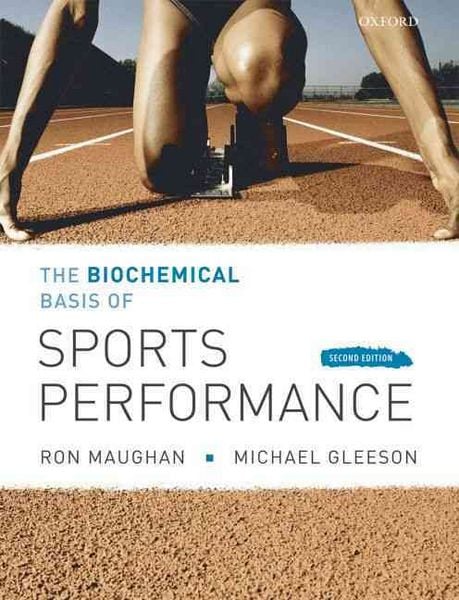
Beschreibung
Produktdetails
Einband
Taschenbuch
Erscheinungsdatum
15.07.2010
Abbildungen
110 line illustrations
Verlag
Oxford University PressSeitenzahl
332
Maße (L/B/H)
24,5/18,9/1,9 cm
Gewicht
653 g
Auflage
2nd edition
Sprache
Englisch
ISBN
978-0-19-920828-9
Some understanding of the biochemistry of exercise is fundamental to any study of the factors that contribute to sports performance. It is the physical, chemical and biochemical properties of cells and tissues that determine the physiological responses to exercise, and yet the teaching of exercise biochemistry is poorly developed compared with exercise physiology. Where the subject is taught, the student often finds the approach somewhat daunting, with its focus on thermodynamics, chemical structures and metabolic pathways.
Many students find the subject difficult, when it should not be so. This book introduces the student of sports science or exercise physiology to the biochemical processes that underpin exercise performance and the adaptations that occur with training. The focus is on skeletal muscle metabolism and the provision of energy for working muscles and the principles of exercise biochemistry are introduced in a context that is immediately relevant to the student of sports science.
Instead of the traditional approach of working through the main classes of biomolecules and metabolic pathways, the subject is tackled by considering the biochemical processes involved in energy provision for different sports events and the way in which limitations in energy supply can cause fatigue, and thus limit performance. Recovery from exercise is important for athletes who train and compete with only a limited rest period, and the biochemical processes that influence recovery and restoration of performance capacity are also addressed. The processes fuelling the activities that contribute to sport form the core of this book, together with the changes that occur with training and the role of diet in providing the necessary fuels. But sporting talent is a rare gift, and a brief description of its hereditary basis is included.
· A complete introduction to the biochemical basis of sports performance, appealing to undergraduate students, coaches, and athletes
· Numerous links made between biochemistry and physiology for an integrated view of the subject
· The student is directed to carefully chosen further reading articles, allowing them to readily explore key topics in more detail
Online Resource Centre
The Online Resource Centre to accompany The Biochemical Basis of Sports Performance features:
For students:
· 'In the News' updates
· Multiple choice questions
· Hyperlinked bibliography
· Extended case study following an athlete through a season, with exercises
For lecturers:
· Figures from the book, available to download
Many students find the subject difficult, when it should not be so. This book introduces the student of sports science or exercise physiology to the biochemical processes that underpin exercise performance and the adaptations that occur with training. The focus is on skeletal muscle metabolism and the provision of energy for working muscles and the principles of exercise biochemistry are introduced in a context that is immediately relevant to the student of sports science.
Instead of the traditional approach of working through the main classes of biomolecules and metabolic pathways, the subject is tackled by considering the biochemical processes involved in energy provision for different sports events and the way in which limitations in energy supply can cause fatigue, and thus limit performance. Recovery from exercise is important for athletes who train and compete with only a limited rest period, and the biochemical processes that influence recovery and restoration of performance capacity are also addressed. The processes fuelling the activities that contribute to sport form the core of this book, together with the changes that occur with training and the role of diet in providing the necessary fuels. But sporting talent is a rare gift, and a brief description of its hereditary basis is included.
· A complete introduction to the biochemical basis of sports performance, appealing to undergraduate students, coaches, and athletes
· Numerous links made between biochemistry and physiology for an integrated view of the subject
· The student is directed to carefully chosen further reading articles, allowing them to readily explore key topics in more detail
Online Resource Centre
The Online Resource Centre to accompany The Biochemical Basis of Sports Performance features:
For students:
· 'In the News' updates
· Multiple choice questions
· Hyperlinked bibliography
· Extended case study following an athlete through a season, with exercises
For lecturers:
· Figures from the book, available to download
Kundinnen und Kunden meinen
Verfassen Sie die erste Bewertung zu diesem Artikel
Helfen Sie anderen Kund*innen durch Ihre Meinung
Kurze Frage zu unserer Seite
Vielen Dank für Ihr Feedback
Wir nutzen Ihr Feedback, um unsere Produktseiten zu verbessern. Bitte haben Sie Verständnis, dass wir Ihnen keine Rückmeldung geben können. Falls Sie Kontakt mit uns aufnehmen möchten, können Sie sich aber gerne an unseren Kund*innenservice wenden.
zum Kundenservice