• Produktbild: Spelling
  • Produktbild: Spelling

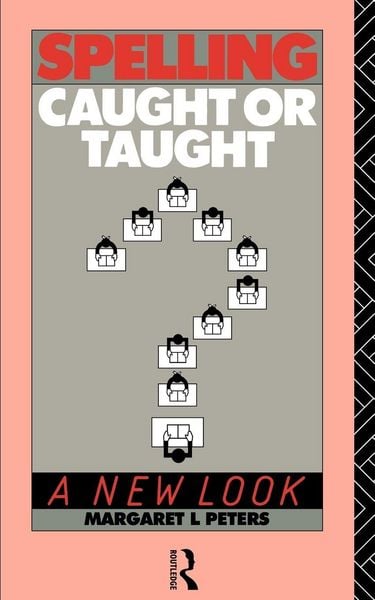
Spelling Caught or Taught?: A New Look

65,99 €

inkl. gesetzl. MwSt., Versandkostenfrei


Beschreibung

Produktdetails

Einband

Taschenbuch

Erscheinungsdatum

31.01.1985

Verlag

Taylor and Francis

Seitenzahl

128

Maße (L/B/H)

20,3/12,7/0,7 cm

Gewicht

240 g

Sprache

Englisch

ISBN

978-0-415-02762-5

Beschreibung

Produktdetails

Einband

Taschenbuch

Erscheinungsdatum

31.01.1985

Verlag

Taylor and Francis

Seitenzahl

128

Maße (L/B/H)

20,3/12,7/0,7 cm

Gewicht

240 g

Sprache

Englisch

ISBN

978-0-415-02762-5

Herstelleradresse

Libri GmbH
Europaallee 1
36244 Bad Hersfeld
DE

Email: gpsr@libri.de

Kundinnen und Kunden meinen

0 Bewertungen

Informationen zu Bewertungen

Zur Abgabe einer Bewertung ist eine Anmeldung im Konto notwendig. Die Authentizität der Bewertungen wird von uns nicht überprüft. Wir behalten uns vor, Bewertungstexte, die unseren Richtlinien widersprechen, entsprechend zu kürzen oder zu löschen.

Die Bewertungen sind nach Format, Anzahl Sterne und Datum sortiert.

Verfassen Sie die erste Bewertung zu diesem Artikel

Helfen Sie anderen Kund*innen durch Ihre Meinung

Kundinnen und Kunden meinen

0 Bewertungen filtern

Die Leseprobe wird geladen.
  • Produktbild: Spelling
  • Produktbild: Spelling
  • The spelling problem, The case for good spelling, What is involved in spelling? Caught or taught? The incidental/systematic Controversy, The 1970 research 1 Verbal ability 2 Visual perception of word form, 3 Perceptuo-motor ability, 2 How is it caught? Is it caught through reading? Does poor hearing prevent the catching of spelling? Is it caught through listening? Does poor sight prevent the catching of spelling? Is it caught through looking? Would spelling be caught more easily by a simplified spelling system? 3 Teachin~ the catching of ~elling for those w 0 have not alrea y caught it, Directing attention, Attention and perception, Parents' knowledge of the spelling system, A visual skill? How do we know? Looking with intent, The importance of associative learning techniqtles in the learning of unknown words, Letter strings, Words within words, The dangers of syllabification, Use of morphemic information in learning to spell, The importance of developing a kind of imagery and of increasing the span of apprehension, Intentional communication and handwriting, Spelling in the Infant School, Intentional communication, Acquiring secretarial skills preparatory to performative activity, The importance of children developing a firm strategy for learning new words, How to learn a new word, 4 Historical approaches to the teaching of spelling, The problem of homophones, Teaching spelling by rules, Reservations about the use of rules, Test-study/Study-test method 5 Current approaches, Exploiting the visual media, Learning to spell by computers, Current materials, Correction procedures, Dictionary techniques, The self-image in spelling, Techniques of study 6 The assessment of spelling: how spelling is tested, Normative spelling tests (recall), Predictive information on spelling, A positive assessment of spelling strategies. Conclusion