• Produktbild: Animal Models
  • Produktbild: Animal Models
- 12%

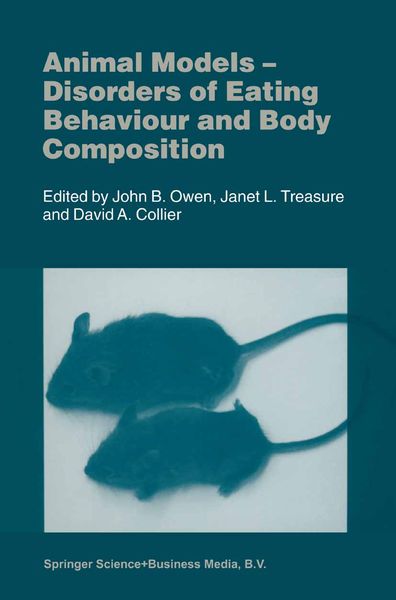
Animal Models Disorders of Eating Behaviour and Body Composition

12% sparen

139,99 € UVP 160,49 €

inkl. gesetzl. MwSt., Versandkostenfrei


Beschreibung

Produktdetails

Einband

Taschenbuch

Erscheinungsdatum

01.12.2010

Abbildungen

X, 252 p.

Herausgeber

J.B. Owen + weitere

Verlag

Springer Netherland

Seitenzahl

252

Maße (L/B/H)

23,5/15,5/1,5 cm

Gewicht

406 g

Auflage

1. Auflage

Sprache

Englisch

ISBN

978-90-481-5743-3

Beschreibung

Produktdetails

Einband

Taschenbuch

Erscheinungsdatum

01.12.2010

Abbildungen

X, 252 p.

Herausgeber

Verlag

Springer Netherland

Seitenzahl

252

Maße (L/B/H)

23,5/15,5/1,5 cm

Gewicht

406 g

Auflage

1. Auflage

Sprache

Englisch

ISBN

978-90-481-5743-3

Herstelleradresse

Springer-Verlag GmbH
Tiergartenstr. 17
69121 Heidelberg
DE

Email: ProductSafety@springernature.com

Noch keine Bewertungen vorhanden

Verfassen Sie die erste Bewertung zu diesem Artikel

Helfen Sie anderen Kundinnen und Kunden durch Ihre Meinung.

Kundinnen und Kunden meinen

Bewertungen (0)

  • Produktbild: Animal Models
  • Produktbild: Animal Models
  • 1 Human disorders of eating behaviour and body composition.- 1 Obesity syndromes.- 2 The spectrum of eating disorders in humans.- 3 Free-choice diet selection — the economics of eating.- 2 Diet selection and aberrations of body composition.- 4 Diet selection in wild animals.- 5 The animal within: lessons from the feeding behaviour of farm animals.- 6 Exercise and diet-induced obesity in mice.- 3 Genetic models of animal obesity.- 7 The obesity (ob) gene and leptin in animal models of obesity.- 8 Genetic susceptibility of rodents to diet-induced obesity.- 4 Genetic susceptibility to leanness in animals.- 9 Muscle enhanced traits in cattle and sheep.- 10 The halothane gene and leanness and stress susceptibility in pigs.- 5 Anorexia models.- 11 The Anorexia Mouse.- 12 Anorexia-like wasting syndromes in pigs.- 13 Laboratory animal models for investigating the mechanisms and function of parasite-induced anorexia.- Conclusion Implications for understanding and treating human eating disorders.