• Produktbild: Corporate Governance
  • Produktbild: Corporate Governance

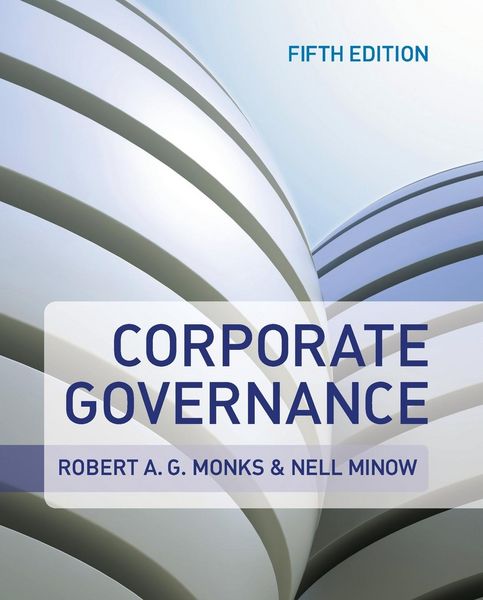
Corporate Governance

52,99 €

inkl. gesetzl. MwSt., Versandkostenfrei


Beschreibung

Produktdetails

Einband

Taschenbuch

Erscheinungsdatum

08.07.2011

Verlag

John Wiley & Sons Inc

Seitenzahl

520

Maße (L/B/H)

23,3/19/2,8 cm

Gewicht

1134 g

Auflage

5. Auflage

Sprache

Englisch

ISBN

978-0-470-97259-5

Beschreibung

Produktdetails

Einband

Taschenbuch

Erscheinungsdatum

08.07.2011

Verlag

John Wiley & Sons Inc

Seitenzahl

520

Maße (L/B/H)

23,3/19/2,8 cm

Gewicht

1134 g

Auflage

5. Auflage

Sprache

Englisch

ISBN

978-0-470-97259-5

Herstelleradresse

Libri GmbH
Europaallee 1
36244 Bad Hersfeld
DE

Email: gpsr@libri.de

Noch keine Bewertungen vorhanden

Verfassen Sie die erste Bewertung zu diesem Artikel

Helfen Sie anderen Kundinnen und Kunden durch Ihre Meinung.

Kundinnen und Kunden meinen

Bewertungen (0)

Die Leseprobe wird geladen.
  • Produktbild: Corporate Governance
  • Produktbild: Corporate Governance
  • Cases in Point xiii

    Preface xvii

    Acknowledgments xxvii

    Introduction - How to Use this Book 1

    1. What is a Corporation? 3

    Defining the Corporate Structure, Purpose, and Powers 5

    Evolution of the Corporate Structure 6

    The Purpose of a Corporation 9

    Satisfying the human need for ambition, creativity, and meaning 9

    Social structure 10

    Efficiency and efficacy 10

    Ubiquity and flexibility 11

    Identity 11

    Metaphor 1: The Corporation as a "Person" 12

    Metaphor 2: The Corporation as a Complex Adaptive System 12

    Are Corporate Decisions "Moral"? 14

    Are Corporations Accountable? 16

    Three Key External Mechanisms for Directing Corporate Behavior: Law, the Market, and Performance Measurement 18

    Government: legislation, regulation, enforcement 18

    What Does "Within the Limits of the Law" Mean? 20

    When and how do you punish a corporation? 28

    Probation of corporations 29

    The problem of serial offenders 31

    Securities analyst settlement 32

    What is the role of shareholders in making this system work? 33

    The market: too big to fail 36

    The corporation and elections 40

    Citizens united 41

    The corporation and the law 45

    A Market Test: Measuring Performance 47

    Long term versus short term 50

    Corporate decision making: whose interests does this "person"/adaptive creature serve? 55

    Another (failed) market test: NGOs 61

    Measuring value enhancement 62

    GAAP 62

    Market value 69

    Earnings per share 70

    EVA(r): economic value added 71

    Human capital: "It's not what you own but what you know" 72

    The "value chain" 73

    Knowledge capital 74

    The value of cash 74

    Corporate "externalities" 79

    Equilibrium: The Cadbury Paradigm 79

    ESG: Environment, Social Governance - A New Way to Analyze Investment Risk and Value 83

    Quantifying Nontraditional Assets and Liabilities 87

    Future Directions 92

    Summary and Discussion Questions 93

    Notes 95

    2. Shareholders: Ownership 101

    Definitions 105

    Early Concepts of Ownership 106

    Early Concepts of the Corporation 107

    A Dual Heritage: Individual and Corporate "Rights" 108

    The Reinvention of the Corporation: Eastern Europe in the 1990s 110

    The Evolution of the American Corporation 111

    The Essential Elements of the Corporate Structure 115

    The Mechanics of Shareholder Rights 117

    The Separation of Ownership and Control, Part 1: Berle and Means 118

    Fractionated Ownership 125

    The Separation of Ownership and Control, Part 2: The Takeover Era 129

    Waking the Sleeping Giant 134

    A Framework for Shareholder Monitoring and Response 140

    Ownership and Responsibility 141

    No innocent shareholder 141

    To Sell or Not to Sell: The Prisoner's Dilemma 143

    Who the Institutional Investors Are 144

    Bank trusts 145

    Mutual funds 146

    Insurance companies 149

    Universities and foundations 149

    Executive pay from the consumer side - a leading indicator of risk 150

    Pension plans 154

    The Biggest Pool of Money in the World 154

    Pension plans as investors 164

    Pension plans as owners 166

    Public Pension Funds 169

    Divestment initiatives 188

    Economically targeted investments 189

    AFSCME 195

    Federal Employees' Retirement System 197

    TIAA-CREF 199

    Private Pension Funds 201

    The Sleeping Giant Awakens: Shareholder Proxy Proposals on Governance Issues 206

    Focus on the Board 212

    Hedge Funds 220

    Synthesis: Hermes 221

    Investing in Activism 222

    New Models and New Paradigms 223

    The "Ideal Owner" 228

    Pension Funds as "Ideal Owners" 233

    Is the "Ideal Owner" Enough? 234

    Summary and Discussion Questions 236

    Notes 238

    3. Directors: Monitoring 251

    A Brief History of Anglo-American Boards 255

    Who Are They? 256

    Size 256

    Term 256

    Inside/outside mix 257

    Qualifications 261

    Who Leads the Board? Splitting the Chairman and CEO and the Rise of the Lead Director 261

    Agenda 263

    Minutes 263

    Diversity 264

    Meetings 264

    Communicating with Shareholders 264

    Special Obligations of Audit Committees 265

    Ownership/Compensation 266

    Post-Sarbanes-Oxley Changes 266

    Board Duties: The Legal Framework 267

    The Board's Agenda 281

    The Evolution of Board Responsibilities: The Takeover Era 283

    The Fiduciary Standard and the Delaware Factor 284

    How did boards respond? 287

    Greenmail 287

    "Poison pills" 288

    Other anti-takeover devices 290

    The Director's Role in Crisis 291

    Limits and Obstacles to Board Oversight of Managers 295

    Information Flow 295

    Practical Limits: Time and Money 301

    The Years of Corporate Scandals - Boards Begin to Ask for More 302

    Director Information Checklist 303

    Who Runs the Board? 304

    Catch 22: The Ex-CEO as Director 306

    Director Resignation 308

    CEO Succession 308

    Director Nomination 309

    Limits and Obstacles to Effective Board Oversight by Shareholders 318

    Carrots: Director Compensation and Incentives 319

    Sticks, Part 1: Can Investors Ensure or Improve Board Independence by Replacing Directors who Perform Badly or Suing Directors who Fail to Act as Fiduciaries? 324

    Can Directors be Held Accountable through the Election Process? 324

    Staggered boards 327

    Confidential voting 328

    Sticks, Part 2: Suing for Failure to Protect the Interests of Shareholders - Are the Duties of Care and Loyalty Enforceable? 331

    Future Directions 331

    Majority voting and proxy access 331

    Improving director compensation 333

    Increasing the authority of independent directors 333

    "A market for independent directors" 335

    "Designated director" 336

    Board evaluation 336

    Executive session meetings 336

    Succession planning and strategic planning 337

    Making directors genuinely "independent" 337

    Involvement by the federal government 338

    Involvement by shareholders 339

    Summary and Discussion Questions 339

    Notes 340

    4. Management: Performance 347

    Introduction 348

    What Do We Want from the CEO? 354

    The Biggest Challenge 359

    Risk Management 363

    Executive Compensation 363

    The pay Czar 370

    Post-meltdown pay 370

    The Council of Institutional Investors 371

    Stock Options 374

    Restricted Stock 379

    Yes, We Have Good Examples 380

    Shareholder Concerns: Several Ways to Pay Day 380

    The "guaranteed bonus" - the ultimate oxymoron 380

    Deliberate obfuscation 381

    The Christmas tree 382

    Compensation plans that are all upside and no downside 382

    Loans 382

    Accelerated vesting of options 383

    Manipulation of earnings to support bonuses 383

    Manipulation of peer groups 384

    Huge disparity between CEO and other top executives 384

    Imputed years of service 384

    Excessive departure packages 384

    Backdating, bullet-dodging, and spring-loading options 385

    Phony cuts 386

    Golden hellos 386

    Transaction bonuses 386

    Gross-ups and other perquisites 387

    Retirement benefits 387

    Obstacles to restitution when CEOs are overpaid 387

    Future Directions for Executive Compensation 388

    CEO Employment Contracts 389

    Cause 390

    Change of control 391

    Half now, half later 391

    CEO Succession Planning 391

    Sarbanes-Oxley 392

    Creation of the Public Company Accounting Oversight Board 392

    Section 404 393

    Other changes 394

    Dodd-Frank 394

    Employees: Compensation and Ownership 395

    Employee Stock Ownership Plans 399

    Mondragón and Symmetry: Integration of Employees, Owners, and Directors 403

    Conclusion 409

    Summary and Discussion Questions 410

    Notes 411

    5. International Corporate Governance 415

    The Institutional Investor as Proxy for the Public Interest 429

    Norway in the driver's seat 431

    The International Corporate Governance Network 433

    ICGN: Statement of Principles on Institutional Shareholder Responsibilities 433

    The Global Corporate Governance Forum 435

    Sweden 435

    Canada 437

    Singapore 438

    Russia 441

    Germany 442

    China 443

    Japan 444

    Governance Metrics International (GMI) 445

    World Bank and G7 Response 458

    Azerbaijan 459

    Slovakia 460

    Jordan 460

    Thailand 461

    Poland 461

    The Global Carbon Project (GCP) 464

    A Common Framework for Sustainability Reporting 465

    Towards a Common Language 468

    Vision 470

    Summary And Discussion Questions 471

    Notes 473

    6. Afterword: Final Thoughts and Future Directions 475

    Beyond the Nation State 477

    Government as Shareholder: The Institutional Investor as Proxy for the Public Interest 484

    Notes 486

    Index 489