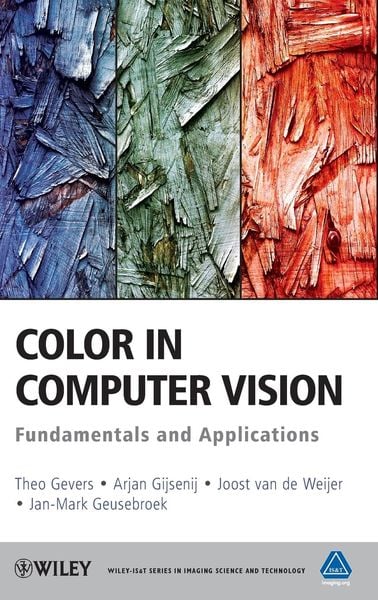
Color in Computer Vision Fundamentals and Applications
Aus der Reihe
Wiley-IS&T Series in Imaging Science and Technology
152,99 €
inkl. gesetzl. MwSt.,
Beschreibung
Produktdetails
Einband
Gebundene Ausgabe
Erscheinungsdatum
04.09.2012
Verlag
John Wiley & SonsSeitenzahl
350
Maße (L/B/H)
24/16,1/2,5 cm
Gewicht
790 g
Auflage
1. Auflage
Sprache
Englisch
ISBN
978-0-470-89084-4
While the field of computer vision drives many of today's digital technologies and communication networks, the topic of color has emerged only recently in most computer vision applications. One of the most extensive works to date on color in computer vision, this book provides a complete set of tools for working with color in the field of image understanding.
Based on the authors' intense collaboration for more than a decade and drawing on the latest thinking in the field of computer science, the book integrates topics from color science and computer vision, clearly linking theories, techniques, machine learning, and applications. The fundamental basics, sample applications, and downloadable versions of the software and data sets are also included. Clear, thorough, and practical, Color in Computer Vision explains:
* Computer vision, including color-driven algorithms and quantitative results of various state-of-the-art methods
* Color science topics such as color systems, color reflection mechanisms, color invariance, and color constancy
* Digital image processing, including edge detection, feature extraction, image segmentation, and image transformations
* Signal processing techniques for the development of both image processing and machine learning
* Robotics and artificial intelligence, including such topics as supervised learning and classifiers for object and scene categorization Researchers and professionals in computer science, computer vision, color science, electrical engineering, and signal processing will learn how to implement color in computer vision applications and gain insight into future developments in this dynamic and expanding field.
Based on the authors' intense collaboration for more than a decade and drawing on the latest thinking in the field of computer science, the book integrates topics from color science and computer vision, clearly linking theories, techniques, machine learning, and applications. The fundamental basics, sample applications, and downloadable versions of the software and data sets are also included. Clear, thorough, and practical, Color in Computer Vision explains:
* Computer vision, including color-driven algorithms and quantitative results of various state-of-the-art methods
* Color science topics such as color systems, color reflection mechanisms, color invariance, and color constancy
* Digital image processing, including edge detection, feature extraction, image segmentation, and image transformations
* Signal processing techniques for the development of both image processing and machine learning
* Robotics and artificial intelligence, including such topics as supervised learning and classifiers for object and scene categorization Researchers and professionals in computer science, computer vision, color science, electrical engineering, and signal processing will learn how to implement color in computer vision applications and gain insight into future developments in this dynamic and expanding field.
Kundinnen und Kunden meinen
Verfassen Sie die erste Bewertung zu diesem Artikel
Helfen Sie anderen Kund*innen durch Ihre Meinung
Kurze Frage zu unserer Seite
Vielen Dank für Ihr Feedback
Wir nutzen Ihr Feedback, um unsere Produktseiten zu verbessern. Bitte haben Sie Verständnis, dass wir Ihnen keine Rückmeldung geben können. Falls Sie Kontakt mit uns aufnehmen möchten, können Sie sich aber gerne an unseren Kund*innenservice wenden.
zum Kundenservice