Beschreibung
Produktdetails
Einband
Taschenbuch
Erscheinungsdatum
23.07.2010
Verlag
Cornell University PressSeitenzahl
224
Maße (L/B/H)
24,2/15,9/1,5 cm
Gewicht
372 g
Sprache
Englisch
ISBN
978-0-8014-7690-7
"The just city is one in which equity, democracy, and diversity are important considerations. This is in contrast with the city as growth machine. Fainstein examines three cities: New York, London, and Amsterdam. She provides a history of post–World War II planning and then focuses on fairly recent cases of development in each. Her goals, though modest, are important if growing inequality in urban areas is to be reversed. Recommended."
- Choice
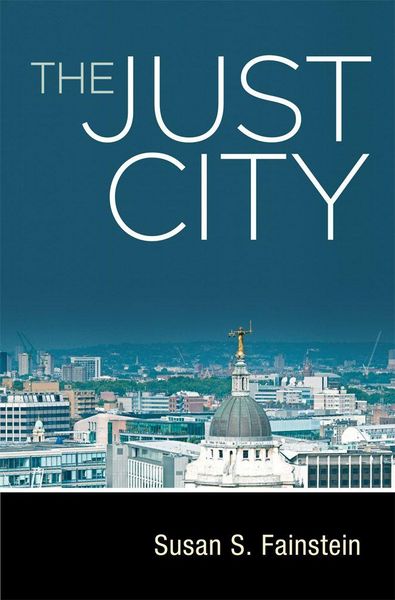
For much of the twentieth century improvement in the situation of disadvantaged communities was a focus for urban planning and policy. Yet over the past three decades the ideological triumph of neoliberalism has caused the allocation of spatial, political, economic, and financial resources to favor economic growth at the expense of wider social benefits. Susan Fainstein's concept of the "just city" encourages planners and policymakers to embrace a different approach to urban development. Her objective is to combine progressive city planners' earlier focus on equity and material well-being with considerations of diversity and participation so as to foster a better quality of urban life within the context of a global capitalist political economy. Fainstein applies theoretical concepts about justice developed by contemporary philosophers to the concrete problems faced by urban planners and policymakers and argues that, despite structural obstacles, meaningful reform can be achieved at the local level.
In the first half of The Just City, Fainstein draws on the work of John Rawls, Martha Nussbaum, Iris Marion Young, Nancy Fraser, and others to develop an approach to justice relevant to twenty-first-century cities, one that incorporates three central concepts: diversity, democracy, and equity. In the book's second half, Fainstein tests her ideas through case studies of New York, London, and Amsterdam by evaluating their postwar programs for housing and development in relation to the three norms. She concludes by identifying a set of specific criteria for urban planners and policymakers to consider when developing programs to assure greater justice in both the process of their formulation and their effects.
Kundinnen und Kunden meinen
Pamphlet für ein ethisch…
P. Locher aus München am 16.08.2021
Bewertungsnummer: 2824102
Bewertet: eBook (ePUB)
Kurze Frage zu unserer Seite
Vielen Dank für Ihr Feedback
Wir nutzen Ihr Feedback, um unsere Produktseiten zu verbessern. Bitte haben Sie Verständnis, dass wir Ihnen keine Rückmeldung geben können. Falls Sie Kontakt mit uns aufnehmen möchten, können Sie sich aber gerne an unseren Kund*innenservice wenden.
zum Kundenservice