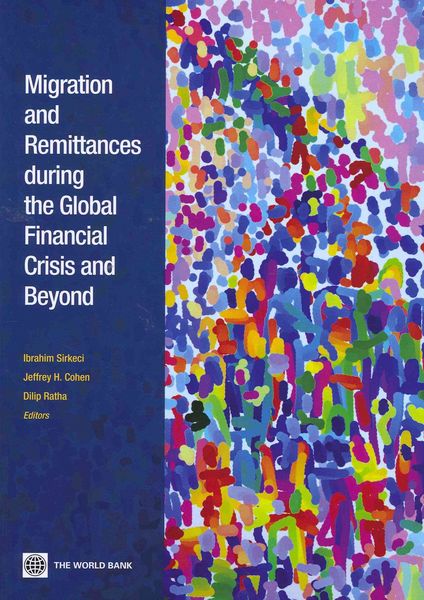
Migration and Remittances During the Global Financial Crisis and Beyond
-
- Englisch ausgewählt
39,99 €
inkl. gesetzl. MwSt.,
Beschreibung
Produktdetails
Einband
Taschenbuch
Erscheinungsdatum
31.05.2012
Herausgeber
Ibrahim Sirkeci + weitereVerlag
World Bank PublicationsSeitenzahl
470
Maße (L/B/H)
25,4/17,7/3,5 cm
Gewicht
834 g
Sprache
Englisch
ISBN
978-0-8213-8826-6
During the 2008 financial crisis, the possible changes in remittance-sending behavior and potential avenues to alleviate a probable decline in remittance flows became concerns. This book brings together a wide array of studies from around the world focusing on the recent trends in remittance flows. The authors have gathered a select group of researchers from academic, practitioner and policy making bodies. Thus the book can be seen as a conversation between the different stakeholders involved in or affected by remittance flows globally. The book is a first-of-its-kind attempt to analyze the effects of an ongoing crisis on remittance flows globally. Data analyzed by the book reveals three trends. First, The more diversified the destinations and the labour markets for migrants the more resilient are the remittances sent by migrants. Second, the lower the barriers to labor mobility, the stronger the link between remittances and economic cycles in that corridor. And third, as remittances proved to be relatively resilient in comparison to private capital flows, many remittance-dependent countries became even more dependent on remittance inflows for meeting external financing needs. There are several reasons for migration and remittances to be relatively resilient to the crisis. First, remittances are sent by the stock (cumulative flows) of migrants, not only by the recent arrivals (in fact, recent arrivals often do not remit as regularly as they must establish themselves in their new homes). Second, contrary to expectations, return migration did not take place as expected even as the financial crisis reduced employment opportunities in the US and Europe. Third, in addition to the persistence of migrant stocks that lent persistence to remittance flows, existing migrants often absorbed income shocks and continued to send money home. Fourth, if some migrants did return or had the intention to return, they tended to take their savings back to their country of origin. Finally, exchange rate movements during the crisis caused unexpected changes in remittance behavior: as local currencies of many remittance recipient countries depreciated sharply against the US dollar, they produced a "sale" effect on remittance behavior of migrants in the US and other destination countries.
Noch keine Bewertungen vorhanden
Verfassen Sie die erste Bewertung zu diesem Artikel
Helfen Sie anderen Kundinnen und Kunden durch Ihre Meinung.
Kurze Frage zu unserer Seite
Vielen Dank für Ihr Feedback
Wir nutzen Ihr Feedback, um unsere Produktseiten zu verbessern. Bitte haben Sie Verständnis, dass wir Ihnen keine Rückmeldung geben können. Falls Sie Kontakt mit uns aufnehmen möchten, können Sie sich aber gerne an unseren Kund*innenservice wenden.
zum Kundenservice