• Produktbild: Pluralism and Freedom
  • Produktbild: Pluralism and Freedom

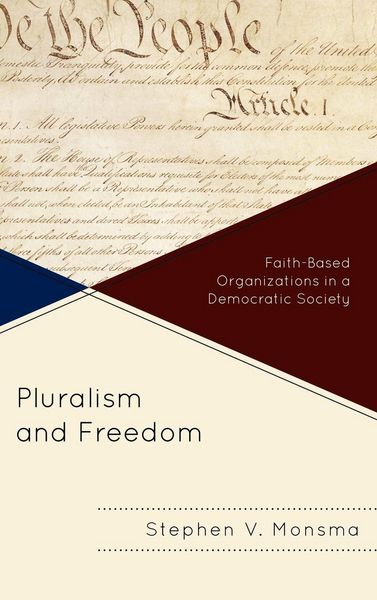
Pluralism and Freedom Faith-Based Organizations in a Democratic Society

119,99 €

inkl. gesetzl. MwSt., Versandkostenfrei


Beschreibung

Produktdetails

Einband

Gebundene Ausgabe

Erscheinungsdatum

09.12.2011

Verlag

Rowman & Littlefield

Seitenzahl

238

Maße (L/B/H)

23,5/15,7/1,9 cm

Gewicht

508 g

Sprache

Englisch

ISBN

978-1-4422-1430-9

Beschreibung

Zitat

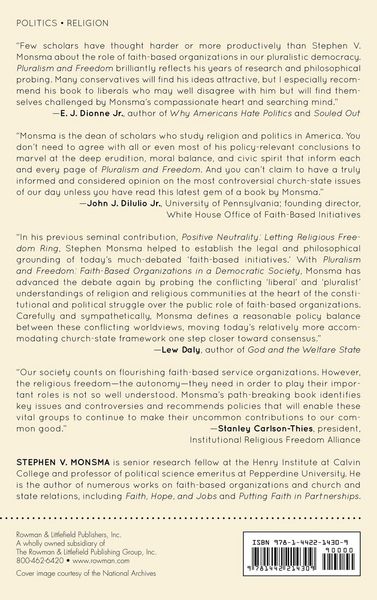
In this book Monsma (emer., Pepperdine Univ.) examines the contentious issue of the proper place of faith-based organizations (FBOs) in the public square in the US through the important lenses of freedom, pluralism, tolerance, and diversity. In particular, Monsma wants to determine how much religious autonomy FBOs should legally retain when entering into the public sphere, and how much religious diversity and pluralism should be willingly accepted in the public realm. Monsma correctly asserts that answering these questions is crucial given the large role that FBOs play in critical areas of US public life, and also convincingly argues that current thinking across the ideological spectrum is of little use in providing usable answers. In his attempt to address this dilemma, Monsma turns to western Europe, specifically to the Roman Catholic teaching of subsidiarity, the neo-Calvinist idea of sphere sovereignty, and the tradition of Christian Democracy to flesh out a solution he labels structural pluralism. Structural pluralism reserves an important place in the public realm for all intermediary institutions, religious and nonreligious alike. All will not agree with Monsma's take here, but all will benefit from considering his ideas. Summing Up: Highly recommended. CHOICE In Pluralism and Freedom: Faith-Based Organizations in a Democratic Society, Monsma looks beyond our borders for a fresh perspective on this most contentious issue. Christianity Today Few scholars have thought harder or more productively than Steve Monsma about the role of faith-based organizations in our pluralistic democracy. Pluralism and Freedom brilliantly reflects his years of research and philosophical probing. Many conservatives will find his ideas attractive, but I especially recommend his book to liberals who may well disagree with him, but will find themselves challenged by Monsma's compassionate heart and searching mind. -- E J. Dionne, Jr., author of Why Americans Hate Politics and They Only Look Dead Our society counts on flourishing faith-based service organizations. However, the religious freedom-the autonomy-they need in order to play their important roles is not so well understood. Stephen V. Monsma's path-breaking book identifies key issues and controversies and recommends policies that will enable these vital groups to continue to make their uncommon contributions to our common good. -- Stanley Carlson-Thies, Institutional Religious Freedom Alliance Monsma is the dean of scholars who study religion and politics in America. You don't need to agree with all or even most of his policy-relevant conclusions to marvel at the deep erudition, moral balance, and civic spirit that inform each and every page of Pluralism and Freedom. And you can't claim to have a truly informed and considered opinion on the most controversial church-state issues of our day unless you have read this latest gem of a book by Monsma. -- John J. DiIulio, Jr., former director, White House Office of Faith-Based and Community Initiatives In his previous seminal contribution Positive Neutrality: Letting Religious Freedom Ring, Stephen Monsma helped to establish the legal and philosophical grounding of today's much-debated "faith-based initiatives." With Pluralism and Freedom: Faith Based Organizations in a Democratic Society, Monsma has advanced the debate again by probing the conflicting "liberal" and "pluralist" understandings of religion and religious communities at the heart of the constitutional and political struggle over the public role of faith-based organizations. Carefully and sympathetically, Monsma defines a reasonable policy balance between these conflicting worldviews, moving today's relatively more accommodating church-state framework one step closer toward consensus." -- Lew Daly, Senior Fellow at Demos and author of God and the Welfare State The book provides resources such as Supreme Court decisions and information on constitutional interpretations of religious freedom that will be useful for readers of any political background...the assembly of primary sources will be useful for readers from all parts of the political spectrum. Conscience Magazine

Produktdetails

Einband

Gebundene Ausgabe

Erscheinungsdatum

09.12.2011

Verlag

Rowman & Littlefield

Seitenzahl

238

Maße (L/B/H)

23,5/15,7/1,9 cm

Gewicht

508 g

Sprache

Englisch

ISBN

978-1-4422-1430-9

Herstelleradresse

Libri GmbH
Europaallee 1
36244 Bad Hersfeld
DE

Email: gpsr@libri.de

Noch keine Bewertungen vorhanden

Verfassen Sie die erste Bewertung zu diesem Artikel

Helfen Sie anderen Kundinnen und Kunden durch Ihre Meinung.

Kundinnen und Kunden meinen

Bewertungen (0)

Die Leseprobe wird geladen.
  • Produktbild: Pluralism and Freedom
  • Produktbild: Pluralism and Freedom
  • Preface
    Chapter 1: The Issue that Will Not Go Away
    Diversity, Pluralism, and Autonomy
    Two Sets of Questions
    A Conflict of Theoretical Concepts
    The Plan of the Book
    Chapter 2: Faith-Based Organizations and the Network of Human Services
    Faith-Based Organizations in the Nonprofit and Voluntary Sector
    International Emergency Relief and Long-Term Development
    Faith-Based Organizations in International Relief and Development
    The Added Value of Faith-Based and Other Nongovernmental Organizations.
    The Role of Faith in Faith-Based Organizations.
    Adoption and Foster Care Services
    Faith-Based Organizations in Adoption and Foster Care Services
    The Added Value of Faith-Based Organizations.
    The Role of Faith in Faith-Based Organizations.
    The Michigan Prisoner Reentry Initiative (MPRI)
    Faith-Based Organizations in the MPRI.
    The Added Value of Faith-Based Organizations
    The Role of Faith in Faith-Based Organizations.
    Conclusions
    Chapter 3: The Seedbeds of Attitudes towards Faith-Based Organizations
    The Liberal Enlightenment, the Founding Era, and the Young Nation
    The Eighteenth Century Enlightenment in Europe
    The Eighteenth Century Enlightenment and the American Founders
    Religion in the Founding Era and the Young Nation
    The Legacy of the Founding Era and the Young Nation
    The Supreme Court, Church-State Relations, and Faith-Based Organizations
    The Strict Separation, No-Aid-to-Religion Standard
    The Equal Treatment, Neutrality Standard
    The Accommodationist Standard
    The Continuing Strength of the Strict Separation, No-Aid-to-Religion Standard
    The Inadequacy of the Strict Separation, No-Aid-to-Religion Standard
    The Supreme Court and Freedom of Association
    Summary
    Nondiscrimination Measures and Faith-Based Organizations
    The 1960s Nondiscrimination Civil Rights Laws
    The Legacy of Nondiscrimination Laws
    Conclusions
    Chapter 4: The Partisan-Political Landscape Today
    Faith-Based Organizations and the Left
    The Left's Mindset towards Faith-Based Organizations in the Public Realm
    Applications of the Left's Mindset towards Faith-Based Organizations in the Public Realm
    Faith-Based Organizations and the Right
    The Right's Mindset towards Faith-Based Organizations in the Public Realm
    Applications of the Right's Mindset towards Faith-Based Organizations in the Public Realm
    Chapter 5: Structural Pluralism in Christian Democratic Thought
    Religious Freedom in the Context of Church-State Separation
    Structural Pluralism and Christian Democracy
    Origins in Nineteenth Century Events and Political Currents
    Personalism
    The Pluralism of Structural Pluralism
    Subsidiarity in Roman Catholic Social Thought.
    Sphere Sovereignty in Dutch neo-Calvinist Thought.
    Common Ground between Catholics and Protestants:
    Contemporary Structural Pluralism
    Structural Pluralism and the American Polity.
    Chapter 6: Faith-Based Organizations a Pluralistic Public Square: Applications
    Three Basic Perspectives
    A Respect for Religion and Its Role in the Public Policy World
    Faith-Based Organizations Possess Religious Freedom and Autonomy Rights
    Substantive Religious Neutrality as the Key to Freedom of Religion
    Specific Issues: Government Funds and Religious Hiring Rights
    Structural Pluralism's Answer
    Objections to the Structural Pluralist Position
    Specific Issues: Religious Elements in Government Subsidized Services
    Structural Pluralism's Answer
    Objections to the Structural Pluralist Position
    Specific Issues: Nondiscrimination and Hiring and Membership Standards
    Structural Pluralism's Answer
    Objections to the Structural Pluralist Position
    Specific Issues: Requiring Faith-Based Organizations to Provide Services They Find Religiously Objectionable
    Structural Pluralism's Answer
    Objections to the Structural Pluralist Position
    Bibliography