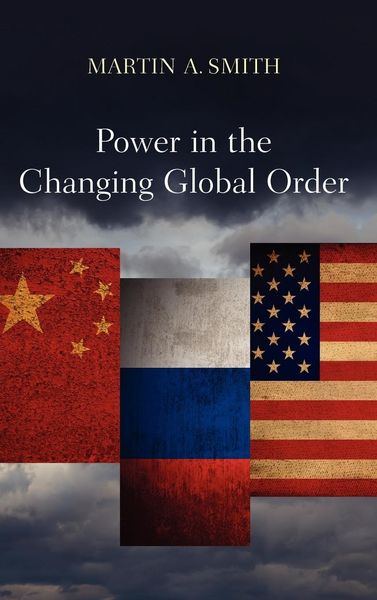
• Produktbild: Power in the Changing Global Order
  • Produktbild: Power in the Changing Global Order

Power in the Changing Global Order The US, Russia and China

84,99 €

inkl. gesetzl. MwSt., Versandkostenfrei


Beschreibung

Produktdetails

Einband

Gebundene Ausgabe

Erscheinungsdatum

01.06.2012

Verlag

John Wiley & Sons Inc

Seitenzahl

224

Maße (L/B/H)

22,9/15,2/1,4 cm

Gewicht

489 g

Auflage

1. Auflage

Sprache

Englisch

ISBN

978-0-7456-3471-5

Beschreibung

Rezension

Winner of the Choice award for Outstanding Academic Title
 
"A great introduction to theoretical and practical aspects of power, with detailed case studies and a convincing narrative."
Global Policy
 
"Presents its evidence in a convincing manner and deserves to attract interest for skilfully including many classical and non-western thinkers in its analysis ... The book will be of use to scholars at any level but may especially appeal to students."
Central European Journal of International and Security Studies
 
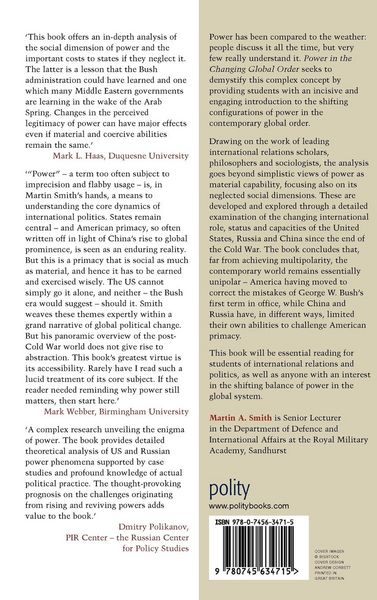
"This book offers an in-depth analysis of the social dimension of power, and the important costs to states if they neglect it. The latter is a lesson that the Bush administration could have learned and one which many Middle Eastern governments are learning in the wake of the Arab Spring. Changes in the perceived legitimacy of power can have major effects even if material and coercive abilities remain the same."
Mark L. Haas, Duquesne University
 
"'Power' - a term too often subject to imprecision and flabby usage - is, in Martin Smith's hands, a means to understanding the core dynamics of international politics. States remain central - and American primacy, so often written off in light of China's rise to global prominence, is seen as an enduring reality. But this is a primacy that is social as much as material, and hence it has to be earned and exercised wisely. The US cannot simply go it alone, and neither - the Bush era would suggest - should it. Smith weaves these themes expertly within a grand narrative of global political change. But his panoramic overview of the post-Cold War world does not give rise to abstraction. This book's greatest virtue is its accessibility. Rarely have I read such a lucid treatment of its core subject. If the reader needed reminding why power still matters, then start here."
Mark Webber, University of Birmingham
 
"A complex research unveiling the enigma of power. The book provides detailed theoretical analysis of US and Russian power phenomena supported by case studies and profound knowledge of actual political practice. The thought-provoking prognosis on the challenges originating from rising and reviving powers adds value to the book."
Dmitry Polikanov, PIR Center - the Russian Center for Policy Studies

Zitat

"A great introduction to theoretical and practical aspects of power, with detailed case studies and a convincing narrative." Global Policy "Presents its evidence in a convincing manner and deserves to attract interest for skilfully including many classical and non-western thinkers in its analysis ... The book will be of use to scholars at any level but may especially appeal to students." Central European Journal of International and Security Studies "This book offers an in-depth analysis of the social dimension of power, and the important costs to states if they neglect it. The latter is a lesson that the Bush administration could have learned and one which many Middle Eastern governments are learning in the wake of the Arab Spring. Changes in the perceived legitimacy of power can have major effects even if material and coercive abilities remain the same." Mark L. Haas, Duquesne University "'Power' - a term too often subject to imprecision and flabby usage - is, in Martin Smith's hands, a means to understanding the core dynamics of international politics. States remain central - and American primacy, so often written off in light of China's rise to global prominence, is seen as an enduring reality. But this is a primacy that is social as much as material, and hence it has to be earned and exercised wisely. The US cannot simply go it alone, and neither - the Bush era would suggest - should it. Smith weaves these themes expertly within a grand narrative of global political change. But his panoramic overview of the post-Cold War world does not give rise to abstraction. This book's greatest virtue is its accessibility. Rarely have I read such a lucid treatment of its core subject. If the reader needed reminding why power still matters, then start here." Mark Webber, University of Birmingham "A complex research unveiling the enigma of power. The book provides detailed theoretical analysis of US and Russian power phenomena supported by case studies and profound knowledge of actual political practice. The thought-provoking prognosis on the challenges originating from rising and reviving powers adds value to the book." Dmitry Polikanov, PIR Center - the Russian Center for Policy Studies

Produktdetails

Einband

Gebundene Ausgabe

Erscheinungsdatum

01.06.2012

Verlag

John Wiley & Sons Inc

Seitenzahl

224

Maße (L/B/H)

22,9/15,2/1,4 cm

Gewicht

489 g

Auflage

1. Auflage

Sprache

Englisch

ISBN

978-0-7456-3471-5

Herstelleradresse

Libri GmbH
Europaallee 1
36244 Bad Hersfeld
DE

Email: gpsr@libri.de

Kundinnen und Kunden meinen

0 Bewertungen

Informationen zu Bewertungen

Zur Abgabe einer Bewertung ist eine Anmeldung im Konto notwendig. Die Authentizität der Bewertungen wird von uns nicht überprüft. Wir behalten uns vor, Bewertungstexte, die unseren Richtlinien widersprechen, entsprechend zu kürzen oder zu löschen.

Die Bewertungen sind nach Format, Anzahl Sterne und Datum sortiert.

Verfassen Sie die erste Bewertung zu diesem Artikel

Helfen Sie anderen Kund*innen durch Ihre Meinung

Kundinnen und Kunden meinen

0 Bewertungen filtern

Die Leseprobe wird geladen.
  • Produktbild: Power in the Changing Global Order
  • Produktbild: Power in the Changing Global Order
  • Acknowledgements
     
    Introduction: Power in the Changing Global Order
     
    1: Understanding Power
     
    2: Power Resources
     
    3: Hegemony, Unipolarity and the United States
     
    4: The Multipolar Moment? The US and the World in the 1990s
     
    5: A New Era? The George W Bush administration's War on Terror
     
    6: Return to Multilateralism?
     
    7: Russia as a Continuing or Reviving Great Power
     
    8: The Russian Multipolarity Debates
     
    9: China: Rising Power or Constrained State?
     
    10: China, Anti Hegemonism and Harmony
     
    Conclusions
     
    Notes
     
    Index