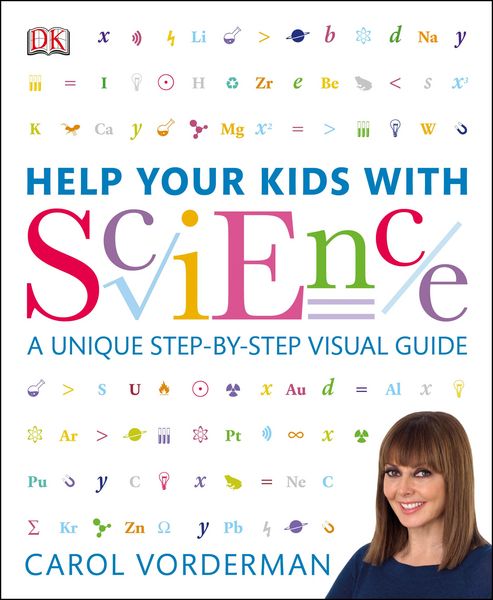
Produktbild: Help Your Kids with Science

Help Your Kids with Science A Unique Step-by-Step Visual Guide, Revision and Reference

Aus der Reihe DK Help Your Kids With

17,99 €

inkl. gesetzl. MwSt., Versandkostenfrei


Produktdetails

ISBN

978-1-4093-8346-8

Erscheinungsdatum

01.06.2012

Bundesländer

Baden-Württemberg + weitere

Einband

Taschenbuch

Verlag

Penguin Books UK

Seitenzahl

256

Maße (L/B/H)

24,1/20/2,2 cm

Gewicht

830 g

Sprache

Englisch

Produktdetails

ISBN

978-1-4093-8346-8

Erscheinungsdatum

01.06.2012

Bundesländer

  • Baden-Württemberg
  • Bayern
  • Berlin
  • Brandenburg
  • Bremen
  • Hamburg
  • Hessen
  • Mecklenburg-Vorpommern
  • Niedersachsen
  • Nordrhein-Westfalen
  • Rheinland-Pfalz
  • Saarland
  • Sachsen
  • Sachsen-Anhalt
  • Schleswig-Holstein
  • Thüringen

Einband

Taschenbuch

Verlag

Penguin Books UK

Seitenzahl

256

Maße (L/B/H)

24,1/20/2,2 cm

Gewicht

830 g

Sprache

Englisch

Herstelleradresse

Libri GmbH
Europaallee 1
36244 Bad Hersfeld
DE

Email: gpsr@libri.de

Kundinnen und Kunden meinen

0 Bewertungen

Informationen zu Bewertungen

Zur Abgabe einer Bewertung ist eine Anmeldung im Konto notwendig. Die Authentizität der Bewertungen wird von uns nicht überprüft. Wir behalten uns vor, Bewertungstexte, die unseren Richtlinien widersprechen, entsprechend zu kürzen oder zu löschen.

Die Bewertungen sind nach Format, Anzahl Sterne und Datum sortiert.

Verfassen Sie die erste Bewertung zu diesem Artikel

Helfen Sie anderen Kund*innen durch Ihre Meinung

Kundinnen und Kunden meinen

0 Bewertungen filtern

Weitere Artikel finden Sie in

  • Produktbild: Help Your Kids with Science
    • 1: Foreword by Carol Vorderman
    • 2: What is science?
    • 3: The Scientific Method
    • 4: Fields of Science
    • 5: Biology
      • 1: What is biology?
      • 2: Variety of life
      • 3: Cell structure
      • 4: Cells at work
      • 5: Fungi and single-celled life
      • 6: Respiration
      • 7: Photosynthesis
      • 8: Feeding
      • 9: Waste materials
      • 10: Transport systems
      • 11: Movement
      • 12: Sensitivity
      • 13: Reproduction I
      • 14: Reproduction II
      • 15: Life cycles
      • 16: Hormones
      • 17: Disease and immunity
      • 18: Animal relationships
      • 19: Plants
      • 20: Invertebrates
      • 21: Fish, amphibians, and reptiles
      • 22: Mammals and birds
      • 23: Body systems
      • 24: Human senses
      • 25: Human digestion
      • 26: Brain and heart
      • 27: Human health
      • 28: Human reproduction
      • 29: Ecosystems
      • 30: Food chains
      • 31: Cycles in nature
      • 32: Evolution
      • 33: Adaptations
      • 34: Genetics I
      • 35: Genetics II
      • 36: Pollution
      • 37: Human impact
    • 6: Chemistry
      • 1: What is chemistry?
      • 2: Properties of materials
      • 3: States of matter
      • 4: Changing states
      • 5: Gas laws
      • 6: Mixtures
      • 7: Separating mixtures
      • 8: Elements and atoms
      • 9: Compounds and molecules
      • 10: Ionic bonding
      • 11: Covalent bonding
      • 12: Periodic table
      • 13: Understanding the periodic table
      • 14: Alkali metals and alkali earth metals
      • 15: The halogens and noble gases
      • 16: Transition metals
      • 17: Radioactivity
      • 18: Chemical reactions
      • 19: Combustion
      • 20: Redox reactions
      • 21: Energy and reactions
      • 22: Rates of reaction
      • 23: Catalysts
      • 24: Reversible reactions
      • 25: Water
      • 26: Acids and bases
      • 27: Acid reactions
      • 28: Electrochemistry
      • 29: Lab equipment and techniques
      • 30: Refining metals
      • 31: Chemical industry
      • 32: Carbon and fossil fuels
      • 33: Hydrocarbons
      • 34: Functional groups
      • 35: polymers and plastics
    • 7: Physics
      • 1: What is physics?
      • 2: Inside atoms
      • 3: Energy
      • 4: Forces and mass
      • 5: Stretching and deforming
      • 6: Velocity and acceleration
      • 7: Gravity
      • 8: Newton's law of motion
      • 9: Understanding motion
      • 10: Pressure
      • 11: Machines
      • 12: Heat transfer
      • 13: Using heat
      • 14: Waves
      • 15: Electromagnetic waves
      • 16: Light
      • 17: Optics
      • 18: Sound
      • 19: Electricity
      • 20: Current, voltage, and resistance
      • 21: Circuits
      • 22: Electronics
      • 23: Magnets
      • 24: Electric motors
      • 25: Electricity generators
      • 26: Transformers
      • 27: Power generation
      • 28: Electricity supplies
      • 29: Energy efficiency
      • 30: Renewable energy
      • 31: The Earth
      • 32: Weather
      • 33: Astronomy
      • 34: The Sun
      • 35: The Solar System I
      • 36: The Solar System II
      • 37: Stars and galaxies
      • 38: Origins of the Universe
    • 8: Reference - Biology
    • 9: Reference - Chemistry
    • 10: Reference - Physics
    • 11: Glossary
    • 12: Index
    • 13: Acknowledgements