Beschreibung
Produktdetails
Einband
Taschenbuch
Erscheinungsdatum
15.06.2005
Verlag
Universal PublishersSeitenzahl
180
Maße (L/B/H)
21,6/14/1 cm
Gewicht
235 g
Sprache
Englisch
ISBN
978-1-58112-467-5
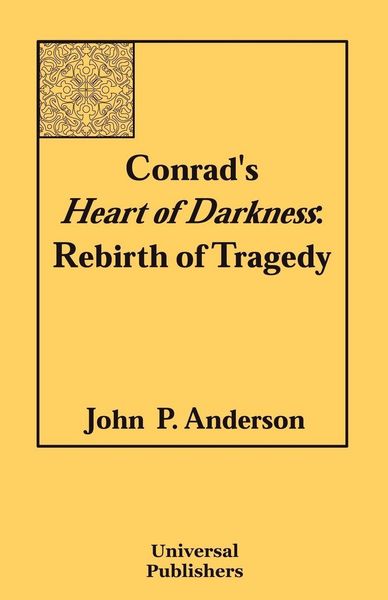
This is a reader's guide to Conrad's novel Heart of Darkness as art, not as a page-turner but as art. As he has done with other works of Conrad, Anderson traces Conrad's art in a line-by-line analysis of most of this short novel. Anderson traces the unifying theme of the novel to Nietzsche's ideas in The Birth of Tragedy. Nietzsche interpreted ancient Greek tragedy as a reflection of Dionysian and Apollinian life experiencesof the Greek audience. Apollo was a Greek god of the higher orders of civilization and the civilized restraint and control that is necessary for getting along with others. Dionysus, on the other hand, was agod of nature and fertility and is associated with unrestrained, orgiastic worship. This author shows how Conrad used the contrast between the Apollinian and Dionysian to structure the form and content of the novel: how the contrast holds together the important artistic decisions made by Conrad; how Conrad midwived the rebirth of ancient Greek tragedy as the Congo tragedy-the rape of the Congo by Europeans in the late 19th century; and how this could have happened-how the psyches of the Europeans unraveled in the Congo jungle. In Conrad's rendition, the unrestrained competitive and hostile Dionysian life forces at the heart of nature not only power the teeming jungle but also lurk in the inherited instincts of mankind. The European search for ivory in the Congo brought these primitive instincts to the surface, out of their holes like serpents with venom of a mixture of desire and hate. The high ground of the novel is an irony-in the Congo clothes do not make the man. The European exploiters dressed in the very proper tropical whites are savage in behavior while naked man-eaters are restrained in behavior. As with Nietzsche before him, Conrad's approach anticipated central doctrines of Freud and Jung. Conrad's use of Nietzschean elements gives many modern readers a sense of dread or uneasiness, suggesting that the Nietzschean elements jostle important structures in our unconscious.
Noch keine Bewertungen vorhanden
Verfassen Sie die erste Bewertung zu diesem Artikel
Helfen Sie anderen Kundinnen und Kunden durch Ihre Meinung.
Kurze Frage zu unserer Seite
Vielen Dank für Ihr Feedback
Wir nutzen Ihr Feedback, um unsere Produktseiten zu verbessern. Bitte haben Sie Verständnis, dass wir Ihnen keine Rückmeldung geben können. Falls Sie Kontakt mit uns aufnehmen möchten, können Sie sich aber gerne an unseren Kund*innenservice wenden.
zum Kundenservice