Rezension
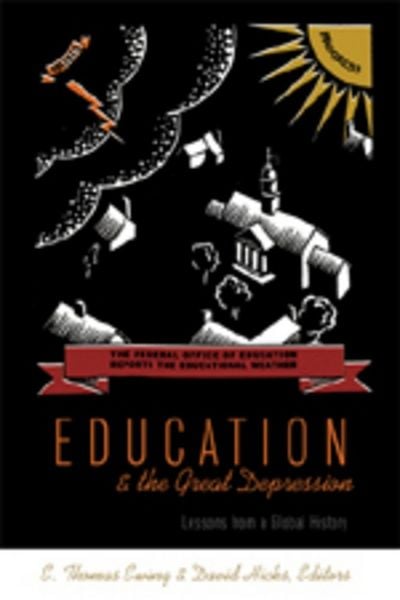
«This is a provocative collection of studies of educational responses to economic crisis, examined through both regional and global frameworks. It is a valuable contribution to both American and comparative studies of the Great Depression.» (Kate Rousmaniere, Professor & Chair, Department of Educational Leadership, Miami University, Oxford, Ohio)
«This illuminating book gives multiple perspectives on how different societies responded to the crises generated by the Great Depression of the 1930s. The authors focus on the actions of individuals and groups as well as global structures and processes. Dramatic differences as well as similarities mark the stories they tell: Nazis 'cleanse' the teacher corps, Brazilian reformers emulate Dewey, activists in Egypt promote literacy in desperately poor villages, and progressives in New Zealand and the United States seek to fashion schools that will, over time, reshape society. As revolutionists of the right and left argued with one another about schooling, educators in local districts struggled to preserve hope amid fear for the future.» (David Tyack, Professor of Education & History Emeritus, Stanford University)
Portrait
The Editors: E. Thomas Ewing received his Ph.D. in modern Russian history from the University of Michigan. He is Associate Professor in the Department of History at Virginia Tech, and he is the author of The Teachers of Stalinism: Policy, Practice, and Power in Soviet Schools of the 1930s (Lang, 2002) and editor of Revolution and Pedagogy (2005).
David Hicks received his M.A. in history from the State University of New York at Cortland and his Ph.D. in curriculum and instruction (history and social science education) from Virginia Tech. He is currently Associate Professor in the School of Education at Virginia Tech, and he has published extensively on teaching the social studies.