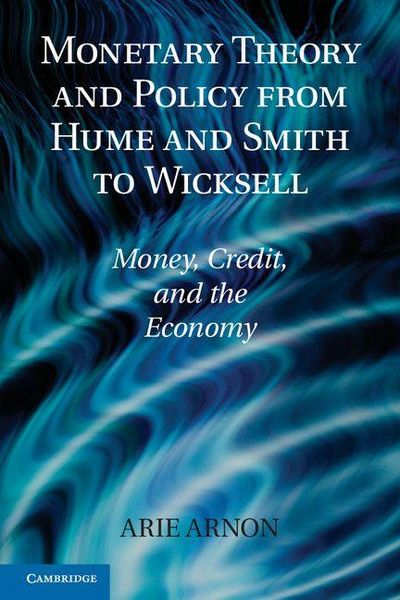
Monetary Theory and Policy from Hume and Smith to Wicksell Money, Credit, and the Economy
-
- Hardcover
- Taschenbuch ausgewählt
- eBook
-
Sprache:Englisch
68,99 €
inkl. gesetzl. MwSt.,
Beschreibung
Produktdetails
Einband
Taschenbuch
Erscheinungsdatum
01.08.2012
Abbildungen
Worked examples or Exercises
Verlag
Cambridge AcademicSeitenzahl
450
Maße (L/B/H)
22,9/15,2/2,7 cm
Gewicht
726 g
Sprache
Englisch
ISBN
978-1-107-64273-7
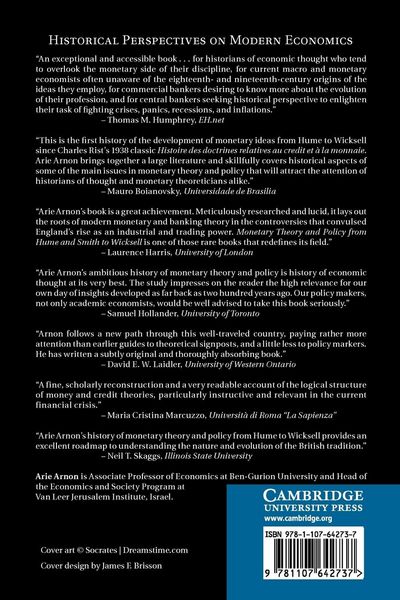
This book provides a comprehensive survey of the major developments in monetary theory and policy from David Hume and Adam Smith to Walter Bagehot and Knut Wicksell. In particular, it seeks to explain why it took so long for a theory of central banking to penetrate mainstream thought. The book investigates how major monetary theorists understood the roles of the invisible and visible hands in money, credit and banking; what they thought about rules and discretion and the role played by commodity-money in their conceptualizations; whether or not they distinguished between the two different roles carried out via the financial system - making payments efficiently within the exchange process and facilitating intermediation in the capital market; how they perceived the influence of the monetary system on macroeconomic aggregates such as the price level, output and accumulation of wealth; and finally, what they thought about monetary policy.
Noch keine Bewertungen vorhanden
Verfassen Sie die erste Bewertung zu diesem Artikel
Helfen Sie anderen Kundinnen und Kunden durch Ihre Meinung.
Kurze Frage zu unserer Seite
Vielen Dank für Ihr Feedback
Wir nutzen Ihr Feedback, um unsere Produktseiten zu verbessern. Bitte haben Sie Verständnis, dass wir Ihnen keine Rückmeldung geben können. Falls Sie Kontakt mit uns aufnehmen möchten, können Sie sich aber gerne an unseren Kund*innenservice wenden.
zum Kundenservice