Band 139
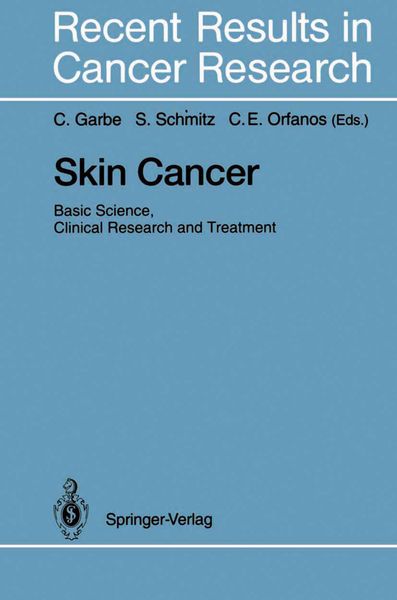
Skin Cancer: Basic Science, Clinical Research and Treatment
Aus der Reihe
Recent Results in Cancer Research
-
- Englisch ausgewählt
97,99 €
inkl. gesetzl. MwSt.,
Beschreibung
Produktdetails
Einband
Taschenbuch
Erscheinungsdatum
27.12.2011
Herausgeber
Claus Garbe + weitereVerlag
Springer BerlinSeitenzahl
440
Maße (L/B/H)
23,5/15,5/2,5 cm
Gewicht
692 g
Auflage
Softcover reprint of the original 1st ed. 1995
Sprache
Englisch
ISBN
978-3-642-78773-7
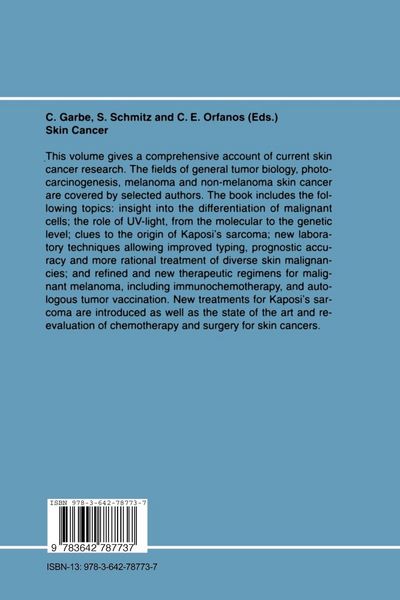
In the past two decades, considerable interest in skin cancer has developed in the public and scientific communities. There may have been several reasons for this: - The rise in the global incidence of cutaneous cancers - New molecular biology techniques resulting in a better understanding of pathogenesis and improved diagnostic procedures - The advent of new pathological entities, e. g. , the endemic form of Kaposi's sarcoma - A constantly increasing range of therapeutic modalities, providing even more efficacious treatment and manage ment of skin cancers As N. E. Fusenig describes in the first chapter of this volume, basic research is only beginning to unravel the complex mechanism involved in cellular dedifferentiation and tumor progression. Progress is dearly needed, especially in dermato oncology, where the rise in the incidence of epithelial tumors has inflated the overall skin cancer incidence. The incidence of tumors of the skin exceeds that of all other neoplasias in humans, with recreational sun exposure being a suspected primary cause. Several studies on the effects of UV radiation have been included at the beginning of this volume. Even the role of long wavelength UV (UVA) has become a focus of research activities. The main concern is that the low carcinogenicity of UVA, in comparison to UVB, may be outweighed and exceeded in its effects by increased UV A exposure, e. g.
Kundinnen und Kunden meinen
Verfassen Sie die erste Bewertung zu diesem Artikel
Helfen Sie anderen Kund*innen durch Ihre Meinung
Kurze Frage zu unserer Seite
Vielen Dank für Ihr Feedback
Wir nutzen Ihr Feedback, um unsere Produktseiten zu verbessern. Bitte haben Sie Verständnis, dass wir Ihnen keine Rückmeldung geben können. Falls Sie Kontakt mit uns aufnehmen möchten, können Sie sich aber gerne an unseren Kund*innenservice wenden.
zum Kundenservice