• Produktbild: Mechanisms of B Cell Neoplasia 1998
  • Produktbild: Mechanisms of B Cell Neoplasia 1998
Band 246

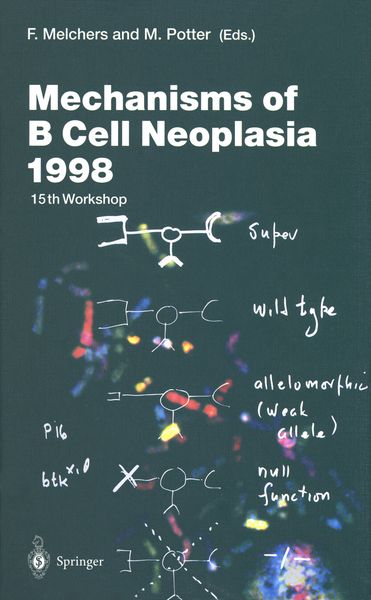
Mechanisms of B Cell Neoplasia 1998 Proceedings of the Workshop held at the Basel Institute for Immunology 4th–6th October 1998

147,99 €

inkl. gesetzl. MwSt., Versandkostenfrei


Beschreibung

Produktdetails

Einband

Taschenbuch

Erscheinungsdatum

24.11.2011

Herausgeber

Fritz Melchers + weitere

Verlag

Springer Berlin

Seitenzahl

415

Maße (L/B/H)

23,5/15,5/2,5 cm

Gewicht

680 g

Auflage

Softcover reprint of the original 1st ed. 1999

Sprache

Englisch

ISBN

978-3-642-64283-8

Beschreibung

Portrait

Michael Potter is Reader in the Philosophy of Mathematics at Cambridge University. He is the author of Sets (OUP, 1990), Reason's Nearest Kin (OUP, 2000), Set Theory and its Philosophy (OUP, 2004), and Mathematical Knowledge (edited with Mary Leng and Alexander Paseau, OUP, 2007).

Produktdetails

Einband

Taschenbuch

Erscheinungsdatum

24.11.2011

Herausgeber

Verlag

Springer Berlin

Seitenzahl

415

Maße (L/B/H)

23,5/15,5/2,5 cm

Gewicht

680 g

Auflage

Softcover reprint of the original 1st ed. 1999

Sprache

Englisch

ISBN

978-3-642-64283-8

Herstelleradresse

Springer-Verlag KG
Sachsenplatz 4-6
1201 Wien
AT

Email: GPSR Kontakt

Noch keine Bewertungen vorhanden

Verfassen Sie die erste Bewertung zu diesem Artikel

Helfen Sie anderen Kundinnen und Kunden durch Ihre Meinung.

Kundinnen und Kunden meinen

Bewertungen (0)

  • Produktbild: Mechanisms of B Cell Neoplasia 1998
  • Produktbild: Mechanisms of B Cell Neoplasia 1998
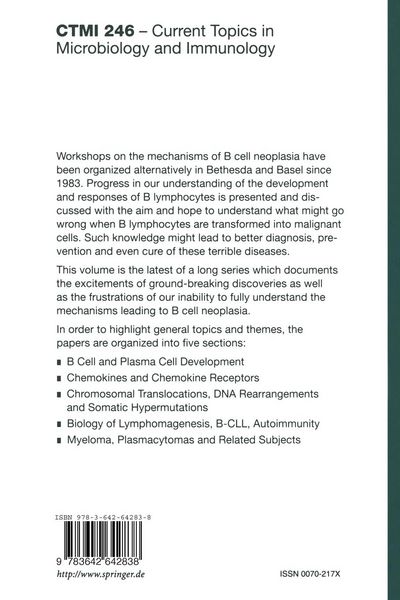
  • I B Cell and Plasma Cell Development.- The Formation and Selection of Cells Expressing PreB Cell Receptors and B Cell Receptors.- Fetal Liver Organ Cultures as a Tool to Study Selection Processes During B Cell Development.- Negative Selection of Self-reactive B Lymphocytes Involves Complement.- Cross-talk Between CD44 and c-Met in B Cells.- The Transition from Immature to Mature B Cells.- CD21high IgMhigh Splenic B Cells Enriched in the Marginal Zone: Distinct Phenotypes and Functions.- Do Germinal Centers Have a Role in the Generation of Lymphomas?.- Role of Complement Receptors CD21/CD35 in B Lymphocyte Activation and Survival.- Long-lived Plasma Cells Survive Independent of Antigen.- II Chemokines and Chemokine Receptors.- Regulation of Expression of Chemokine Receptor BLR1/CXCR5 during B Cell Maturation.- Chemokines and B cell Homing to Follicles.- A Novel CC Chemokine ABCD-1, Produced by Dendritic Cells and Activated B Cells, Exclusively Attracts Activated T Lymphocytes.- Human Macrophage-Derived Chemokine (MDC) is Strongly Expressed Following Activation of both Normal and Malignant Precursor and Mature B Cells.- Susceptibility Genes for AIDS and AIDS-Related Lymphoma.- Molecular Mechanisms of T Helper Cell Differentiation and Tissue-specific Migration.- The Role of Chemokine Receptors in Directing Traffic of Naive, Type 1 and Type 2 T Cells.- A Lymphoid Tissue-Specific Receptor, EDG6, with Potential Immune Modulatory Functions Mediated by Extracellular Lysophospholipids.- III Chromosomal Translocations, DNA Rearrangements and Somatic Hypermutations.- Phenotypic and Molecular Characterization of Human Peripheral Blood B-cell Subsets with Special Reference to N-Region Addition and J?-Usage in V?J?-Joints and ?/?-Ratios ixn Naive Versus Memory B-cell Subsets to Identify Traces of Receptor Editing Processes.- Tuning Somatic Hypermutation by Transcription.- Immunoglobulin Gene Associated Chromosomal Translocations in B Cell Derived Tumors.- Analysis of B-cell Neoplasias by Spectral Karyotyping (SKY).- Recurrent Non-reciprocal Translocations of Chromosome 5 in Primary T (12;15)-positive BALB/c Plasmacytomas.- MYC-Induced Cyclin D2 Genomic Instability in Murine B Cell Neoplasms.- The Role of Somatic Hypermutation in the Generation of Deletions and Duplications in Human Ig V Region Genes and Chromosomal Translocations.- Chromosome 13 Deletion in Myeloma.- Unusual Immunoglobulin and T-Cell Receptor Gene Rearrangement Patterns in Acute Lymphoblastic Leukemias.- Analysis of Variable Heavy and Light Chain Genes in Follicular Lymphomas of Different Heavy Chain Isotype.- Regulation of c-myc and Immunoglobulin K Gene Transcription by Promoter-proximal Pausing of RNA Polymerase II.- IV Biology of Lymphomagenesis, B-CLL, Autoimmunity.- Epidemiology of B-Cell Lymphomas.- Alternative Splicing of CD79a (Ig?) and CD79b (Ig?) Transcripts in Human B-CLL Cells.- Novel Aspects of Murine B Cell Lymphomas.- Molecular Pathogenesis of B Cell Malignancy: The Role of BCL-6.- ATM and Lymphoid Malignancies; Use of Oriented Peptide Libraries to Identify Novel Substrates of ATM Critical in Downstream Signaling Pathways.- MHC-linked Control of Murine SLE.- The Adaptor Protein SLP-65/BLNK Controls the Calcium Response in Activated B Cells.- Involvement of the SHP-1 Tyrosine Phosphatase in Regulating B Lymphocyte Antigen Receptor Signaling, Proliferation and Transformation.- Antigen Receptor Signaling Induces Differential Tyrosine Kinase Activation and Population Stability in B-Cell Lymphoma.- Importance of CD44 Variant Isoforms in Mouse Models for Inflammatory Bowel Disease.- EBNA2 and c-myc in B Cell Immortalization by Epstein-Barr Virus and in the Pathogenesis of Burkitt’s Lymphoma.- V Myeloma, Plasmacytomas and Related Subjects.- The Control of Proliferation, Survival and Apoptosis in Human Multiple Myeloma Cells in vitro.- Activation Molecules on Human Myeloma Cells.- Peritoneal B-l Cells Switch in vivo to IgA and these IgA Antibodies can bind to Bacteria of the Normal Intestinal Microflora.- Inhibition of Pristane-Induced Peritoneal Plasmacytoma Formation.- The Role of p16INK4a (Cdkn2a) in Mouse Plasma Cell Tumors.- Transgenic Shuttle Vector Assays for Assessing Oxidative B-cell Mutagenesis in vivo.- Plasmacytoma Induction in Specific Pathogen-Free (SPF) bcl-2 Transgenic BALB/c Mice.- Induction of B Cell Autoimmunity by Pristane.- Cytokine Network Imbalances in Plasmacytoma-Regressor Mice.- The Role of Human Herpesvirus-8, (HHV-8), in Multiple Myeloma Pathogenesis.