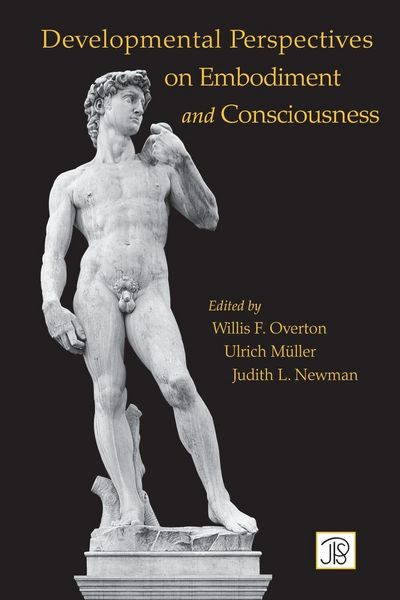
Developmental Perspectives on Embodiment and Consciousness
-
- Hardcover
- Taschenbuch ausgewählt
- eBook
-
Sprache:Englisch
73,99 €
inkl. gesetzl. MwSt.,
Beschreibung
Produktdetails
Einband
Taschenbuch
Erscheinungsdatum
28.11.2012
Herausgeber
Overton Willis + weitereVerlag
Taylor & FrancisSeitenzahl
378
Maße (L/B/H)
22,9/15,2/2 cm
Gewicht
710 g
Sprache
Englisch
ISBN
978-0-415-64717-5
Until recently, the body has been largely ignored in theories and empirical research in psychology, particularly in developmental psychology. Recently however, several conceptions of the relation between body and mind have been developed. Common among these conceptions is the idea that the body plays an important role in our emotional, social, and cognitive lives.
This latest volume in the Jean Piaget Society Symposia Series illustrates different ways in which the concept of embodiment can be used in developmental psychology and related disciplines. It explores the role of the body in the development of meaning, consciousness, and psychological functioning. The overall goal is to demonstrate how the concept of embodiment can deepen our understanding of developmental psychology by suggesting new possibilities of integrating biological, psychological, and socio-cultural approaches.
Developmental Perspective on Embodiment and Consciousness explores embodiment in two ways. First, embodiment is examined as a condition of and influencing the particular shape of psychological experience. This sense of embodiment reflects the effort to put the mind back into the body. Second, embodiment is examined as a reflective experience in the sense that the mind forms particular images about the body. This sense of embodiment reflects the effort to put the body into the mind.
The book opens with a discussion of embodiment from a meta-theoretical perspective. Then the role of embodiment in grounding conceptual meaning is examined. This is followed by discussions of the role of embodiment in strengthening our understanding of emotions, cognitive development, religious experiences, and social development. Then the role of the body in spatial cognition and the role of language in the development of complex forms of consciousness are explored. The final chapters examine the impact of culture on the conceptualization of the embodied self. The book concludes with an overview of the historical context of the mind-body dualism and a discussion of how the idea of embodiment transcends this dualism.
Intended for researchers and advanced students in developmental, cognitive, and social psychology, neuroscience, philosophy, anthropology, biology, and sociology, this new book also serves as a reference for advanced courses on cognition and development.
Noch keine Bewertungen vorhanden
Verfassen Sie die erste Bewertung zu diesem Artikel
Helfen Sie anderen Kundinnen und Kunden durch Ihre Meinung.
Kurze Frage zu unserer Seite
Vielen Dank für Ihr Feedback
Wir nutzen Ihr Feedback, um unsere Produktseiten zu verbessern. Bitte haben Sie Verständnis, dass wir Ihnen keine Rückmeldung geben können. Falls Sie Kontakt mit uns aufnehmen möchten, können Sie sich aber gerne an unseren Kund*innenservice wenden.
zum Kundenservice