
• Produktbild: Islam in Perspective
  • Produktbild: Islam in Perspective

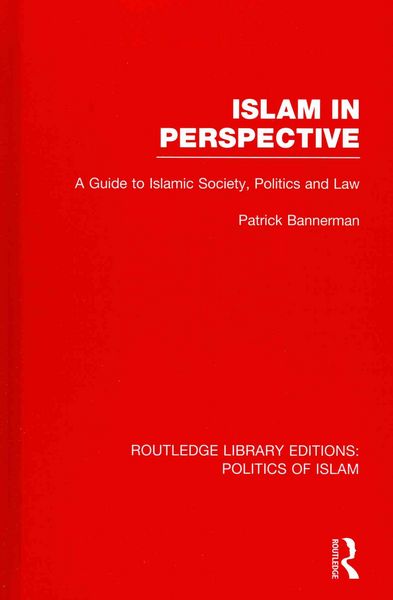
Islam in Perspective A Guide to Islamic Society, Politics and Law

151,99 €

inkl. gesetzl. MwSt., Versandkostenfrei


Beschreibung

Produktdetails

Einband

Gebundene Ausgabe

Erscheinungsdatum

08.05.2013

Herausgeber

Bannerman Patrick

Verlag

Taylor & Francis

Seitenzahl

290

Maße (L/B/H)

24/16,1/2,1 cm

Gewicht

710 g

Sprache

Englisch

ISBN

978-0-415-83077-5

Beschreibung

Produktdetails

Einband

Gebundene Ausgabe

Erscheinungsdatum

08.05.2013

Herausgeber

Bannerman Patrick

Verlag

Taylor & Francis

Seitenzahl

290

Maße (L/B/H)

24/16,1/2,1 cm

Gewicht

710 g

Sprache

Englisch

ISBN

978-0-415-83077-5

Herstelleradresse

Libri GmbH
Europaallee 1
36244 Bad Hersfeld
DE

Email: gpsr@libri.de

Kundinnen und Kunden meinen

0 Bewertungen

Informationen zu Bewertungen

Zur Abgabe einer Bewertung ist eine Anmeldung im Konto notwendig. Die Authentizität der Bewertungen wird von uns nicht überprüft. Wir behalten uns vor, Bewertungstexte, die unseren Richtlinien widersprechen, entsprechend zu kürzen oder zu löschen.

Die Bewertungen sind nach Format, Anzahl Sterne und Datum sortiert.

Verfassen Sie die erste Bewertung zu diesem Artikel

Helfen Sie anderen Kund*innen durch Ihre Meinung

Kundinnen und Kunden meinen

0 Bewertungen filtern

Weitere Artikel finden Sie in

Die Leseprobe wird geladen.
  • Produktbild: Islam in Perspective
  • Produktbild: Islam in Perspective
  • Preface. Introduction. 1. Ways of Looking at Islam. Introduction. Conventional ways of looking at Islam. Modern schools of thought. Towards a different view of Islam. Theory and practice: a neglected relationship. Islam re-defined: a general view. Matters affecting the general view. Islam, modernization and economic development: a difficult balance. The mystique of Islam. Conclusions 2. The Law. Introduction. The sources of the law. The Quran and the Sunna: primary sources of the law. Ijma’, qiyas, ijtihad and maslaha: secondary sources of the law. The early development of the law, jurisprudence and the administration of justice. Al Shafi’i: the classical theory defined. Theory and practice in the post-al Shafi’i period. Shi’a legal theory. The classical theory and pre-modern practice: a recapitulation. A modern definition of the Shari’a. Conclusions 3. Concepts of State Government and Authority. Introduction. Sunni political theory. Theory and practice: an uneasy relationship. Ibn Taymiyya. Ibn Khaldun. Jalal al Din Dawani and Fadhl Allah Khunji. Shi’a political theory. A variant approach to theory and practice. Conclusions 4. International Relations and International Law. Introduction. The Muslim theory of international relations. Jihad. International law in Islam. Pragmatic modification to the theory. Conclusions 5. The Islamic Economic System. Introduction. Islamic economic theory. Taxation and interest. Islamic banking. Partnership arrangements. Justification of a separate Islamic economic system. Conclusion 6. Intellectual Influences, Part One – The Indian Sub-continent. Introduction. Shah Wali Allah: orthodoxy, reconciliation and reform. Sir Sayyid Ahman Khan: speculative rationalism. Muhammad Iqbal: the reconstruction of the theory. Abul A’la Maududi: conservative orthodoxy triumphant 7. Intellectual Influences, Part Two – Egypt. Introduction. Muhammad Abduh: the father of Egyptian modernism. Rashid Ridha: pragmatic conservatism. Hassan al Banna and the Muslim Brotherhood. Sayyid Qutb: radical ideologue and the politics of despair. Conclusions 8. The Islamic Revival. Introduction: fundamentalism defined and the historical context. The Islamic revival, differing views. The revival: what has happened. The revival: why did it happen. The revival: goals and implications. The revival and the relationship between faith and power. An alternative view. Conclusions 9. The Extremists. Introduction. Motivations for violence and types of organization. Islamization imposed by government fiat. Broadly based and popularly supported organizations. Small clandestine but discrete groups. The terrorist groups. The Egyptian experience. Iraq, Bahrain, and South and Southeast Asia. The Lebanese experience: Hizballah. Conclusions 10. Envoi. Notes. Glossary of technical terms. Biographical notes on major historical figures. Suggestions for further reading. Index