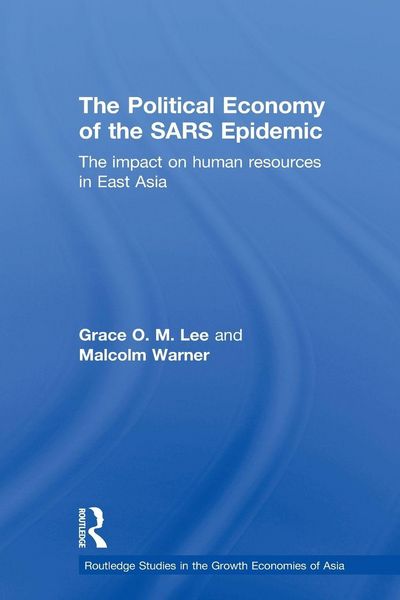

The Political Economy of the SARS Epidemic The Impact on Human Resources in East Asia
-
- Hardcover
- Taschenbuch ausgewählt
- eBook
-
Sprache:Englisch
73,99 €
inkl. gesetzl. MwSt.,
Beschreibung
Produktdetails
Einband
Taschenbuch
Erscheinungsdatum
15.05.2012
Abbildungen
28 SW-Abb., 28 SW-Zeichn., 33 Tabellen
Verlag
Taylor & FrancisSeitenzahl
194
Maße (L/B/H)
23,4/15,6/1,1 cm
Gewicht
304 g
Sprache
Englisch
ISBN
978-0-415-54192-3
This book discusses the political economy of the SARS epidemic and its impact on human resources in East Asia, as it occurred in 2003. The epidemic spread from the People's Republic of China, to Hong Kong, Singapore and Taiwan, amongst other countries in East Asia and as far away as North America, particularly Canada, the EU and elsewhere. The book looks first at earlier precedents, such as the Black Death and the way in which the potential threats of the recent epidemic were diffused across the world in 'instant news' reports; examining why it was dubbed the first 'global epidemic' due to its media coverage and how far the threat started a psychological 'tsunami' of fear and panic. Next, it examines the anticipated economic consequences arising from this phenomenon and how it affected the business of everyday life, market behaviour and human resources in the Chinese and Overseas Chinese economies. It focuses in particular detail on the cases of the PRC, Hong Kong, Singapore and Taiwan. It concludes with a discussion of the issues involved and lessons to be learnt, and draws conclusions both for theory and practice vis-à-vis future pandemics that may threaten the global economy in the coming decade and the public policy issues involved
Noch keine Bewertungen vorhanden
Verfassen Sie die erste Bewertung zu diesem Artikel
Helfen Sie anderen Kundinnen und Kunden durch Ihre Meinung.
Kurze Frage zu unserer Seite
Vielen Dank für Ihr Feedback
Wir nutzen Ihr Feedback, um unsere Produktseiten zu verbessern. Bitte haben Sie Verständnis, dass wir Ihnen keine Rückmeldung geben können. Falls Sie Kontakt mit uns aufnehmen möchten, können Sie sich aber gerne an unseren Kund*innenservice wenden.
zum Kundenservice