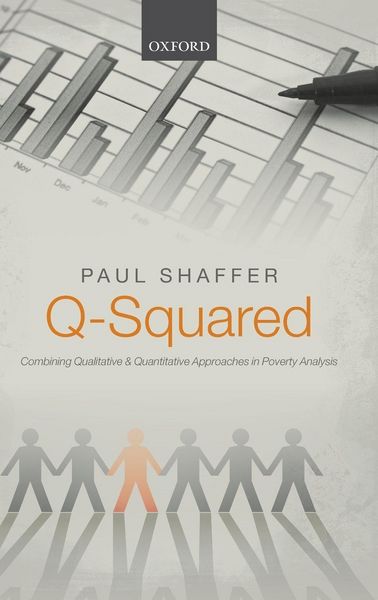
Zitat
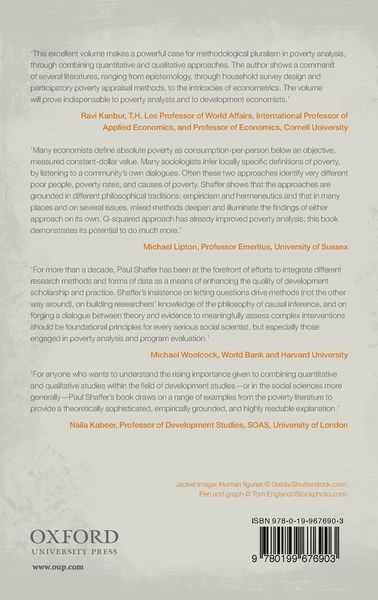
This excellent volume makes a powerful case for methodological pluralism in poverty analysis, through combining quantitative and qualitative approaches. It does so by examining the foundations of alternative approaches, and by showing how in practice they can complement each other by building on strengths and compensating for weakness. The author shows a command of several literatures, ranging from epistemology, through household survey design and participatory poverty appraisal methods, to the intricacies of econometrics. The volume will prove indispensable to poverty analysts and to development economists. Ravi Kanbur, T.H. Lee Professor of World Affairs, International Professor of Applied Economics, and Professor of Economics, Cornell University Many economists - e.g. in setting the UN Millennium Development Goal for 'poverty reduction' - define absolute poverty as consumption-per-person below an objective, measured constant-dollar value. Many sociologists infer locally specific definitions of poverty, by listening to a community's own dialogues. Often these two approaches identify very different poor people, poverty rates, and causes of poverty. Shaffer shows that the approaches are grounded in different philosophical traditions: empiricism and hermeneutics. He argues convincingly against the prevailing "war of dogmas" in poverty analysis. Instead, he shows that, in many places and on several issues, mixed methods deepen and illuminate the findings of either approach on its own. Q-squared approach has already improved poverty analysis; this book demonstrates its potential to do much more. Michael Lipton, Professor Emeritus, University of Sussex For more than a decade, Paul Shaffer has been at the forefront of efforts to integrate different research methods and forms of data as a means of enhancing the quality of development scholarship and practice. This is difficult but important work: on a bad day well-meaning calls to adopt a 'mixed methods approach' leads to the worst of both worlds, but on a good day it generates unique, rigorous, and useable insights. Shaffer's insistence on letting questions drive methods (not the other way around, as too often happens), on building researchers' knowledge of the philosophy of causal inference, and on forging a dialogue between theory and evidence to meaningfully assess complex interventions should be foundational principles for every serious social scientist, but especially those engaged in poverty analysis and program evaluation. Michael Woolcock, World Bank and Harvard University For anyone who wants to understand the rising importance given to combining quantitative and qualitative studies within the field of development studies - or in the social sciences more generally - Paul Shaffer's book draws on a range of examples from the poverty literature to provide a theoretically sophisticated, empirically grounded and highly readable explanation. Naila Kabeer, Professor of Development Studies, SOAS, University of London