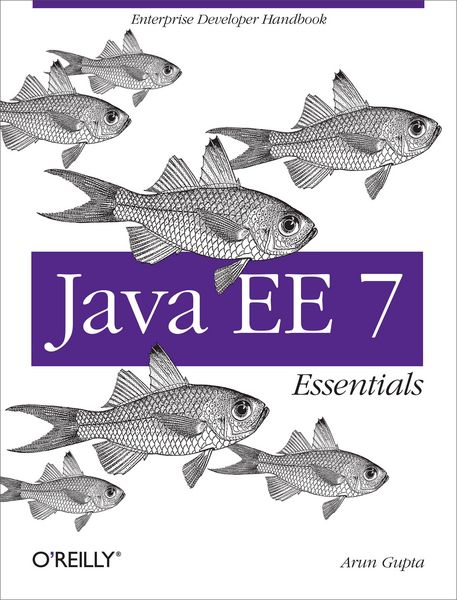
Java Ee 7 Essentials Entreprise Developer Handbook
-
- Taschenbuch ausgewählt
- eBook
-
Sprache:Englisch
59,99 €
inkl. gesetzl. MwSt.,
Beschreibung
Produktdetails
Einband
Taschenbuch
Erscheinungsdatum
01.10.2013
Verlag
O'Reilly MediaSeitenzahl
366
Maße (L/B/H)
23,1/18,1/2,5 cm
Gewicht
600 g
Auflage
1st ed.
Sprache
Englisch
ISBN
978-1-4493-7017-6
Get up to speed on the principal technologies in the Java Platform, Enterprise Edition 7, and learn how the latest version embraces HTML5, focuses on higher productivity, and provides functionality to meet enterprise demands. Written by Arun Gupta, a key member of the Java EE team, this book provides a chapter-by-chapter survey of several Java EE 7 specifications, including WebSockets, Batch Processing, RESTful Web Services, and Java Message Service.
You’ll also get self-paced instructions for building an end-to-end application with many of the technologies described in the book, which will help you understand the design patterns vital to Java EE development.
* Understand the key components of the Java EE platform, with easy-to-understand explanations and extensive code samples
* Examine all the new components that have been added to Java EE 7 platform, such as WebSockets, JSON, Batch, and Concurrency
* Learn about RESTful Web Services, SOAP XML-based messaging protocol, and Java Message Service
* Explore Enterprise JavaBeans, Contexts and Dependency Injection, and the Java Persistence API
* Discover how different components were updated from Java EE 6 to Java EE 7
You’ll also get self-paced instructions for building an end-to-end application with many of the technologies described in the book, which will help you understand the design patterns vital to Java EE development.
* Understand the key components of the Java EE platform, with easy-to-understand explanations and extensive code samples
* Examine all the new components that have been added to Java EE 7 platform, such as WebSockets, JSON, Batch, and Concurrency
* Learn about RESTful Web Services, SOAP XML-based messaging protocol, and Java Message Service
* Explore Enterprise JavaBeans, Contexts and Dependency Injection, and the Java Persistence API
* Discover how different components were updated from Java EE 6 to Java EE 7
Kundinnen und Kunden meinen
Verfassen Sie die erste Bewertung zu diesem Artikel
Helfen Sie anderen Kund*innen durch Ihre Meinung
Kurze Frage zu unserer Seite
Vielen Dank für Ihr Feedback
Wir nutzen Ihr Feedback, um unsere Produktseiten zu verbessern. Bitte haben Sie Verständnis, dass wir Ihnen keine Rückmeldung geben können. Falls Sie Kontakt mit uns aufnehmen möchten, können Sie sich aber gerne an unseren Kund*innenservice wenden.
zum Kundenservice