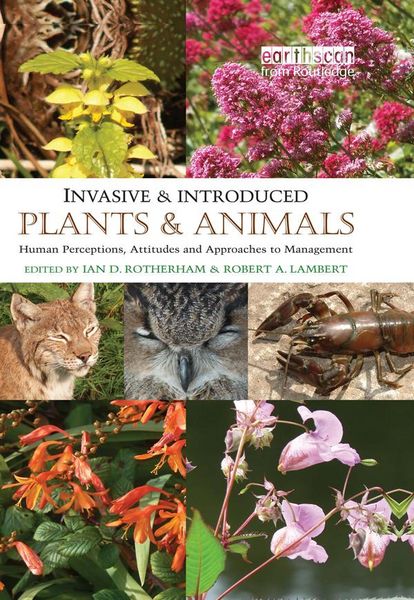
Invasive and Introduced Plants and Animals Human Perceptions, Attitudes and Approaches to Management
-
- Hardcover
- Taschenbuch
- eBook ausgewählt
-
Form:Einzelkauf Download
-
Sprache:Englisch
-
eBook Format:PDF
- ePUB 3 77,49 €
- PDF 77,49 € ausgewählt
77,49 €
inkl. gesetzl. MwSt.Beschreibung
Produktdetails
Format
Kopierschutz
Ja
Family Sharing
Nein
Text-to-Speech
Nein
Erscheinungsdatum
06.12.2012
Herausgeber
Ian D. Rotherham + weitereVerlag
Taylor & Francis eBooksSeitenzahl
392 (Printausgabe)
Dateigröße
20333 KB
Auflage
1. Auflage
Sprache
Englisch
EAN
9781134061952
There have been many well-publicized cases of invasive species of plants and animals, often introduced unintentionally but sometimes on purpose, causing widespread ecological havoc. Examples of such alien invasions include pernicious weeds such as Japanese knotweed, an introduced garden ornamental which can grow through concrete, the water hyacinth which has choked tropical waterways, and many introduced animals which have out-competed and displaced local fauna.
This book addresses the broader context of invasive and exotic species, in terms of the perceived threats and environmental concerns which surround alien species and ecological invasions. As a result of unprecedented scales of environmental change, combined with rapid globalisation, the mixing of cultures and diversity, and fears over biosecurity and bioterrorism, the known impacts of particular invasions have been catastrophic. However, as several chapters show, reactions to some exotic species, and the justifications for interventions in certain situations, including biological control by introduced natural enemies, rest uncomfortably with social reactions to ethnic cleansing and persecution perpetrated across the globe. The role of democracy in deciding and determining environmental policy is another emerging issue. In an increasingly multicultural society this raises huge questions of ethics and choice. At the same time, in order to redress major ecological losses, the science of reintroduction of native species has also come to the fore, and is widely accepted by many in nature conservation. However, with questions of where and when, and with what species or even species analogues, reintroductions are acceptable, the topic is hotly debated. Again, it is shown that many decisions are based on values and perceptions rather than objective science. Including a wide range of case studies from around the world, his book raises critical issues to stimulate a much wider debate.
Noch keine Bewertungen vorhanden
Verfassen Sie die erste Bewertung zu diesem Artikel
Helfen Sie anderen Kundinnen und Kunden durch Ihre Meinung.
Kurze Frage zu unserer Seite
Vielen Dank für Ihr Feedback
Wir nutzen Ihr Feedback, um unsere Produktseiten zu verbessern. Bitte haben Sie Verständnis, dass wir Ihnen keine Rückmeldung geben können. Falls Sie Kontakt mit uns aufnehmen möchten, können Sie sich aber gerne an unseren Kund*innenservice wenden.
zum Kundenservice